Showing posts with label tattered cover recommendations short stories. Show all posts

Thursday, February 5, 2015

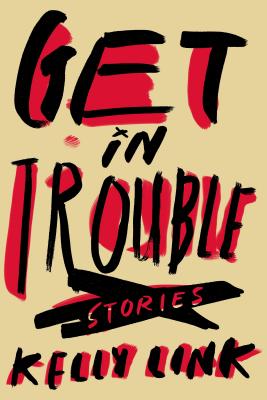
Hurricanes, Astronauts, Evil Twins, Bootleggers, Ouija Boards, Iguanas, The Wizard of Oz, Superheroes, the Pyramids . . . All In One Book!

http://bit.ly/1EFJvfA
She has been hailed by Michael Chabon as “the most darkly playful voice in American fiction” and by Neil Gaiman as “a national treasure.” Now Kelly Link’s eagerly awaited new collection—her first for adult readers in a decade—proves indelibly that this bewitchingly original writer is among the finest we have.

Link has won an ardent following for her ability, with each new short story, to take readers deeply into an unforgettable, brilliantly constructed fictional universe. The nine exquisite examples in this collection show her in full command of her formidable powers. In “The Summer People,” a young girl in rural North Carolina serves as uneasy caretaker to the mysterious, never-quite-glimpsed visitors who inhabit the cottage behind her house. In “I Can See Right Through You,” a middle-aged movie star makes a disturbing trip to the Florida swamp where his former on- and off-screen love interest is shooting a ghost-hunting reality show. In “The New Boyfriend,” a suburban slumber party takes an unusual turn, and a teenage friendship is tested, when the spoiled birthday girl opens her big present: a life-size animated doll.

Hurricanes, astronauts, evil twins, bootleggers, Ouija boards, iguanas, The Wizard of Oz, superheroes, the Pyramids . . . These are just some of the talismans of an imagination as capacious and as full of wonder as that of any writer today. But as fantastical as these stories can be, they are always grounded by sly humor and an innate generosity of feeling for the frailty—and the hidden strengths—of human beings. In Get in Trouble, this one-of-a-kind talent expands the boundaries of what short fiction can do.

Read one of the stories in the book HERE.

Friday, August 23, 2013

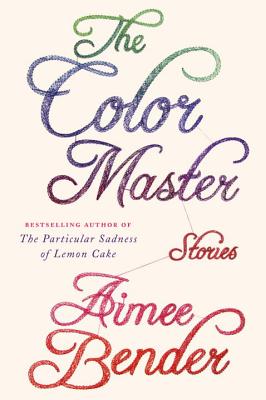
Aimee Bender's Stories Are A Great Addition To The Year of the Short Story


The bestselling author of The Particular Sadness of Lemon Cake returns with a wondrous collection of dreamy, strange, and magical stories.

Truly beloved by readers and critics alike, Aimee Bender has become known as something of an enchantress whose lush prose is “moving, fanciful, and gorgeously strange” (People), “richly imagined and bittersweet” (Vanity Fair), and “full of provocative ideas” (The Boston Globe). In her deft hands, “relationships and mundane activities take on mythic qualities” (The Wall Street Journal).

In this collection, Bender’s unique talents sparkle brilliantly in stories about people searching for connection through love, sex, and family—while navigating the often painful realities of their lives. A traumatic event unfolds when a girl with flowing hair of golden wheat appears in an apple orchard, where a group of people await her. A woman plays out a prostitution fantasy with her husband and finds she cannot go back to her old sex life. An ugly woman marries an ogre and struggles to decide if she should stay with him after he mistakenly eats their children. Two sisters travel deep into Malaysia, where one learns the art of mending tigers who have been ripped to shreds.

In these deeply resonant stories—evocative, funny, beautiful, and sad—we see ourselves reflected as if in a funhouse mirror. Aimee Bender has once again proven herself to be among the most imaginative, exciting, and intelligent writers of our time.

Sunday, May 19, 2013

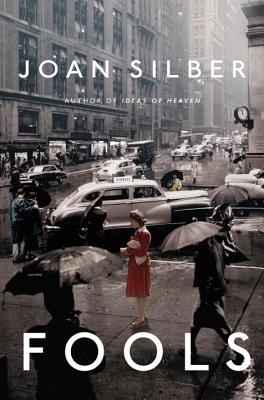
You'd Be Foolish To Miss These Wonderful Stories


When is it wise to be a fool for something? What makes people want to be better than they are? From New York to India to Paris, from the Catholic Worker movement to Occupy Wall Street, the characters in Joan Silber's dazzling new story cycle tackle this question head-on.

Vera, the shy, anarchist daughter of missionary parents, leaves her family for love and activism in New York. A generation later, her own doubting daughter insists on the truth of being of two minds, even in marriage. The adulterous son of a Florida hotel owner steals money from his family and departs for Paris, where he takes up with a young woman and finds himself outsmarted in turn. Fools ponders the circle of winners and losers, dupers and duped, and the price we pay for our beliefs.

Fools is a luminous, intelligent, and rewarding work of fiction from the author for whom the Boston Globe said, "No other writer can make a few small decisions ripple across the globe, and across time, with more subtlety and power."

Sunday, February 17, 2013

“An uplifting and radiant book.” --New York Times


The bestselling author of Faith and The Condition returns with a collection of unforgettable short stories inspired by a Pennsylvania coal-mining town and the people who call it home.

When her iconic novel Baker Towers was published in 2005, it was hailed as a modern classic—"compassionate and powerful . . . a song of praise for a too-little-praised part of America, for the working families whose toils and constancy have done so much to make the country great" (Chicago Tribune). Its young author, Jennifer Haigh, was "an expert natural storyteller with an acute sense of her characters' humanity" (New York Times).

Now, in this collection of interconnected short stories, Jennifer Haigh returns to the vividly imagined world of Bakerton, Pennsylvania, a coal-mining town rocked by decades of painful transition. From its heyday during two world wars through its slow decline, Bakerton is a town that refuses to give up gracefully, binding—sometimes cruelly—succeeding generations to the place that made them. A young woman glimpses a world both strange and familiar when she becomes a live-in maid for a Jewish family in New York City. A long-absent brother makes a sudden and tragic homecoming. A solitary middle-aged woman tastes unexpected love when a young man returns to town. With a revolving cast of characters—many familiar to fans of Baker Towers—these stories explore how our roots, the families and places in which we are raised, shape the people we eventually become.

News from Heaven looks unflinchingly at the conflicting human desires for escape and for connection, and explores the enduring hold of home. Exploring themes of restlessness, regret, redemption and acceptance, Jennifer Haigh depicts men and women of different generations shaped by dreams and haunted by disappointments.

You can browse through the book HERE.

Monday, February 11, 2013

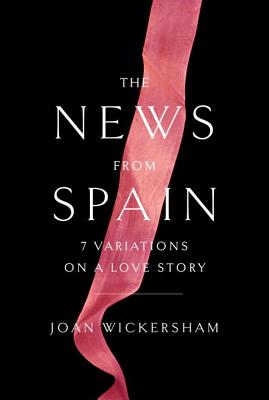
“Elegantly structured, emotionally compelling …Short stories don’t get much better than this.” -- Kirkus, Best Books of 2012


From the author of the acclaimed memoir The Suicide Index, a virtuosic collection of stories, each a stirring parable of the power of love and the impossibility of understanding, much less controlling, it.

In these seven beautifully wrought variations on a theme, a series of characters trace and retrace eternal yet ever-changing patterns of love and longing, connection and loss. The stories range over centuries and continents—from eighteenth-century Vienna, where Mozart and his librettist Da Ponte are collaborating on their operas, to America in the 1940s, where a love triangle unfolds among a doctor, a journalist, and the president’s wife. A race-car driver’s widow, a nursing-home resident and her daughter, a paralyzed dancer married to a famous choreographer—all feel the overwhelming force of passion and renunciation. With uncanny emotional exactitude, Wickersham shows how we never really know what’s in someone else’s heart, or in our own; how we continually try to explain others and to console ourselves; and how love, like storytelling, is ultimately a work of the imagination.

Wednesday, March 7, 2012

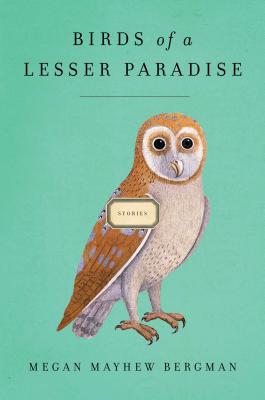
"Expertly delivered, Bergman's stories bloom from the minutiae of life. They confirm the inescapable power that nature--and our own biology--has over us.” – Sara Gruen, author of Water for Elephants


Exploring the way our choices and relationships are shaped by the menace and beauty of the natural world, Megan Mayhew Bergman’s powerful and heartwarming collection captures the surprising moments when the pull of our biology becomes evident, when love or fear collide with good sense, or when our attachment to an animal or wild place can’t be denied.

In “Housewifely Arts,” a single mother and her son drive hours to track down an African gray parrot that can mimic her deceased mother’s voice. A population-control activist faces the ultimate conflict between her loyalty to the environment and her maternal desire in “Yesterday’s Whales.” And in the title story, a lonely naturalist allows an attractive stranger to lead her and her aging father on a hunt for an elusive woodpecker.

As intelligent as they are moving, the stories in Birds of a Lesser Paradise are alive with emotion, wit, and insight into the impressive power that nature has over all of us. This extraordinary collection introduces a young writer of remarkable talent.

Saturday, January 15, 2011

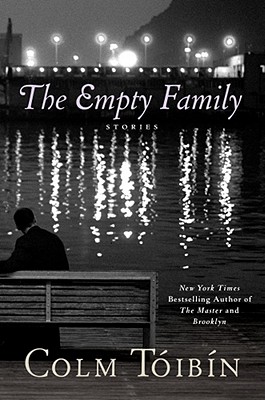
Colm Toibin's New Short Story Collection

In the captivating stories that make up The Empty Family, Colm Tóibín delineates with a tender and unique sensibility, lives of unspoken or unconscious longing, of individuals often willingly cast adrift from their history. From the young Pakistani immigrant who seeks some kind of permanence in a strange town, to the Irish woman reluctantly returning to Dublin and discovering a city that refuses to acknowledge her long absence, each of Tóibín's stories manage to contain whole worlds: stories of fleeing the past and returning home, of family threads lost and ultimately regained.

Sunday, November 21, 2010

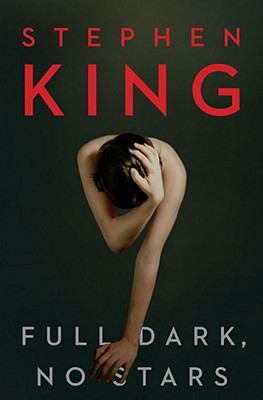
Stephen King's Latest


"I believe there is another man inside every man, a stranger . . ." writes Wilfred Leland James in the early pages of the riveting confession that makes up "1922," the first in this pitch-black quartet of mesmerizing tales from Stephen King. For James, that stranger is awakened when his wife, Arlette, proposes selling off the family homestead and moving to Omaha, setting in motion a gruesome train of murder and madness.

In "Big Driver," a cozy-mystery writer named Tess encounters the stranger along a back road in Massachusetts when she takes a shortcut home after a book-club engagement. Violated and left for dead, Tess plots a revenge that will bring her face-to-face with another stranger: the one inside herself.

"Fair Extension," the shortest of these tales, is perhaps the nastiest and certainly the funniest. Making a deal with the devil not only saves Dave Streeter from a fatal cancer but provides rich recompense for a lifetime of resentment.

When her husband of more than twenty years is away on one of his business trips, Darcy Anderson looks for batteries in the garage. Her toe knocks up against a box under a worktable and she discovers the stranger inside her husband. It's a horrifying discovery, rendered with bristling intensity, and it definitively ends "A Good Marriage".

Like Different Seasons and Four Past Midnight, which generated such enduring films as The Shawshank Redemption and Stand by Me, Full Dark, No Stars proves Stephen King a master of the long story form.

Wednesday, September 22, 2010

Great New Essay and Short Story Collections

Encounter

A brilliant new contribution to Kundera's ongoing reflections on art and artists, written with unparalleled insight, authority, and range of reference and allusion

Milan Kundera's new collection of essays is a passionate defense of art in an era that, he argues, no longer values art or beauty. With the same dazzling mix of emotion and idea that characterizes his novels, Kundera revisits the artists who remain important to him and whose works help us better understand the world we live in and what it means to be human. An astute reader of fiction, Kundera brings his extraordinary critical gifts to bear on the paintings of Francis Bacon, the music of Leos Janacek, and the films of Federico Fellini, as well as the novels of Philip Roth, Fyodor Dostoyevsky, and Gabriel GarcÍa MÁrquez, among others. He also takes up the challenge of restoring to its rightful place the work of Anatole France and Curzio Malaparte, major writers who have fallen into obscurity.

Milan Kundera's signature themes of memory and forgetting, the experience of exile, and the championing of modernist art are here, along with more personal reflections and stories. Encounter is a work of great humanism. Art is what we possess in the face of evil and the darker side of human nature. Elegant, startlingly original, and provocative, Encounter follows in the footsteps of Kundera's earlier essay collections, The Art of the Novel, Testaments Betrayed, and The Curtain.

Here Comes Another Lesson

Stephen O’Connor is one of today's most gifted and original writers. In Here Comes Another Lesson, O’Connor, whose stories have appeared in The New Yorker, Conjunctions, and many other places, fearlessly depicts a world that no longer quite makes sense. Ranging from the wildly inventive to the vividly realistic, these brilliant stories offer tender portraits of idealists who cannot live according to their own ideals and of lovers baffled by the realities of love.

The story lines are unforgettable: A son is followed home from work by his dead father. God instructs a professor of atheism to disseminate updated Commandments. The Minotaur is awakened to his own humanity by the computer-game-playing "new girl" who has been brought to him for supper. A recently returned veteran longs for the utterly ordinary life he led as a husband and father before being sent to Iraq. An ornithologist, forewarned by a cormorant of the exact minute of his death, struggles to remain alert to beauty and joy.

As playful as it is lyrical, Here Comes Another Lesson celebrates human hopefulness and laments a sane and gentle world that cannot exist.

Before You Suffocate Your Own Fool Self

Introducing a new star of her generation, an electric debut story collection about young African-American and mixed-race teens, women, and men struggling to find a place in their families and communities.

When Danielle Evans's short story "Virgins" was published in The Paris Review in late 2007, it announced the arrival of a bold new voice. Written when she was only twenty-three, Evans's story of two black, blue-collar fifteen-year-old girls' flirtation with adulthood for one night was startling in its pitch-perfect examination of race, class, and the shifting terrain of adolescence.

Now this debut collection delivers on the promise of that early story. In "Harvest," a college student's unplanned pregnancy forces her to confront her own feelings of inadequacy in comparison to her white classmates. In "Jellyfish," a father's misguided attempt to rescue a gift for his grown daughter from an apartment collapse magnifies all he doesn't know about her. And in "Snakes," the mixed-race daughter of intellectuals recounts the disastrous summer she spent with her white grandmother and cousin, a summer that has unforeseen repercussions in the present.

Striking in their emotional immediacy, the stories in Before You Suffocate Your Own Fool Self are based in a world where inequality is reality but where the insecurities of adolescence and young adulthood, and the tensions within family and the community, are sometimes the biggest complicating forces in one's sense of identity and the choices one makes.
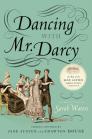

Dancing with Mr. Darcy

An anthology of the winning entries for the Jane Austen Short Story Award

Two hundred years ago, Jane Austen— traumatized by her parents’ decision to give up the rectory in Hampshire where she grew up, and unable to write for a decade—accepted her brother Edward’s offer of a permanent home in his Chawton House estate. It was there that she picked up her pen once again . . . and gave the world some of the most beloved and enduring novels ever written.

The Jane Austen Short Story Competition celebrates the immortal author and her works, and the blessed home that afforded her the peace and security to create them. Judged and chosen by Sarah Waters, bestselling author of Tipping the Velvet and Fingersmith, Dancing with Mr. Darcy includes the winning selection and nineteen runners-up, as well as introductions from Waters and Rebecca Smith, the great-great-great-great-great niece of Jane Austen.


Comfort to the Enemy

The "Hot Kid" of the U.S. Marshals Service, Carl Webster maintains the law with a cool, showdown attitude. He's one of the richest creations in Elmore Leonard's half century of delivering the goods. From his appearances in the critically acclaimed novels The Hot Kid and Up in Honey's Room, Carl returns to lay down the law in a novella that originally appeared as a serial in the New York Times Sunday Magazine.

The title novella—plus two Carl Webster short stories—traces Carl's career from his run-in with 1930's gangsters to his investigation of a murder at a German POW camp in Oklahoma. This time it's Carl against war-seasoned Afrika Korps Nazis. With its pitch-perfect dialogue, compelling characters, and classic charm, Comfort to the Enemy is vintage Leonard.
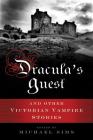

Dracula's Guest

Before Twilight and True Blood, even before Buffy and Anne Rice and Bela Lugosi, vampires haunted the nineteenth century, when brilliant writers everywhere indulged their bloodthirsty imaginations, culminating in Bram Stoker's legendary 1897 novel, Dracula.

Michael Sims brings together the very best vampire stories of the Victorian era—from England, America, France, Germany, Transylvania, and even Japan—into a unique collection that highlights their cultural variety. Beginning with the supposedly true accounts that captivated Byron and Shelley, the stories range from Edgar Allan Poe's "The Oval Portrait" and Sheridan Le Fanu's "Carmilla" to Guy de Maupassant's "The Horla" and Mary Elizabeth Braddon's "Good Lady Ducayne." Sims also includes a nineteenth-century travel tour of Transylvanian superstitions, and rounds out the collection with Stoker's own "Dracula's Guest"—a chapter omitted from his landmark novel.

Vampires captivated the Victorians, as Sims reveals in his insightful introduction: In 1867, Karl Marx described capitalism as "dead labor, which, vampire-like, lives only by sucking living labor"; while in 1888 a London newspaper invoked vampires in trying to explain Jack the Ripper's predations. At a time when vampires have been re-created in a modern context, Dracula's Guest will remind readers young, old, and in between of why the undead won't let go of our imagination.
Saturday, July 10, 2010

New To Our Shelves: Short Story Collections

The Thing Around Your Neck
Chimamanda Ngozi Adichie burst onto the literary scene with her remarkable debut novel, Purple Hibiscus, which critics hailed as “one of the best novels to come out of Africa in years” (Baltimore Sun), with “prose as lush as the Nigerian landscape that it powerfully evokes” (The Boston Globe); The Washington Post called her “the twenty-first-century daughter of Chinua Achebe.” Her award-winning Half of a Yellow Sun became an instant classic upon its publication three years later, once again putting her tremendous gifts—graceful storytelling, knowing compassion, and fierce insight into her characters’ hearts—on display. Now, in her most intimate and seamlessly crafted work to date, Adichie turns her penetrating eye on not only Nigeria but America, in twelve dazzling stories that explore the ties that bind men and women, parents and children, Africa and the United States.

In “A Private Experience,” a medical student hides from a violent riot with a poor Muslim woman whose dignity and faith force her to confront the realities and fears she’s been pushing away. In “Tomorrow is Too Far,” a woman unlocks the devastating secret that surrounds her brother’s death. The young mother at the center of “Imitation” finds her comfortable life in Philadelphia threatened when she learns that her husband has moved his mistress into their Lagos home. And the title story depicts the choking loneliness of a Nigerian girl who moves to an America that turns out to be nothing like the country she expected; though falling in love brings her desires nearly within reach, a death in her homeland forces her to reexamine them.

Searing and profound, suffused with beauty, sorrow, and longing, these stories map, with Adichie’s signature emotional wisdom, the collision of two cultures and the deeply human struggle to reconcile them. The Thing Around Your Neck is a resounding confirmation of the prodigious literary powers of one of our most essential writers.


Legend of a Suicide

In semiautobiographical stories set largely in David Vann's native Alaska, Legend of a Suicide follows Roy Fenn from his birth on an island at the edge of the Bering Sea to his return thirty years later to confront the turbulent emotions and complex legacy of his father's suicide.


“The stories in Legend of a Suicide approach a private mythos, revisiting, reinvestigating, and reinventing one family’s broken past. They also transport us to wild, uncharted places on the Alaskan coast and in the American soul. Throughout, David Vann is a generous, sure-handed guide in some very dangerous territory.”
-Stewart O'Nan, author of Songs for the Missing

“His legend is at once the truest memoir and the purest fiction. . . . Nothing quite like this book has been written before.”
-Alexander Linklater, London Observer

“A reckoning. . . . A message of profound sympathy and sadness, anger and regret, Legend of a Suicide is the melting away of one man’s past and the reshaping of tragedy into art. . . . [It] journeys unflinchingly into darkness.”
-Greg Schutz, Fiction Writers Review

If I Loved You I Would Tell You This
Heralding the arrival of a stunning new voice in American fiction, Robin Black’s If I Loved You, I Would Tell You This takes readers into the minds and hearts of people navigating the unsettling transitions that life presents to us all.


Written with maturity and insight, and in beautiful, clear-eyed prose, these stories plumb the depths of love, loss, and hope. A father struggles to forge an independent identity as his blind daughter prepares for college. A mother comes to terms with her adult daughter’s infidelity, even as she keeps a disturbing secret of her own. An artist mourns the end of a romance while painting a dying man’s portrait. An accident on a trip to Italy and an unexpected connection with a stranger cause a woman to question her lifelong assumptions about herself.

Brilliant, hopeful, and fearlessly honest, If I Loved You, I Would Tell You This illuminates the truths of human relationships, truths we come to recognize in these characters and in ourselves.

Day Out of Days

From one of our most admired writers: a collection of stories set mainly in the fertile imaginative landscape of the American West, written with the terse lyricism, cinematic detail, and wry humor that have become Sam Shepard’s trademarks.

A man traveling down Highway 90 West gets trapped alone overnight inside a Cracker Barrel restaurant, where he is tormented by an endless loop of Shania Twain songs on the overhead sound system. A wandering actor returns to his hometown against his better instincts and runs into an old friend, who recounts their teenage days of stealing cars, scoring Benzedrine, and sleeping with whores in Tijuana. A Minnesota family travels south for a winter vacation but, caught up in the ordinary tyrannies of family life, remains oblivious to the beauty of the Yucatán Peninsula. A solitary horse rancher muses on Sitting Bull and Beckett amid the jumble of stuff in his big country kitchen—from rusted spurs and Lakota dream-catchers to yellowing pictures of hawks and galloping horses to “snapshots of different sons in different shirts doing different things like fishing, riding mules and tractors; leaning up against their different mothers at radical angles.”

Made up of short narratives, lyrics, and dialogues, Day out of Days sets conversation against tale, song against memory, in a cubistic counterpoint that finally links each piece together. The result is a stunning work of vision and clarity imbued with the vivid reverberations of myth—Shepard at his flinty-eyed, unwavering best.

Friday, July 9, 2010

Short Story/Essay Week Spotlight: David Foster Wallace

Consider the Lobster
Do lobsters feel pain? Did Franz Kafka have a funny bone? What is John Updike's deal, anyway? And what happens when adult video starlets meet their fans in person? David Foster Wallace answers these questions and more in essays that are also enthralling narrative adventures. Whether covering the three-ring circus of a vicious presidential race, plunging into the wars between dictionary writers, or confronting the World's Largest Lobster Cooker at the annual Maine Lobster Festival, Wallace projects a quality of thought that is uniquely his and a voice as powerful and distinct as any in American letters. (recommended by Paul)

Brief Interviews with Hideous Men
A collection of stories from David Foster Wallace is occasion to celebrate. These stories -- which have been prominently serialized in Harper's, Esquire, the Paris Review, and elsewhere -- explore intensely immediate states of mind, with the attention to voice and the extraordinary creative daring that have won Wallace his reputation as one of the most talented fiction writer of his generation.Among the stories are "The Depressed Person", a dazzling portrayal of a woman's mental state; "Adult World", which reveals a woman's agonized consideration of her confusing sexual relationship with her husband; and "Brief Interviews with Hideous Men", a dark, hilarious series of portraits of men whose fear of women renders them grotesque.


A Supposedly Fun Thing I'll Never Do Again
A collection of stories from David Foster Wallace is occasion to celebrate. These stories -- which have been prominently serialized in Harper's, Esquire, the Paris Review, and elsewhere -- explore intensely immediate states of mind, with the attention to voice and the extraordinary creative daring that have won Wallace his reputation as one of the most talented fiction writer of his generation.Among the stories are "The Depressed Person", a dazzling portrayal of a woman's mental state; "Adult World", which reveals a woman's agonized consideration of her confusing sexual relationship with her husband; and "Brief Interviews with Hideous Men", a dark, hilarious series of portraits of men whose fear of women renders them grotesque.

Oblivion
In the stories that make up Oblivion, David Foster Wallace joins the rawest, most naked humanity with the infinite involutions of self-consciousness--a combination that is dazzlingly, uniquely his. These are worlds undreamt-of by any other mind. Only David Foster Wallace could convey a father's desperate loneliness by way of his son's daydreaming through a teacher's homicidal breakdown ("The Soul Is Not a Smithy"). Or could explore the deepest and most hilarious aspects of creativity by delineating the office politics surrounding a magazine profile of an artist who produces miniature sculptures in an anatomically inconceivable way ("The Suffering Channel"). Or capture the ache of love's breakdown in the painfully polite apologies of a man who believes his wife is hallucinating the sound of his snoring ("Oblivion"). Each of these stories is a complete world, as fully imagined as most entire novels, at once preposterously surreal and painfully immediate. Oblivion is an arresting and hilarious creation from a writer "whose best work challenges and reinvents the art of fiction" (Atlanta Journal-Constitution).

Girl with Curious Hair
David Foster Wallace is one of the most prodigiously talented and original young writers in America today, and Girl with Curious Hair displays the full range of his gifts. From the eerily "real," almost holographic evocations of historical figures like Lyndon Johnson and overtelevised game-show hosts and late-night comedians to the title story, where terminal punk nihilism meets Young Republicanism, Wallace renders the incredible comprehensible, the bizarre normal, the absurd hilarious, the familiar strange.

Wednesday, July 7, 2010

Short Story/Essay Week Spotlight: Raymond Carver

Raymond Clevie Carver, Jr. (May 25, 1938 – August 2, 1988) was an American short story writer and poet. Carver is considered a major American writer of the late 20th century and also a major force in the revitalization of the short story in the 1980s.

Carver's career was dedicated to short stories and poetry. He described himself as "inclined toward brevity and intensity" and "hooked on writing short stories" . Another stated reason for his brevity was "that the story [or poem] can be written and read in one sitting." This was not simply a preference but, particularly at the beginning of his career, a practical consideration as he juggled writing with work. His subject matter was often focused on blue-collar experience, and was clearly reflective of his own life. The same could probably be said of the recurring theme of alcoholism and recovery. *


Where I'm Calling From
By the time of his early death in 1988, Raymond Carver had established himself as one of the great practitioners of the American short story, a writer who had not only found his own voice but imprinted it in the imaginations of thousands of readers. Where I'm Calling From, his last collection, encompasses classic stories from Cathedral, What We Talk About When We Talk About Love, and earlier Carver volumes, along with seven new works previously unpublished in book form. Together, these 37 stories give us a superb overview of Carver's life work and show us why he was so widely imitated but never equaled.

Will You Please Be Quiet, Please?
With this, his first collection of stories, Raymond Carver breathed new life into the American short story. Carver shows us the humor and tragedy that dwell in the hearts of ordinary people; his stories are the classics of our time.


What We Talk About When We Talk About Love
In his second collection of stories, as in his first, Carver's characters are peripheral people--people without education, insight or prospects, people too unimaginative to even give up. Carver celebrates these men and women.


Cathedral

"A dozen stories that overflow with the danger, excitement, mystery and possibility of life...Carver is a writer of astonishing compassion and honesty...his eye set only on describing and revealing the world as he sees it. His eye is so clear, it almost breaks your heart."--Jonathan Yardley, Washington Post Book World

"Cathedral contains astonishing achievements, which bespeaks a writer expanding his range of intentions."--The Boston Globe

"A few of Mr. Carver's stories can already be counted among the masterpieces of American fiction...Cathedral shows a gifted writer struggling for a larger scope of reference, a finer touch of nuance." --Irving Howe, front page, The New York Times Book Review

"Clear, hard language so right that we shiver at the knowledge we gain from it." --Thomas Williams, Chicago Tribune Book World

"Carver is more than a realist; there is, in some of his stories, a strangeness, the husk of a myth." --Los Angeles Times

Tuesday, July 6, 2010

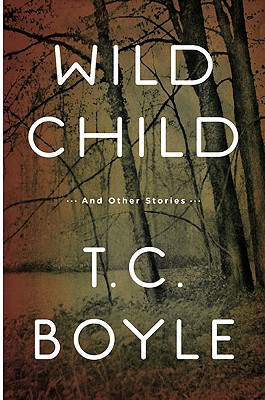
T.C. Boyle's "Wild Child"


A superb new collection from "a writer who can take you anywhere" (The New York Times)

In the title story of this rich new collection, T.C. Boyle has created so vivid and original a retelling of the story of Victor, the feral boy who was captured running naked through the forests of Napoleonic France, that it becomes not just new but definitive: yes, this is how it must have been. The tale is by turns magical and moving, a powerful investigation of what it means to be human.

There is perhaps no one better than T.C. Boyle at engaging, shocking, and ultimately gratifying his readers while at the same time testing his characters' emotional and physical endurance. The fourteen stories gathered here display both Boyle's astonishing range and his imaginative muscle. Nature is the dominant player in many of these stories, whether in the form of the catastrophic mudslide that allows a cynic to reclaim his own humanity ("La Conchita") or the wind-driven fires that howl through a high California canyon ("Ash Monday"). Other tales range from the drama of a man who spins Homeric lies in order to stop going to work, to that of a young woman who must babysit for a $250,000 cloned Afghan and the sad comedy of a child born to Mexican street vendors who is unable to feel pain.

Brilliant, incisive, and always entertaining, Boyle's short stories showcase the mischievous humor and socially conscious sensibility that have made him one of the most acclaimed writers of our time.


The book trailer:

Wild Child from jamieson on Vimeo.

Monday, July 5, 2010

Short Story/Essay Week Spotlight: Sherman Alexie

The Lone Ranger and Tonto Fistfight in Heaven

In this darkly comic collection of 22 interlocked tales, Alexia brilliantly weaves memory, fantasy, and stark realism to paint a complex, grimly ironic portrait of life in and around the Spokane Indian Reservation.


Ten Little Indians

Even as they often make readers laugh, Alexie's stories are driven by a haunting lyricism and naked candor that cut to the heart of the human experience. The result is a short-story collection that has been hailed as Alexie's "best in years" ("Austin American-Statesman").


The Toughest Indian in the World

This acclaimed collection of stories presents the kind of native American rarely seen in literature--one portrayed without stereotypes--who pays his bills, holds down jobs, and falls in and out of love.


War Dances

Alexie delivers a heartbreaking and hilarious collection of stories that explores the precarious balance between self-preservation and external responsibility in art, family, and the world at large.

War Dances won the 2010 PEN/Faulkner Award. At the announcement, Award Judge Al Young stated, " War Dances taps every vein and nerve, every tissue, every issue that quickens the current blood-pulse: parenthood, divorce, broken links, sex, gender and racial conflict, substance abuse, medical neglect, 9/11, Official Narrative vs. What Really Happened, settler religion versus native spirituality; marketing, shopping and war, war, war. All the heartbreaking ways we don't live now — this is the caring, eye-opening beauty of this rollicking, bittersweet gem of a book." Alexie himself calls the book a "mixtape" of writing styles and forms (with) stories, poems, themes intersecting themes."