Friday, October 25, 2013

Lucas Takes On Classical Music With This Audio Book


Listen to former Colorado Symphony Orchestra conductor Marin Alsop guide you through the story of one of the greatest musical traditions. Any level of learner or music lover would get a lot out of this work. Look at it as a crash course in Western classical music history.

Starting with Gregorian Chant and ending with music for films (such as the score from the Harry Potter films and the works of John Williams) this is a comprehensive overview. The abundance of sound clips to listen to and Alsop's witty and delightful anecdote's keep the listener engaged and interested. Did you know that during the Classical era of music (1750-1830ish), two prominent composers engaged in a heated keyboard duel (one on organ, one on harpsichord)? The result was a draw. Now, who said that classical music is boring?

I think this is a good book for anyone who is looking to learn more about music history or for anyone who is looking to reinforce or add to their existing knowledge. I guarantee almost anybody would take something new away from this audiobook.

~Lucas

Some Fresh New Fall Titles On Our Shelves Now

The shocking end is only the beginning . . .

#1 bestselling author Jeffery Deaver has created the most riveting and original novel of the year-a race-against-the-clock mystery, told in reverse.

Gabriela waits desperately for news of her abducted daughter.

At last, the door opens.

But it's not the negotiators. It's not the FBI.

It's the kidnapper.

And he has a gun.

How did it come to this?

Two days ago, Gabriela's life was normal. Then, out of the blue, she gets word that her six-year-old daughter has been taken. She's given an ultimatum: pay half a million dollars and find a mysterious document known as the "October List" within 30 hours, or she'll never see her child again. A mind-bending novel with twists and turns that unfold from its dramatic climax back to its surprising beginning, The October List is Jeffery Deaver at his masterful, inventive best.


From one of America’s most accomplished and acclaimed fiction writers, a chilling, spectacularly riveting novel based on a real life multiple murder by a con man who preyed on widows—a story that has haunted Jayne Anne Phillips for more than four decades.

Jayne Anne Phillips’s debut collection, Black Tickets, galvanized critics and readers when it was published in 1979 and announced her as one of the great new voices of her generation. Her four novels, prizewinners and reader favorites, have secured her place as one of America’s most celebrated storytellers. In Quiet Dell, Phillips re-imagines a gruesome crime in a tiny West Virginia community not far from where she grew up.

In Chicago in 1931, Asta Eicher, mother of three, is lonely and despairing, pressed for money after the sudden death of her husband. She begins to receive seductive letters from a chivalrous, elegant man named Harry Powers, who promises to cherish and protect her, ultimately to marry her and to care for her and her children. Weeks later, the family are dead.

Emily Thornhill, one of the few women in the Chicago press, covers the case and becomes deeply invested in understanding what happened to this beautiful family, particularly to the youngest child, Annabel, an enchanting girl with a precocious imagination and sense of magic. Bold and intrepid, Emily allies herself with the Chicago banker who funds the investigation and who is wracked by guilt for not saving Asta. Driven by secrets of their own, the heroic characters in this magnificent tale will stop at nothing to ensure that Powers is convicted. A mesmerizing retelling of a harrowing crime, Quiet Dell is a tour de force of obsession and imagination.
 
 
Rich in characters both whimsical and deeply poignant, humorous and real, the stories of Goli Taraghi have made her one of the world’s most beloved contemporary writers from Iran. A best-selling author in her native country and widely anthologized in the United States and around the world, Taraghi's work is now made fully accessible to an English-speaking audience in this standout and long-awaited volume of selected stories.

Drawing on childhood experiences in Tehran during the reign of the Shah, her exile in Paris, and her subsequent visits to Tehran after the revolution, Taraghi develops characters and tales that linger in one’s mind. In the title story, a woman traveling from Tehran to Paris is obliged to help an old woman—the Pomegranate Lady—find her way to her fugitive sons in Sweden. In "The Gentleman Thief," a new kind of polite, apologetic thief emerges from the wreckage of the revolution. In "Encounter," a woman's world is upended when her former maid becomes her jailer. And in "The Flowers of Shiraz," a group of teenagers finally manages to coax a shy schoolmate out of her shell—only to once again encounter tragedy.

Reminiscent of the work of Nadine Gordimer and Eudora Welty, Taraghi's stories capture universal experiences of love, loss, alienation, and belonging—all with an irresistible sense of life’s absurdities. 
 
 
 When people knocked on wood for good luck, Arthur Koehler actually knew why. He could explain the superstition dating back to ancient times when trees were held to be deities of the forest and simply tapping on them would invoke the aid of those higher powers to ward off evils…

Koehler knew every tree in the world was distinct, just like every person. As he liked to say, “A tree never lies.”

And so the revelation came.

He…began to write to his best contact, his superior at the New Jersey State Police, Capt. J.J. Lamb, the man leading the Lindbergh baby kidnapping investigation. He wanted to remind him of the original report he’d conducted on the ladder a year and a half earlier.

Before there was CSI and NCIS, there was a mild-mannered forensic scientist whose diligence would help solve the twentieth century’s greatest crime. Arthur Koehler was called the Sherlock Holmes of his era for his work tracing the ladder used to kidnap Charles Lindbergh’s son to the culprit. The subject of an upcoming Smithsonian Channel show, this is a gripping tale of science and true crime.


"The insane are always mere guests on earth, eternal strangers carrying around broken decalogues that they cannot read."  ~F. Scott Fitzgerald

Evalina Toussaint, orphaned child of an exotic dancer in New Orleans, is just thirteen when she is admitted to Highland Hospital in Asheville, North Carolina. The year is 1936, and the mental hospital is under the direction of the celebrated psychiatrist Dr. Robert S. Carroll, whose innovative treatment for nervous disorders and addictions is based upon fresh air, diet, exercise, gardening, art, dance, music, theater, and therapies of the day such as rest cures, freeze wraps, and insulin shock.
 
Talented Evalina is soon taken under the wing of the doctor s wife, a famous concert pianist, and eventually becomes the accompanist for all musical programs at the hospital, including the many dances and theatricals choreographed by longtime patient Zelda Fitzgerald. Evalina s role gives her privileged access to the lives and secrets of other patients and staff swept into a cascading series of events leading up to the tragic fire of 1948 that killed nine women in a locked ward on the top floor.

She offers a solution for the still-unsolved mystery of that fire, as well as her own ideas about the very thin line between sanity and insanity; her opinion of the psychiatric treatment of women and girls who failed to fit into prevailing male ideals; and her insights into the resonance between art and madness. A writer at the height of her craft, Lee Smith has created, through her masterful melding of fiction and fact, a mesmerizing novel about a world apart a time and a place where creativity and passion, theory and medicine, fact and fiction, tragedy and transformation, are luminously intertwined.


A vivid and compelling novel about a woman who becomes entangled in an affair with Edgar Allan Poe—at the same time she becomes the unwilling confidante of his much-younger wife.

It is 1845, and Frances Osgood is desperately trying to make a living as a writer in New York; not an easy task for a woman—especially one with two children and a philandering portrait painter as her husband. As Frances tries to sell her work, she finds that editors are only interested in writing similar to that of the new renegade literary sensation Edgar Allan Poe, whose poem, “The Raven” has struck a public nerve.

She meets the handsome and mysterious Poe at a literary party, and the two have an immediate connection. Poe wants Frances to meet with his wife since she claims to be an admirer of her poems, and Frances is curious to see the woman whom Edgar married.

As Frances spends more and more time with the intriguing couple, her intense attraction for Edgar brings her into dangerous territory. And Mrs. Poe, who acts like an innocent child, is actually more manipulative and threatening than she appears. As Frances and Edgar’s passionate affair escalates, Frances must decide whether she can walk away before it’s too late...

Set amidst the fascinating world of New York’s literati, this smart and sexy novel offers a unique view into the life of one of history’s most unforgettable literary figures.

Halloween Fun With Authors

In Vogue‘s recent Edith Wharton spread, we have: Junot Díaz as diplomat Walter Berry, Jonathan Safran Foer as architect Ogden Codman, Jr., and, most excellently, Jeffrey Eugenides as Henry James. 
 In case you need some help: Eugenides is standing behind the lady in white, Diaz is seated right next to him, and Foer is standing on the far right wearing period appropriate specs.

Thursday, October 24, 2013

"'The Emerald Mile' by Kevin Fedarko is a remarkable book that evokes an adventure so well that the reader can become immersed its places and events." ~Mark

http://www.tatteredcover.com/book/9781439159859


In the winter of 1983, the largest El Niño event on record—a chain of “superstorms” that swept in from the Pacific Ocean—battered the entire West. That spring, a massive snowmelt sent runoff racing down the Colorado River toward the Glen Canyon Dam, a 710-foot-high wall of concrete that sat at the head of the most iconic landscape feature in America, the Grand Canyon. As the water clawed toward the parapet of the dam, worried federal officials desperately scrambled to avoid a worst-case scenario: one of the most dramatic dam failures in history.

In the midst of this crisis, beneath the light of a full moon, a trio of river guides secretly launched a small, hand-built wooden boat, a dory named the Emerald Mile, into the Colorado just below the dam’s base and rocketed toward the dark chasm downstream, where the torrents of water released by the dam engineers had created a rock-walled maelstrom so powerful it shifted giant boulders and created bizarre hydraulic features never previously seen. The river was already choked with the wreckage of commercial rafting trips: injured passengers clung to the remnants of three-ton motorboats that had been turned upside down and torn to pieces. The chaos had claimed its first fatality, further launches were forbidden, and rangers were conducting the largest helicopter evacuation in the history of Grand Canyon National Park.

An insurgent river run under such conditions seemed to border on the suicidal, but Kenton Grua, the captain of that dory, was on an unusual mission: a gesture of defiance unlike anything the river world had ever seen. His aim was to use the flood as a hydraulic slingshot that would hurl him and two companions through 277 miles of some of the most ferocious white water in North America and, if everything went as planned, catapult the Emerald Mile into legend as the fastest boat ever propelled—by oar, by motor, or by the grace of God—through the heart of the Grand Canyon.

Grua himself was already something of a mythic figure, a fearless boatman obsessed with the mysteries of the canyon. His quest embraced not only the trials of the speed run itself but also the larger story of his predecessors: the men who had first discovered the canyon and pioneered its exploration, as well as those who waged a landmark battle to prevent it from being hog-tied by a series of massive hydroelectric dams—a conflict that continues to this day.

A writer who has worked as a river guide himself and is intimately familiar with the canyon’s many secrets, Kevin Fedarko is the ideal narrator for this American epic. The saga of the Emerald Mile is a thrilling adventure, as well as a magisterial portrait of the hidden kingdom of white water at the bottom of the greatest river canyon on earth. This book announces Fedarko as a major writing talent and at last sets forth the full story of an American legend—the legend of the Emerald Mile.

Mark L. says:
"The Emerald Mile by Kevin Fedarko is a remarkable book that evokes an adventure so well that the reader can become immersed in its places and events. Set in the Grand Canyon and centered around an attempt to run the Colorado river in a wooden boat for the fastest time ever, Fedarko tells far more than just this event and shows us an unsuspected world, from the history of the canyon, its first discovery by conquistadors, John Wesley Powell's exploration, the projects to dam the river, the environmental movement backlash, and the development of the subculture of river runners and the tourism that supports them. All these tributaries of narrative make the central tale far richer and nuanced than a simple adventure story, and more enjoyable.

Spring thaw in 1983 brought more water, faster than at any time since the dams were constructed and we see the struggles of both the National Park Service and the Bureau of Reclamation as they try to manage the potentially deadly and destructive effects of the unprecedented runoff. The park service is caught between preventing fatalities and not depriving people of trips that were years in the planning, and the bureau has to manage releasing the water so as to minimize the damage to and avoid failure of critical components of the Glenn Canyon dam. The drama in the competing aims, contrasting points of view, and the clashes of legitimate authority with traditional freedoms is as turbulent as the river.

This book is a perfect choice for anyone who loved Into Thin Air and should find a place for itself as a classic in outdoor adventure literature."

Kate M. Is Recommending:

In middle age, Annie Oh—wife, mother, and outsider artist—has shaken her family to its core. After twenty-seven years of marriage and three children, Annie has fallen in love with Viveca, the wealthy, cultured, confident Manhattan art dealer who orchestrated her professional success.

Annie and Viveca plan to wed in the Oh family's hometown of Three Rivers, Connecticut, where gay marriage has recently been legalized. But the impending wedding provokes some very mixed reactions and opens a Pandora's box of toxic secrets—dark and painful truths that have festered below the surface of the Ohs' lives.

We Are Water is an intricate and layered portrait of marriage, family, and the inexorable need for understanding and connection, told in the alternating voices of the Ohs—nonconformist Annie; her ex-husband, Orion, a psychologist; Ariane, the do-gooder daughter, and her twin, Andrew, the rebellious only son; and free-spirited Marissa, the youngest Oh. Set in New England and New York during the first years of the Obama presidency, it is also a portrait of modern America, exploring issues of class, changing social mores, the legacy of racial violence, and the nature of creativity and art.

With humor and breathtaking compassion, Wally Lamb brilliantly captures the essence of human experience in vivid and unforgettable characters struggling to find hope and redemption in the aftermath of trauma and loss. We Are Water is vintage Wally Lamb—a compulsively readable, generous, and uplifting masterpiece that digs deep into the complexities of the human heart to explore the ways in which we search for love and meaning in our lives.


What if your whole world was a lie?

What if a single revelation—like a single choice—changed everything?

What if love and loyalty made you do things you never expected?

The faction-based society that Tris Prior once believed in is shattered—fractured by violence and power struggles and scarred by loss and betrayal. So when offered a chance to explore the world past the limits she's known, Tris is ready. Perhaps beyond the fence, she and Tobias will find a simple new life together, free from complicated lies, tangled loyalties, and painful memories.

But Tris's new reality is even more alarming than the one she left behind. Old discoveries are quickly rendered meaningless. Explosive new truths change the hearts of those she loves. And once again, Tris must battle to comprehend the complexities of human nature—and of herself—while facing impossible choices about courage, allegiance, sacrifice, and love.

Told from a riveting dual perspective, Allegiant, by #1 New York Times best-selling author Veronica Roth, brings the Divergent series to a powerful conclusion while revealing the secrets of the dystopian world that has captivated millions of readers in Divergent and Insurgent.


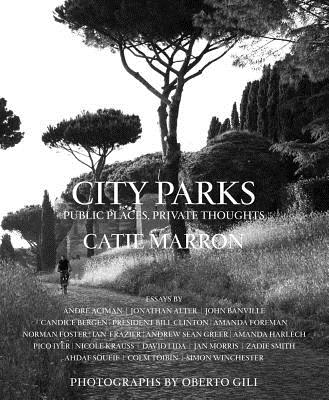
 Catie Marron’s City Parks captures the spirit and beauty of eighteen of the world’s most-loved city parks. Zadie Smith, Ian Frazier, Candice Bergen, Colm Tóibín, Nicole Krauss, Jan Morris, and a dozen other remarkable contributors reflect on a particular park that holds special meaning for them.

Andrew Sean Greer eloquently paints a portrait of first love in the Presidio; André Aciman muses on time’s fleeting nature and the changing face of New York viewed from the High Line; Pico Iyer explores hidden places and privacy in Kyoto; Jonathan Alter takes readers from the 1968 race riots to Obama’s 2008 victory speech in Chicago’s Grant Park; Simon Winchester invites us along on his adventures in the Maidan; and Bill Clinton writes of his affection for Dumbarton Oaks.

Oberto Gili’s color and black-and-white photographs unify the writers’ unique and personal voices. Taken around the world over the course of a year, in every season, his pictures capture the inherent mood of each place. Fusing images and text, City Parks is an extraordinary and unique project: through personal reflection and intimate detail it taps into collective memory and our sense of time’s passage.


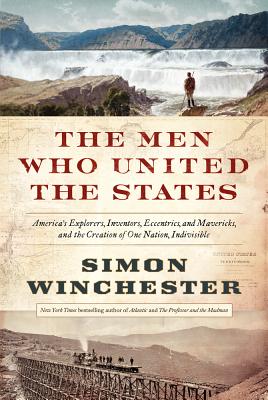
For more than two centuries, E pluribus unum—"Out of many, one"—has been featured on America's official government seals and stamped on its currency. But how did America become "one nation, indivisible"? In this monumental history, Simon Winchester addresses these questions, bringing together the breathtaking achievements of those American pioneers who helped to forge and unify the new nation, and who toiled fearlessly to bond the citizens and geography of the United States from its very beginnings. This sweeping narrative details how these daring men, some famous, some forgotten, left their mark on America's natural landscapes, through courage, ingenuity, and hard work.

Winchester follows the footsteps of America's most crucial innovators, thinkers, and explorers, from Lewis and Clark and the leaders of the Great Surveys of the West to the builders of the first transcontinental railroad and the curmudgeonly civil engineer who oversaw the creation of more than three million miles of highway. Winchester travels across vast swaths of the American landscape, from Pittsburgh to Portland, Seattle to Anchorage, Truckee to Laramie, using the five classical elements—Wood, Earth, Water, Fire, and Metal—to chart the contributions these adventurous leaders made to connect the diverse communities within the United States and ensure the future of the American project begun in 1776.
 
The Men Who United the States is an unforgettable journey of unprecedented scope across time and open spaces, providing a new lens through which to view American history, led by one of our most gifted writers.


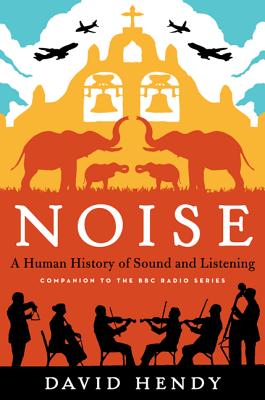
What if history had a sound track? What would it tell us about ourselves? Based on a thirty-part BBC Radio series and podcast, Noise explores the human dramas that have revolved around sound at various points in the last 100,000 years, allowing us to think in fresh ways about the meaning of our collective past.

Though we might see ourselves inhabiting a visual world, our lives have always been hugely influenced by our need to hear and be heard. To tell the story of sound--music and speech, but also echoes, chanting, drumbeats, bells, thunder, gunfire, the noise of crowds, the rumbles of the human body, laughter, silence, conversations, mechanical sounds, noisy neighbors, musical recordings, and radio--is to explain how we learned to overcome our fears about the natural world, perhaps even to control it; how we learned to communicate with, understand, and live alongside our fellow beings; how we've fought with one another for dominance; how we've sought to find privacy in an increasingly noisy world; and how we've struggled with our emotions and our sanity.

Oratory in ancient Rome was important not just for the words spoken but for the sounds made--the tone, the cadence, the pitch of the voice--how that voice might have been transformed by the environment in which it was heard and how the audience might have responded to it. For the Native American tribes first encountering the European colonists, to lose one's voice was to lose oneself. In order to dominate the Native Americans, European colonists went to great effort to silence them, to replace their "demonic" "roars" with the more familiar "bugles, speaking trumpets, and gongs."

Breaking up the history of sound into prehistoric noise, the age of oratory, the sounds of religion, the sounds of power and revolt, the rise of machines, and what he calls our "amplified age," Hendy teases out continuities and breaches in our long relationship with sound in order to bring new meaning to the human story.


First published in the United Kingdom to great acclaim, Unapologetic is a wonderfully pugnacious defense of Christianity. But it isn't an argument that Christianity is true—because how could anyone know that (or indeed its opposite)? It's an argument that Christianity is recognizable, drawing on the deep and deeply ordinary vocabulary of human feeling, satisfying those who believe in it by offering a ruthlessly realistic account of the grown-up dignity of Christian experience.

Unhampered by niceness, this is a book for believers who are fed up with being patronized, for non-believers curious about how faith can possibly work in the twenty-first century, and for anyone who feels there is something indefinably wrong, literalistic, anti-imaginative, and intolerant about the way the atheist case is now being made.


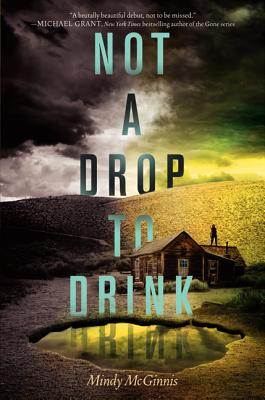
 Regret was for people with nothing to defend, people who had no water.

Lynn knows every threat to her pond: drought, a snowless winter, coyotes, and, most important, people looking for a drink. She makes sure anyone who comes near the pond leaves thirsty or doesn't leave at all.

Confident in her own abilities, Lynn has no use for the world beyond the nearby fields and forest. Having a life means dedicating it to survival and the constant work of gathering wood and water. Having a pond requires the fortitude to protect it, something Mother taught her well during their quiet hours on the rooftop, rifles in hand.

But wisps of smoke on the horizon mean one thing: strangers. The mysterious footprints by the pond, the nighttime threats, and the gunshots make it all too clear Lynn has exactly what they want, and they won't stop until they get it. . . .

With evocative, spare language and incredible drama, danger, and romance, debut author Mindy McGinnis depicts one girl's journey in a barren world not so different from our own.