Showing posts with label tattered cover recommendations nonfiction. Show all posts

Saturday, November 2, 2013

New To Our Non-Fiction Shelves

http://bit.ly/17kEwoD
Falling Upwards tells the story of the enigmatic group of men and women who first risked their lives to take to the air, and so discovered a new dimension of human experience. Why they did it, what their contemporaries thought of them, and how their flights revealed the secrets of our planet in wholly unexpected ways is its subject.

Dramatic sequences move from the early Anglo-French balloon rivalries; the crazy firework flights of beautiful Sophie Blanchard; the revelatory ascents over the great Victorian cities and sprawling industrial towns of Northern Europe; the astonishing long-distance voyages of the American entrepreneur John Wise, and the French photographer Felix Nadar, to the terrifying high-altitude flights of James Glaisher FRS who rose above seven miles without oxygen, helping to establish the new science of meteorology as well as the environmental notion--so important to us today--of a "fragile" planet. Balloons were also used to observe the horrors of modern battle during the American Civil War (including a memorable flight by General Custer).

Readers will also discover the many writers and dreamers--from Mary Shelley to Edgar Allan Poe, from Charles Dickens to Jules Verne--who felt the imaginative impact of flight and allowed it to soar in their work. Most of all, through the strange allure of the great balloonists, Holmes offers another of his subtle portraits of human endeavor, recklessness, and vision.


http://bit.ly/HnRup1
Take a trip back in time through the rich culinary tradition of the last American century with more than 100 of the nation’s top chefs and food personalities.

The Way We Ate captures the twentieth century through the food we’ve shared and prepared. Noah Fecks and Paul Wagtouicz (creators of the hugely popular blog The Way We Ate) are your guides to a dazzling display of culinary impressionism: For each year from 1901 to 2000, they invite a well-known chef or food connoisseur to translate the essence or idea of a historical event into a beautifully realized dish or cocktail. The result is an eclectic array of modern takes and memorable classics, featuring original recipes conjured by culinary notables, including:

Daniel Boulud, Jacques Pépin, Marc Forgione, José Andrés, Ruth Reichl, Marcus Samuelsson, Michael White, Andrew Carmellini, Anita Lo, Gael Greene, Michael Lomonaco, Melissa Clark, Justin Warner, Michael Laiskonis, Sara Jenkins, Shanna Pacifico, Jeremiah Tower, and Ashley Christensen

An innovative work of history and a cookbook like no other, The Way We Ate is the story of a nation’s cravings—and how they continue to influence the way we cook, eat, and talk about food today.


http://bit.ly/1eXn7Sj
Unlock your mind

From the bestselling authors of Thinking, Fast and Slow; The Black Swan; and Stumbling on Happiness comes a cutting-edge exploration of the mysteries of rational thought, decision-making, intuition, morality, willpower, problem-solving, prediction, forecasting, unconscious behavior, and beyond. Edited by John Brockman, publisher of Edge.org ("The world's smartest website"--The Guardian), Thinking presents original ideas by today's leading psychologists, neuroscientists, and philosophers who are radically expanding our understanding of human thought.

Daniel Kahneman on the power (and pitfalls) of human intuition and "unconscious" thinking - Daniel Gilbert on desire, prediction, and why getting what we want doesn't always make us happy - Nassim Nicholas Taleb on the limitations of statistics in guiding decision-making - Vilayanur Ramachandran on the scientific underpinnings of human nature - Simon Baron-Cohen on the startling effects of testosterone on the brain - Daniel C. Dennett on decoding the architecture of the "normal" human mind - Sarah-Jayne Blakemore on mental disorders and the crucial developmental phase of adolescence - Jonathan Haidt, Sam Harris, and Roy Baumeister on the science of morality, ethics, and the emerging synthesis of evolutionary and biological thinking - Gerd Gigerenzer on rationality and what informs our choices.


http://bit.ly/17oZVe2
The amazing story of a very smart Border collie who is redefining animal intelligence.

Chaser has a way with words. She knows over a thousand of them; more than any other animal of any species except humans. In addition to common nouns like house, ball, and tree, she has memorized the names of more than one thousand toys and can retrieve any of them on command. Based on that learning, she and her owner and trainer, retired psychologist John Pilley, have moved on to further impressive feats, demonstrating her ability to understand sentences with multiple elements of grammar and to learn new behaviors by imitation.

Johns ingenuity and tenacity as a researcher are as impressive as Chaser's accomplishments. His groundbreaking approach has opened the door to a new understanding of animal intelligence, one that requires us to reconsider what actually goes on in a dogs mind. Chaser's achievements reveal her use of deductive reasoning and complex problem-solving skills to address novel challenges.

Yet astonishingly, Chaser isn't unique. Johns training methods can be adopted by any dog lover. Through the poignant story of how he trained Chaser, raised her as a member of the Pilley family, and proved her abilities to the scientific community, he reveals the positive impact of incorporating learning into play and more effectively channeling a dogs natural drives.

Johns work with Chaser offers a fresh perspective on whats possible in the relationship between a dog and a human. His story points us toward a new way of relating to our canine companions that takes into account our evolving understanding of the way animals and humans learn.


http://bit.ly/1ckFqDi
New York Times bestselling author and social media expert Gary Vaynerchuk shares hard-won advice on how to connect with customers and beat the competition.

When managers, marketers, and small business owners outline their social media strategies, they plan for the "right hook"--their next campaign that will produce profits. Even companies committed to "jabbing"--creating content for consumers and engaging with customers to build relationships--still desperately want to land the powerful, bruising swing that will knock out their opponents or their customers' resistance in one tooth-shattering, killer blow. Right hooks, after all, convert traffic to sales. They easily show results and return on investment. Except when they don't.

In the same passionate, streetwise style his readers have come to expect, Vaynerchuk is on a mission to strengthen marketers' right hooks by changing the way they fight to make their consumers happy, and ultimately to compete. Thanks to the massive change in and proliferation of social media platforms in the last four years, the winning combination of jabs and right hooks is different now. Communication is still key, but context matters more than ever. It's not just about developing high-quality content; it's also about developing high-quality content that's perfectly adapted to specific social media platforms and mobile devices. It's about truly engaging with customers, not by shouting at them over social media but by using new narrative forms particular to each different media platform--especially, though not exclusively, Facebook, Instagram, Pinterest, Twitter, and Tumblr. Jab, Jab, Jab, Right Hook is a blueprint to social media marketing strategies that really work.


http://bit.ly/17lR0w4
Hollywood was built on beautiful and complicated matinee idols: James Dean and Marlon Brando are classic examples, but in the 1990s, the actor who embodied that archetype was River Phoenix. As the brightly colored 1980s wound down, a new crew of leading men began to appear on movie screens. Hailed for their acting prowess and admired for choosing meaty roles, actors such as Johnny Depp, Nicolas Cage, Keanu Reeves, and Brad Pitt were soon rocketing toward stardom while an unknown Leonardo DiCaprio prepared to make his acting debut. River Phoenix, however, stood in front of the pack. Blessed with natural talent and fueled by integrity, Phoenix was admired by his peers and adored by his fans. More than just a pinup on teenage girls' walls, Phoenix was also a fervent defender of the environment and a vocal proponent of a vegan lifestyle--well on his way to becoming a symbol of his generation. At age eighteen, he received his first Oscar nomination. But behind his beautiful public face, there was a young man who had been raised in a cult by nonconformist parents, who was burdened with supporting his family from a young age, and who eventually succumbed to addiction, escaping into a maelstrom of drink and drugs.

And then he was gone. After a dozen films, including Stand by Me and My Own Private Idaho, and with a seemingly limitless future, River Phoenix died of a drug overdose. He was twenty-three years old.

In Last Night at the Viper Room, bestselling author and journalist Gavin Edwards toggles between the tragic events at the Viper Room in West Hollywood on Halloween 1993 and the story of an extraordinary life. Last Night at the Viper Room is part biography, part cultural history of the 1990s, and part celebration of River Phoenix, a Hollywood icon gone too soon. Full of interviews from his fellow actors, directors, friends, and family, Last Night at the Viper Room shows the role he played in creating the place of the actor in our modern culture and the impact his work still makes today.


http://bit.ly/19K5jYN
Decorated US Navy SEAL lieutenant Jason Redman served his country courageously and with distinction in Colombia, Peru, Afghanistan, and Iraq, where he commanded mobility and assault forces. He conducted over forty capture/kill missions with his men in Iraq, locating more than 120 al-Qaida insurgents. But his journey was not without supreme challenges--both emotional and physical. Redman is brutally honest about his struggles to learn how to be an effective leader, yet that effort pales beside the story of his critical wounding in 2007 while leading a mission against a key al-Qaida commander. On that mission his team was ambushed and he was struck by machine-gun fire at point-blank range.

During the intense recovery period that followed, Redman gained national attention when he posted a sign on his door at the National Naval Medical Center in Bethesda, warning all who entered not to "feel sorry for his wounds." His sign became both a statement and a symbol for wounded warriors everywhere.

From his grueling SEAL training to his search for a balance between arrogance and humility, Redman shares it all in this inspiring and unforgettable account. He speaks candidly of the grit that sustained him despite grievous wounds, and of the extraordinary love and devotion of his wife, Erica, and his family, without whom he would not have survived.

Vivid and powerful, emotionally resonant and illuminating, The Trident traces the evolution of a modern warrior, husband, and father, a man who has come to embody the never-say-die spirit that defines the SEALs, one of America's elite fighting forces.

Thursday, February 21, 2013

Eric B. Is Recommending...

The triumphant final book by Tony Judt, indomitable public critic and author of Postwar

One of our most brilliant historians, Tony Judt brings the past century vividly to life in this unprecedented and original history. Structured as a series of intimate conversations between Judt and his friend and fellow historian Timothy Snyder, Thinking the Twentieth Century presents the triumphs and the failures of the twentieth century's most prominent intellectuals and their ideas, guiding readers through the debates that defined our world.

Spanning an era with unprecedented clarity and insight, Thinking the Twentieth Century is a tour de force: a masterful analysis of the life of the mind and an unforgettable guide to leading the mindful life.


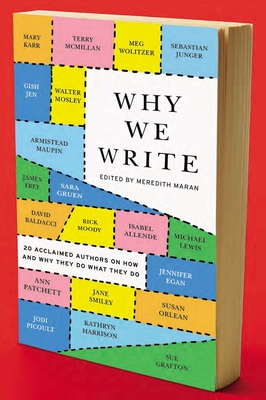
Twenty of America's bestselling authors share tricks, tips, and secrets of the successful writing life.

Anyone who's ever sat down to write a novel or even a story knows how exhilarating and heartbreaking writing can be. So what makes writers stick with it? In Why We Write, twenty well-known authors candidly share what keeps them going and what they love most—and least—about their vocation.
 
Contributing authors include:
Isabel Allende
David Baldacci
Jennifer Egan
James Frey
Sue Grafton
Sara Gruen
Kathryn Harrison
Gish Jen
Sebastian Junger
Mary Karr
Michael Lewis
Armistead Maupin
Terry McMillan
Rick Moody
Walter Mosley
Susan Orlean
Ann Patchett
Jodi Picoult
Jane Smiley
Meg Wolitzer

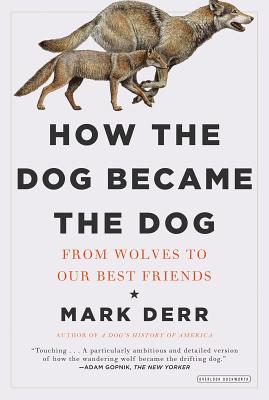
 That the dog evolved from the wolf is an accepted fact of evolution and history, but the question of how wolf became dog has remained a mystery, obscured by myth and legend. How the Dog Became the Dog posits that dog was an evolutionary inevitability in the nature of the wolf and its human soul mate. The natural temperament and social structure of humans and wolves are so similar that as soon as they met on the trail they recognized themselves in each other.

How the Dog Became the Dog adeptly and engrossingly examines this singular relationship. Combining the most recent scientific research with Mark Derr's original insights, this book shows that dogs made us human just as humans affected the evolution of dogs.

Thursday, September 20, 2012

Great New Non-Fiction On Our Shelves This Week

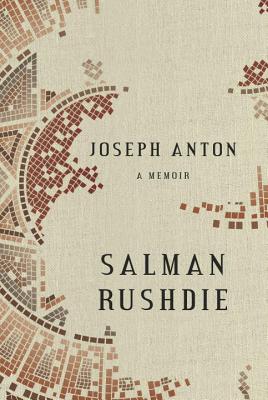
On February 14, 1989, Valentine’s Day, Salman Rushdie was telephoned by a BBC journalist and told that he had been “sentenced to death” by the Ayatollah Khomeini. For the first time he heard the word fatwa. His crime? To have written a novel called The Satanic Verses, which was accused of being “against Islam, the Prophet and the Quran.”

So begins the extraordinary story of how a writer was forced underground, moving from house to house, with the constant presence of an armed police protection team. He was asked to choose an alias that the police could call him by. He thought of writers he loved and combinations of their names; then it came to him: Conrad and Chekhov—Joseph Anton.

How do a writer and his family live with the threat of murder for more than nine years? How does he go on working? How does he fall in and out of love? How does despair shape his thoughts and actions, how and why does he stumble, how does he learn to fight back? In this remarkable memoir Rushdie tells that story for the first time; the story of one of the crucial battles, in our time, for freedom of speech. He talks about the sometimes grim, sometimes comic realities of living with armed policemen, and of the close bonds he formed with his protectors; of his struggle for support and understanding from governments, intelligence chiefs, publishers, journalists, and fellow writers; and of how he regained his freedom.

It is a book of exceptional frankness and honesty, compelling, provocative, moving, and of vital importance. Because what happened to Salman Rushdie was the first act of a drama that is still unfolding somewhere in the world every day.

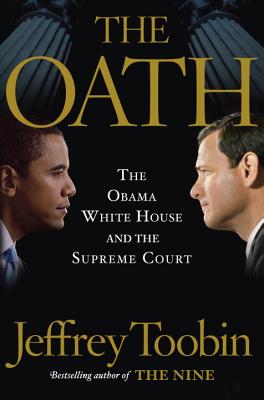
From the prizewinning author of The Nine, a gripping insider's account of the momentous ideological war between the John Roberts Supreme Court and the Obama administration.

From the moment John Roberts, the chief justice of the United States, blundered through the Oath of Office at Barack Obama's inauguration, the relationship between the Supreme Court and the White House has been confrontational. Both men are young, brilliant, charismatic, charming, determined to change the course of the nation—and completely at odds on almost every major constitutional issue. One is radical; one essentially conservative. The surprise is that Obama is the conservative—a believer in incremental change, compromise, and pragmatism over ideology. Roberts—and his allies on the Court—seek to overturn decades of precedent: in short, to undo the ultimate victory FDR achieved in the New Deal.

This ideological war will crescendo during the 2011-2012 term, in which several landmark cases are on the Court's docket—most crucially, a challenge to Obama's controversial health-care legislation. With four new justices joining the Court in just five years, including Obama's appointees Sonia Sotomayor and Elena Kagan, this is a dramatically—and historically—different Supreme Court, playing for the highest of stakes.

No one is better positioned to chronicle this dramatic tale than Jeffrey Toobin, whose prize-winning bestseller The Nine laid bare the inner workings and conflicts of the Court in meticulous and entertaining detail. As the nation prepares to vote for President in 2012, the future of the Supreme Court will also be on the ballot.

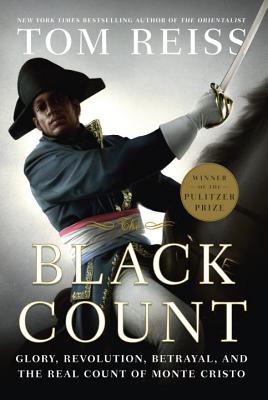
Here is the remarkable true story of the real Count of Monte Cristo – a stunning feat of historical sleuthing that brings to life the forgotten hero who inspired such classics as The Count of Monte Cristo and The Three Musketeers.

The real-life protagonist of The Black Count, General Alex Dumas, is a man almost unknown today yet with a story that is strikingly familiar, because his son, the novelist Alexandre Dumas, used it to create some of the best loved heroes of literature.

Yet, hidden behind these swashbuckling adventures was an even more incredible secret: the real hero was the son of a black slave -- who rose higher in the white world than any man of his race would before our own time.

Born in Saint-Domingue (now Haiti), Alex Dumas was briefly sold into bondage but made his way to Paris where he was schooled as a sword-fighting member of the French aristocracy. Enlisting as a private, he rose to command armies at the height of the Revolution, in an audacious campaign across Europe and the Middle East – until he met an implacable enemy he could not defeat.

The Black Count is simultaneously a riveting adventure story, a lushly textured evocation of 18th-century France, and a window into the modern world’s first multi-racial society. But it is also a heartbreaking story of the enduring bonds of love between a father and son.