"Andrew Pyper is a very interesting writer. I find that he engages my mind with the literary way he writes his characters and how he slowly layers the mystical parts of the story until tension explodes and the horror takes over. That's generally when it get's hard to catch your breath, time to turn on all the lights, and keep turning the pages. The Damned is a very strange for Danny, the main living character in the book, because he can walk through Heaven and Hell as well as the regular world. He needs to find his dead twin sister, who is a very, very unpleasant entity and find out her secret so he can help her leave the living alone, especially him. Pyper's imagination is amazing,his best yet in my mind. Give it a try, if you dare."
One postwar summer in his home of rural Warwickshire, Dr. Faraday, the son of a maid who has built a life of quiet respectability as a country physician, is called to a patient at lonely Hundreds Hall. Home to the Ayres family for over two centuries, the Georgian house, once impressive and handsome, is now in decline, its masonry crumbling, its gardens choked with weeds, the clock in its stable yard permanently fixed at twenty to nine. Its owners—mother, son, and daughter—are struggling to keep pace with a changing society, as well as with conflicts of their own. But are the Ayreses haunted by something more sinister than a dying way of life? Little does Dr. Faraday know how closely, and how terrifyingly, their story is about to become intimately entwined with his.
Lucas says: "This is the perfect read for someone who is looking for a more literary spooky Halloween read. The Little Stranger is a great ghost story and it is also a great reflection on the collapse of British class society after WWII. The story does take a little while to get going, but the last third of the book makes reading through the sluggish beginning worthwhile.
This ghost story has all the creepy elements necessary for a proper British ghost tale: a once grand but now rundown country mansion, an eccentric family who inhabits it, and the strange events that surround the mansion and the family. Waters even manages to throw a love story into the plot. Because this is a ghost story, let me warn you that the love story part of it does not end happily ever after.
As the story progresses out of its doldrums, the reader gets to experience madness, suicide, house fires, and many many many tears of pure terror. This isn't a ghost story that will keep you up at night but it is a ghost story that will keep you thinking and wondering."
Joe Hill, the acclaimed, award-winning author of the New York Times bestsellers Heart-Shaped Box and Horns,
plunges you into the dark side of imagination with a thrilling novel of
supernatural suspense that will have you flinching at shadows and
checking the rearview mirror again and again. . . .
Victoria McQueen has an uncanny knack for finding things: a misplaced
bracelet, a missing photograph, answers to unanswerable questions. When
she rides her bicycle over the rickety old covered bridge in the woods
near her house, she always emerges in the places she needs to be. Vic
doesn't tell anyone about her unusual ability, because she knows no one
will believe her. She has trouble understanding it herself.
Charles Talent Manx has a gift of his own. He likes to take children for
rides in his 1938 Rolls-Royce Wraith with the vanity plate NOS4A2. In
the Wraith, he and his innocent guests can slip out of the everyday
world and onto hidden roads that lead to an astonishing playground of
amusements he calls Christmasland. Mile by mile, the journey across the
highway of Charlie's twisted imagination transforms his precious
passengers, leaving them as terrifying and unstoppable as their
benefactor.
And then comes the day when Vic goes looking for trouble . . . and finds her way, inevitably, to Charlie.
That was a lifetime ago. Now, the only kid ever to escape Charlie's unmitigated evil is all grown up and desperate to forget.
But Charlie Manx hasn't stopped thinking about the exceptional Victoria
McQueen. On the road again, he won't slow down until he's taken his
revenge. He's after something very special—something Vic can never
replace.
As a life-and-death battle of wills builds—her magic pitted against his—Vic McQueen prepares to destroy Charlie once and for all . . . or die trying. . . .
Hank says: "In his third novel, Hill gives himself a broader canvas of 600-some
pages and two more decades to tell a story of good vs.evil than he did in
Heart-Shaped Box or Horns, and the result is a spectacularly exciting
ride, by bicycle, creepy Rolls-Royce, and motorcycle.
Vic McQueen, a
little girl with an otherworldly knack for finding lost things, is the
only child ever to have survived the clutches of serial kidnapper/killer
Charles Talent Manx. Her escape results in his comatose incarceration
in a federal prison, but he's not the only one with unusual abilities.
Years later, Manx fakes his death and slips out, and hits the road
again, in his car with the license plate NOS4A2, this time coming after
Vic's son Wayne, intending to take him to join the other children he's
collected over the years, in a special place called Christmasland....
The good characters, none more than Vic herself, are flawed and
dysfunctional, though in a generally sympathetic way that makes them
more interesting and endearing. Among those who help Vic in her
desperate attempt to retrieve Wayne are a stammering librarian who
divines things using Scrabble tiles, an adversarial but goodhearted FBI
agent, and Vic's ex-husband Lou, the father of Wayne.
It seemed to me for awhile that it was an open secret that Stephen
King is Joe Hill's father, but that he was trying to establish himself
on his own merit, and it wasn't polite to talk about it. Maybe now that
they've collaborated on Road Rage, the cat is out of whatever flimsy bag
it may ever have been in, or maybe it was just my own misperception. In
any case, NOS4A2 contains direct references to several of King's works,
including It, The Dark Tower, and even the forthcoming Doctor Sleep.
Manx's assistant Bing Partridge, aka the Gasmask Man, parrots The Stand's Trashcan Man at one point, and there are less direct
similarities to many others: Firestarter, The Dead Zone, Christine, and
the short story "Mrs. Todd's Shortcut," to name just a few. Hill
dedicates the book to his mom, and it can't be a coincidence that the
FBI agent is named Tabitha! Lovecraft also gets a nod, and his own brief
career has been embellished by many other writers wishing to share in
his literary creation. It's all in good fun, and why not?"
Free
numbered tickets for a place in the signing line will be handed out at
6:00 pm. Seating for the presentation prior to the signing is limited,
and available on a first-come, first-served basis to ticketed customers
only.
In this wry take on the post-apocalyptic horror novel, a pandemic has devastated the planet. The plague has sorted humanity into two types: the uninfected and the infected, the living and the living dead.
Now the plague is receding, and Americans are busy rebuilding civilization under orders from the provisional government based in Buffalo. Their top mission: the resettlement of Manhattan. Armed forces have successfully reclaimed the island south of Canal Street—aka Zone One—but pockets of plague-ridden squatters remain. While the army has eliminated the most dangerous of the infected, teams of civilian volunteers are tasked with clearing out a more innocuous variety—the “malfunctioning” stragglers, who exist in a catatonic state, transfixed by their former lives.
Mark Spitz is a member of one of the civilian teams working in lower Manhattan. Alternating between flashbacks of Spitz’s desperate fight for survival during the worst of the outbreak and his present narrative, the novel unfolds over three surreal days, as it depicts the mundane mission of straggler removal, the rigors of Post-Apocalyptic Stress Disorder, and the impossible job of coming to grips with the fallen world.
And then things start to go wrong.
Both spine chilling and playfully cerebral, Zone One brilliantly subverts the genre’s conventions and deconstructs the zombie myth for the twenty-first century.
Jackie says: "I have, by design and general constitution, largely avoided the whole zombie craze. It's just not my thing. But when a publisher's rep came cloyingly into my office with the latest Colson Whitehead (of "Sag Harbor" fame, among other novels), I happily snapped it up. Then, to my earth shaking surprise, he says, "It's about zombies." Whitehead is known for his high literate style and intense content, something that I though could never be paired with flesh dripping undead beings looking for their next meal. But he does it, and he does it well. I will fully admit that I was bewildered for the first 70 or so pages, because this book starts out smack dab in the middle of the battle of the infected (a plague creates ravenous zombies of it's sufferers) and the (relatively) healthy. The armed forces have done a great deal of the initial extermination, but now there are organized citizen troops looking for the "skels" in a second wave through part of Manhattan--Zone One. Mark Spitz (a nickname, but the only name he's got any more) is the narrating character, and he's learned to be very good with a gun. For the first third of the book, we follow him through his gruesome days, but eventually we start to get the back story of his life and of the massive changes (or ARE they?) to the government and the surviving people--now called "American Phoenixes" in the massive marketing/rebranding of survival created by a brilliant team of spin doctors cached away by what is left of the government (now headquartered in Buffalo). As the book continues, more and more of the whole picture come into place, and Whitehead's critique of today's world, the one I'm writing you from, becomes clearer and sharply pointed. His writing is mesmerizing in its ability to set you down firmly in this horrifying new reality, making reading this book a very visceral experience. I won't lie, his command of the English language sent me to the dictionary more times than I am truly willing to admit to find out what a sentence meant, but it was worth it each time. This man tells a story like no other, and I am deeply, deeply impressed. The blurb on my reader's copy says "dazzling and devastating"--I couldn't agree more."
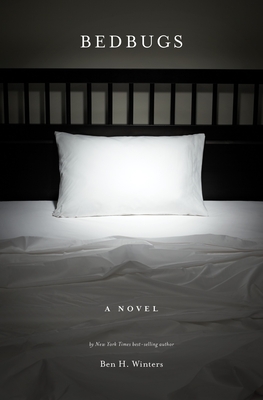
FOR RENT: Top two floors of beautifully renovated brownstone, 1300 sq. ft., 2BR 2BA, eat-in kitchen, one block to parks and playgrounds. No broker’s fee.
Susan and Alex Wendt have found their dream apartment.
Sure, the landlady is a little eccentric. And the elderly handyman drops some cryptic remarks about the basement. But the rent is so low, it’s too good to pass up.
Big mistake. Susan soon discovers that her new home is crawling with bedbugs . . . or is it? She awakens every morning with fresh bites, but neither Alex nor their daughter Emma has a single welt. An exterminator searches the property and turns up nothing. The landlady insists her building is clean. Susan fears she’s going mad—until a more sinister explanation presents itself: she may literally be confronting the bedbug problem from Hell.
Pete says:
"In 'The Sound of Music' Rodgers and Hammerstein pose the question 'How do you solve a problem like Maria?' In this day and age, I'm wondering, how does one sell a book called Bedbugs? Well, I'm certainly up for the challenge. For despite the titular subject matter the book is a lot of fun -- as long as you read it way before bed time. If not you'll be checking under your mattress every ten minutes or so.
Uptight mom Susan has just lucked into a Brooklyn Heights apartment where the rent is not beyond her family's means. Why did the the previous renters leave in such a hurry? Who cares, the rent is low. Isn't that a funny noise that seems to come from nowhere, or a strange smell you can't quite put your finger on? Let it go. It's Brooklyn Heights, right across the East River from Manhattan. You win, right? Wrong. Poor Susan is continuously bitten by bedbugs, but why her and not her husband? They share the same bed. The exterminator says the home is clean, there are no bedbugs. Could it be all in her head? And isn't that the last thing anyone wants to hear? Bedbugs are a terrifying enemy because they're practically invisible. Not like the mole people living in your closet or the monster under your bed.
I would recommend this novel to fans of classic 1970's horror books and movies such as The Exorcist, Rosemary's Baby, and the Amityville Horror. There are even some elements of Oscar Wilde's A Picture of Dorian Gray. If you thought the painting in that one was rough, wait until you add bedbugs to the mix."