Showing posts with label tattered cover recommendations new non-fiction. Show all posts

Monday, December 29, 2014

New Non-Fiction Books

http://bit.ly/1EvJBKu
“We lost the war in southern Afghanistan and it broke my heart.”

So begins Graeme Smith’s The Dogs Are Eating Them Now, and like all heartbreaks, this one happened despite the best intentions. Smith devoted more time to southern Afghanistan than any other Western journalist between 2005 and 2011, and his book offers a candid and critical look at the Taliban’s rising influence and the West’s continued miscalculations.

Smith was not simply embedded with the military: he operated independently and at great personal risk to report from inside the war, and the heroes of his story are the translators, guides, and ordinary citizens who helped him find the truth. They revealed sad, absurd, touching stories that provide the key to understanding why the mission failed to deliver peace and democracy.

For readers of Sebastian Junger, Philip Gourevitch, and Dexter Filkins, The Dogs Are Eating Them Now is a raw, uncensored account of the war in Afghanistan from a brilliant young reporter with unmatched compassion and a rare ability to cut through the noise and see the broader reality.


The first book in a major new trilogy, How to Live: How We Are, How We Break, and How We Mend

We live in small worlds.

How We Are is an astonishing debut and the first part of the monumental How to Live trilogy, a profound and ambitious work that gets to the heart of what it means to be human: how we are, how we break, and how we mend.

In Book One, How We Are, we explore the power of habit and the difficulty of change. As Vincent Deary shows us, we live most of our lives automatically, in small worlds of comfortable routine—what he calls Act One. Conscious change requires deliberate effort, so for the most part we avoid it. But inevitably, from within or without, something comes along to disturb our small worlds—some News from Elsewhere. And with reluctance, we begin the work of adjustment: Act Two.
Over decades of psychotherapeutic work, Deary has witnessed the theater of change—how ordinary people get stuck, struggle with new circumstances, and finally transform for the better. He is keenly aware that novelists, poets, philosophers, and theologians have grappled with these experiences for far longer than psychologists. Drawing on his own personal experience and a staggering range of literary, philosophical, and cultural sources, Deary has produced a mesmerizing and universal portrait of the human condition.

Part psychologist, part philosopher, part novelist, Deary helps us to see how we can resist being habit machines, and make our acts and our lives more fully our own.


http://bit.ly/1CNQdCb
Expanding on her viral post that has become an international phenomenon, a psychotherapist offers simple yet effective solutions for increasing mental strength and finding happiness and success in life.

As a licensed clinical social worker, college psychology instructor, and psychotherapist, Amy Morin has seen countless people choose to succeed despite facing enormous challenges. That resilience inspired her to write 13 Things Mentally Strong People Don't Do, a web post that instantly went viral, and was picked up by the Forbes website.

Morin's post focused on the concept of mental strength, how mentally strong people avoid negative behaviors--feeling sorry for themselves, resenting other people's success, and dwelling on the past. Instead, they focus on the positive to help them overcome challenges and become their best.

In this inspirational, affirmative book, Morin expands upon her original message, providing practical strategies to help readers avoid the thirteen common habits that can hold them back from success. Combining compelling anecdotal stories with the latest psychological research, she offers strategies for avoiding destructive thoughts, emotions, and behaviors common to everyone.

Like physical strength, mental strength requires healthy habits, exercise, and hard work. Morin teaches you how to embrace a happier outlook and arms you to emotionally deal with life's inevitable hardships, setbacks, and heartbreaks--sharing for the first time her own poignant story of tragedy, and how she summoned the mental strength to move on. As she makes clear, mental strength isn't about acting tough; it's about feeling empowered to overcome life's challenges.


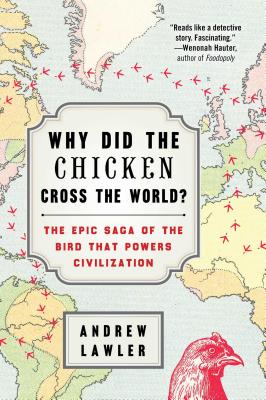
From ancient empires to modern economics, veteran journalist Andrew Lawler delivers a sweeping history of the animal that has been most crucial to the spread of civilization across the globe—the chicken.

Queen Victoria was obsessed with it. Socrates’ last words were about it. Charles Darwin and Louis Pasteur made their scientific breakthroughs using it. Catholic popes, African shamans, Chinese philosophers, and Muslim mystics praised it. Throughout the history of civilization, humans have embraced it in every form imaginable—as a messenger of the gods, powerful sex symbol, gambling aid, emblem of resurrection, all-purpose medicine, handy research tool, inspiration for bravery, epitome of evil, and, of course, as the star of the world’s most famous joke.

In Why Did the Chicken Cross the World?, science writer Andrew Lawler takes us on an adventure from prehistory to the modern era with a fascinating account of the partnership between human and chicken (the most successful of all cross-species relationships). Beginning with the recent discovery in Montana that the chicken’s unlikely ancestor is T. rex, this book builds on Lawler’s popular Smithsonian cover article, “How the Chicken Conquered the World” to track the chicken from its original domestication in the jungles of Southeast Asia some 10,000 years ago to postwar America, where it became the most engineered of animals, to the uncertain future of what is now humanity’s single most important source of protein.

In a masterful combination of historical sleuthing and journalistic exploration on four continents, Lawler reframes the way we feel and think about our most important animal partner—and, by extension, all domesticated animals, and even nature itself.

Lawler’s narrative reveals the secrets behind the chicken’s transformation from a shy jungle bird into an animal of astonishing versatility, capable of serving our species’ changing needs. For no other siren has called humans to rise, shine, and prosper quite like the rooster’s cry: “cock-a-doodle-doo!”


http://bit.ly/1AbSu7W
In her New York Times and USA Today bestseller The Plan, Lyn-Genet Recitas revealed what surprisingly "healthy" foods cause weight gain and a host of other health problems such as migraines, joint pain, and depression.

Now all those who follow The Plan, and have learned which foods to eliminate from their diets, can support their new, healthier lifestyle with these delicious recipes. Recitas includes selections for breakfast, lunch, dinner, snacks, sides, and desserts, such as Panko Crusted Orange Chipotle Chicken, Brazilian Coconut Rice, Provencal Fish with Fennel, Lemon, and Herbs, Red Velvet Cupcakes, and many more. Who says a healthy diet can't be a tasty one?

Wednesday, October 15, 2014

Some of the New Non-Fiction Coming In This Week

http://bit.ly/1uqtAi2
Award-winning novelist Suki Kim's haunting memoir of teaching English to the sons of North Korea's elite during the last six months of Kim Jong Il's reign — a moving and incalculably rare glimpse of life in the world's most unknowable country, and at the privileged young men she calls "soldiers and slaves."

Every day, three times a day, the students march in two straight lines, singing praises to Kim Jong Il and North Korea. It is a chilling scene, but gradually Suki, too, learns the tune and, without noticing, begins to hum it. The year is 2011, and all universities in North Korea have been shut down for an entire year, the students sent to construction fields. Except for the 270 students at Pyongyang University of Science and Technology (PUST)--a prison-like complex where portraits of Kim Il Sung and Kim Jong Il look on impassively from the walls of every room, and where Suki has accepted a job teaching English. Although she's covered North Korea as a journalist for years, the short, regimented foreign press tours reveal very little of the repressive regime, and so she has chosen to live for six months under its watchful eye.

Life at PUST is lonely and claustrophobic, especially for Suki, whose letters are read by censors and who must hide her notes and photographs not only from her minders but from her colleagues--evangelical Christian missionaries who don't know that Suki doesn't share their faith. But she soon grows attached to her students, whose naivete and obedience to the regime she finds heartbreaking.

Over time, she cautiously hints at the existence of a world beyond their own--at such exotic activities as skiing or surfing the Internet and, more dangerously, at electoral democracy and other ideas forbidden in a country where defectors risk torture and execution. The students in turn offer Suki tantalizing glimpses into their lives outside the university walls, sharing their anxieties about girls and their longing to see their families. Then Kim Jong Il dies, leaving the students devastated, and leading Suki to question whether the gulf between her world and theirs can ever be bridged.


http://bit.ly/1vDinZC
The “Alice Waters of American natural perfume” (indieperfume.com) celebrates our most potent sense, through five rock stars of the fragrant world.

Mandy Aftel is widely acclaimed as a trailblazer in natural perfumery. Over two decades of sourcing the finest aromatic ingredients from all over the world and creating artisanal fragrances, she has been an evangelist for the transformative power of scent. In Fragrant, through five major players in the epic of aroma, she explores the profound connection between our sense of smell and the appetites that move us, give us pleasure, make us fully alive.

Cinnamon, queen of the Spice Route, touches our hunger for the unknown, the exotic, the luxurious. Mint, homegrown the world over, speaks to our affinity for the familiar, the native, the authentic. Frankincense, an ancient incense ingredient, taps into our longing for transcendence, while Ambergris embodies our unquenchable curiosity. And exquisite Jasmine exemplifies our yearning for beauty, both evanescent and enduring.

In addition to providing a riveting initiation into the history, natural history, and philosophy of scent, Fragrant imparts the essentials of scent literacy and includes recipes for easy-to-make fragrances and edible, drinkable, and useful concoctions that reveal the imaginative possibilities of creating with—and reveling in—aroma. Vintage line drawings make for a volume that will be a treasured gift as well as a great read.


http://bit.ly/1vI5m20
Neil Young’s first memoir, Waging Heavy Peace, was an international bestseller and critical sensation. The Wall Street Journal wrote that it was “terrific: modest, honest, funny and frequently moving,” while The New York Times found it “as charismatically off the wall as Mr. Young’s records.” Now, in Special Deluxe, Young has fashioned a second work of extraordinary reminiscences about his Canadian boyhood, his musical influences, his family, the rock ’n’ roll life, and one of his deepest, most ebullient passions: cars. Through the framework of the many vehicles he’s collected and driven, Young explores his love for the well-crafted vintage automobile,and examines his newfound awareness of his hobby’s negative environmental impact. With his ferocious devotion to clean energy, he recounts the saga of Lincvolt, his specially modified electric car, and his efforts to demonstrate to lawmakers and consumers how viable non-gas-guzzling vehicles truly can be. Special Deluxe captures Young’s singular lyrical, almost musical, voice. 
Witty, eclectic, and wonderfully candid, Special Deluxe is an unforgettable amalgam of memories, artwork, and political ponderings from one of the most genuine and enigmatic artists of our time.


http://bit.ly/1s2YQDd
Why do we fear vaccines? A provocative examination by Eula Biss, the author of Notes from No Man’s Land, winner of the National Book Critics Circle Award

Upon becoming a new mother, Eula Biss addresses a chronic condition of fear—fear of the government, the medical establishment, and what is in your child’s air, food, mattress, medicine, and vaccines. She finds that you cannot immunize your child, or yourself, from the world.
In this bold, fascinating book, Biss investigates the metaphors and myths surrounding our conception of immunity and its implications for the individual and the social body. As she hears more and more fears about vaccines, Biss researches what they mean for her own child, her immediate community, America, and the world, both historically and in the present moment. She extends a conversation with other mothers to meditations on Voltaire’s Candide, Bram Stoker’s Dracula, Rachel Carson’s Silent Spring, Susan Sontag’s AIDS and Its Metaphors, and beyond. On Immunity is a moving account of how we are all interconnected—our bodies and our fates.
http://bit.ly/1xTLBI9
In this darkly funny work of literary nonfiction, a bookish young woman insinuates herself into the lives of two cage fighters--one a young prodigy, the other an aging journeyman. 
Acclaimed essayist Kerry Howley follows these men for three years through the bloody world of mixed martial arts as they starve themselves, break bones, fail their families and form new ones in the quest to rise from remote Midwestern fairgrounds to packed Vegas arenas. With penetrating intelligence and wry humor, Howley exposes the profundities and absurdities of this American subculture.


http://bit.ly/1pZrBed
The Fall is a memoir like no other. Its 424 short passages match the number of steps taken by Diogo Mainardi's son Tito as he walks, with great difficulty, alongside his father through the streets of Venice, the city where a medical mishap during Tito's birth left him with Cerebral Palsy.

As they make their way toward the hospital where both their lives changed forever, Mainairdi begins to draw on his knowledge of art and history, seeking to better explain a tragedy that was entirely avoidable. From Marcel Proust to Neil Young, to Sigmund Freud to Humpty Dumpty, to Renaissance Venice and Auschwitz, he charts the trajectory of the Western world, with Tito at its center, showing how his fate has been shaped by the past.

Told with disarming simplicity; by turns angry, joyful, and always generous, wise and suprising, The Fall is an astonishing book.

Sunday, March 9, 2014

Mother Nature and Family Both Can Be DangerousTo Your Health

http://bit.ly/1kJyUq3
Meet the Baileys: Burck, a prosperous lawyer once voted the American Legion s Citizen of the Year in his tiny hometown of Vinita, Oklahoma; his wife Marlies, who longs to recapture her festive life in Greenwich Village as a pretty young German immigrant, fresh off the boat; their addled son Scott, who repeatedly crashes the family Porsche; and Blake, the younger son, trying to find a way through the storm. You're gonna be just like me, a drunken Scott taunts him. You're gonna be worse.

Winner of the National Book Critics Circle Award and finalist for the Pulitzer Prize, Blake Bailey has been hailed as "additively readable" (New York Times) and praised for his ability to capture lives
"compellingly and in harrowing detail" (Time). The Splendid Things We Planned is his darkly funny account of growing up in the shadow of an erratic and increasingly dangerous brother, an exhilarating and sometimes harrowing story that culminates in one unforgettable Christmas.


http://bit.ly/1bYHTU6
It may be a wonderful world, but as Dan Riskin (cohost of Discovery Canada's "Daily Planet") explains, it's also a dangerous, disturbing, and disgusting one. At every turn, it seems, living things are trying to eat us, poison us, use our bodies as their homes, or have us spread their eggs. In Mother Nature Is Trying to Kill You, Riskin is our guide through the natural world at its most gloriously ruthless.

Using the seven deadly sins as a road map, Riskin offers dozens of jaw-dropping examples that illuminate how brutal nature can truly be. From slothful worms that hide in your body for up to thirty years to wrathful snails with poisonous harpoons that can kill you in less than five minutes to lustful ducks that have orgasms faster than you can blink, these fascinating accounts reveal the candid truth about "gentle" Mother Nature's true colors.

Riskin's passion for the strange and his enthusiastic expertise bring Earth's most fascinating flora and fauna into vivid focus. Through his adventures-- which include sliding on his back through a thick soup of bat guano just to get face-to-face with a vampire bat, befriending a parasitic maggot that has taken root on his head, and coming to grips with having offspring of his own--Riskin makes unexpected discoveries not just about the world all around us but also about the ways this brutal world has shaped us as humans and what our responsibilities are to this terrible, wonderful planet we call home.

Saturday, October 5, 2013

New Non-Fiction On Our Shelves Now

This game-changing book empowers readers to become confident, independent, wise decision-makers-- savvy to how our emotions, moods, and habits can trip us up.

An investor wonders whether to put his money into the stock market or to keep it in a savings account. A patient is torn between opting for surgery and trying an experimental drug therapy. A college-bound student questions whether to take on debt to attend an Ivy League school or to choose a public institution with low tuition.

We face momentous decisions with important consequences throughout our lives. We have never had better access to information and expertise, yet this data deluge has become a double-edged sword. Which sources of information are credible? How can we separate the signal from the noise? Whose advice can we trust?

All of these questions are reasons for us to become empowered decision-makers capable of making high-stakes choices ourselves. Whether you are a politician, a businessperson, a professional, or a parent, now is the time to take a radically different approach. In Eyes Wide Open, the bestselling author and visionary thinker Noreena Hertz shares insights from the latest research along with practical advice, including why looking at information in black and white rather than in color can lead to better decisions why it's smart to be skeptical about experts' pronouncements, and how to identify the best among them why it's crucial to carve out time to think, even in moments of crisis how and why you should regulate your emotional thermostat to make smart decisions why you need to shake up your social network if you don't want only to reinforce what you already know and amplify the beliefs you already have

It's time to make decisions with our eyes wide open--for the sake of our health, our wealth, and our future security.


No musician has lived a more transformational, or more tragic, life than Charlie Parker, one of the most talented and influential figures of the twentieth century. From the start of his career in the late 1930s, Parker was a new kind of American artist: a revolutionary musician who internalized all of popular music and blew it back through his alto saxophone "at the tempo of emergency"--even as he wrestled with a drug addiction that would ultimately contribute to his death at thirty-four.

Yet no writer has fully captured the arc and texture of Parker's personal story . . . until now. Kansas City Lightning, the first in a two-volume life of Parker by Stanley Crouch, draws on decades of original interviews with peers, collaborators, and family members to reveal Parker as he emerged from the landscapes--literal and artistic--that he inhabited. A precocious child, shy yet self-possessed, Charlie ventured early into the nightlife of wide-open Depression Kansas City, a veritable stomping ground for such bandleaders as Walter Page, Bennie Moten, and Moten's successor, Count Basie, the king of Kansas City swing. Inspired by saxophonists Lester Young and Chu Berry, trumpeter Roy Eldridge, and his mentor Buster Smith, Parker endured initial humiliation on the bandstand--yet persevered until he mastered the idiom and began to transcend it.

Kansas City Lightning follows Parker from the "freak shows" and "spook breakfasts" of late-night Kansas City, to the segregated union halls of Chicago, and finally to New York's Harlem ballrooms. Most intimately, it brings us into young Charlie Parker's family circle, as he plunged headlong into a very adult world--lured by both music and drugs, torn between his oddly protective mother and Rebecca Ruffin, the impressionable young woman whose romance with Charlie is at the bittersweet heart of this story.

With the musical wisdom of a lifetime jazz scholar, the cultural insights of an indispensable social critic, and the narrative skill of a writer at the height of his powers, Crouch brings Parker back to glorious, surprising, and deeply moving life.


With the 2006 publication of The God Delusion, the name Richard Dawkins became a byword for ruthless skepticism and "brilliant, impassioned, articulate, impolite" debate (San Francisco Chronicle). his first memoir offers a more personal view.

His first book, The Selfish Gene, caused a seismic shift in the study of biology by proffering the gene-centered view of evolution. It was also in this book that Dawkins coined the term meme, a unit of cultural evolution, which has itself become a mainstay in contemporary culture.

In An Appetite for Wonder, Richard Dawkins shares a rare view into his early life, his intellectual awakening at Oxford, and his path to writing The Selfish Gene. He paints a vivid picture of his idyllic childhood in colonial Africa, peppered with sketches of his colorful ancestors, charming parents, and the peculiarities of colonial life right after World War II. At boarding school, despite a near-religious encounter with an Elvis record, he began his career as a skeptic by refusing to kneel for prayer in chapel. Despite some inspired teaching throughout primary and secondary school, it was only when he got to Oxford that his intellectual curiosity took full flight.

Arriving at Oxford in 1959, when undergraduates "left Elvis behind" for Bach or the Modern Jazz Quartet, Dawkins began to study zoology and was introduced to some of the university's legendary mentors as well as its tutorial system. It's to this unique educational system that Dawkins credits his awakening, as it invited young people to become scholars by encouraging them to pose rigorous questions and scour the library for the latest research rather than textbook "teaching to" any kind of test. His career as a fellow and lecturer at Oxford took an unexpected turn when, in 1973, a serious strike in Britain caused prolonged electricity cuts, and he was forced to pause his computer-based research. Provoked by the then widespread misunderstanding of natural selection known as "group selection" and inspired by the work of William Hamilton, Robert Trivers, and John Maynard Smith, he began to write a book he called, jokingly, "my bestseller." It was, of course, The Selfish Gene.

Here, for the first time, is an intimate memoir of the childhood and intellectual development of the evolutionary biologist and world-famous atheist, and the story of how he came to write what is widely held to be one of the most important books of the twentieth century.


In June 1967, Israel achieved the unimaginable--a decisive victory against Egypt, Jordan, and Syria in the Six-Day War. The most symbolic triumph for the young nation was the reunification of Israeli West Jerusalem and Jordanian East Jerusalem, achieved at great cost by a group of paratroopers from the 55th Paratroopers Reserve Brigade. In restoring Jewish sovereignty to the Holy City, these men fulfilled the dream of two millennia, changing the history of Israel and of the Middle East. And as veteran journalist Yossi Klein Halevi shows in Like Dreamers, they played pivotal roles in shaping Israel's destiny long after their resounding military success.

A masterful storyteller, Halevi tracks down seven members of the 55th Brigade and traces their lives through the decades following the Six-Day War. But as his narrative reveals, despite the intensity of their shared experience protecting Israel, in their postwar paths they nurture drastically divergent visions for the country's future. Yoel Bin-Nun emerges at the forefront of the religious Zionist West Bank settlement movement, but Arik Achmon--the chief intelligence officer of the 55th--becomes a spiritual father of the unilateral withdrawal from Gaza in 2005. Achmon becomes a driving force in the growth of Israel's capitalist economy, whereas Avital Geva, in addition to building a reputation as a leading conceptual artist, ardently defends the socialist kibbutzim. And while Geva is among the foremost activists in Peace Now, Udi Adiv helps create an anti-Zionist terror underground in Damascus, eventually serving twelve years in an Israeli prison.

Charting the ideological differences among this band of brothers, Halevi weaves a nuanced and insightful chronicle of modern Israel. His fascinating, diligently researched examination of each man's motivations and actions--supported by extensive interviews with their friends, family members, and comrades-in-arms--humanizes the country 's complex political landscape, facilitating a deeper understanding of the forces that influence its evolution as a state.


Strings Attached is the story of a brilliant but ferocious music teacher who came to be known as "Mr. K" told in the alternating first person perspectives of his former student—award-winning journalist Joanne Lipman—and his daughter—Chicago Symphony Orchestra violinist Melanie Kupchynsky.

A Ukrainian immigrant who survived an abusive childhood, Mr. K used music as a means of escape. The authors bring the extraordinary character of Mr. K to life—from his days as a forced Nazi laborer to his home life as a husband to an invalid wife to the terrifying challenges he hurtled from behind the music stand, in a thick Ukrainian accent.

Mr. K pushed his students harder than their parents, harder than their other teachers and coaches, and through sheer force of will made them better than they had any right to be. It wasn’t until years later that his students realized how much they loved him for it. At Mr. K's memorial service, three generations of students flew in from all over the country to play a concert in his memory, having finally understood his tough lessons.

Mr. K’s subject was music, but the lessons he taught were universal ones about resilience, the power of a “can do” attitude, and achieving excellence in life. Strings Attached tells Mr. K’s story—a narrative that is itself as absorbing as fiction—giving readers the opportunity to experience the lessons of the world’s toughest teacher for themselves.
 
 
When acclaimed author Deni Béchard learned of the last living bonobos—matriarchal great apes that are, alongside chimpanzees, our closest relatives in the animal kingdom—he was astonished. How could we accept the disappearance of this majestic species, along with the rainforest it calls home?

As he looked more closely, Béchard discovered that one relatively small organization, the Bonobo Conservation Initiative (BCI), has done more to save bonobos than a number of far larger organizations. In contrast to many traditional conservation groups, BCI does not impose a system on Congolese communities. It approaches conservation as a process of exchange, in which the rainforest’s people teach conservationists to understand the local culture and ecosystem. BCI then partners with village leaders, helping them strengthen their communities and address the unemployment and lack of education that lead to the hunting of bonobos. The result is a truly postcolonial model of conservation. And because the local people feel that it emerges from their culture, they replicate its projects independently.

The struggle to prevent the extinction of bonobos is far from easy, to be sure. The Congo has been devastated by war and aggressive resource extraction, and its people are often skeptical of foreign intervention. But Béchard’s moving account—based on travels in the Congo and hundreds of interviews—reminds us that poverty does not equate to ignorance, that change requires more than wealth and power, and that only through collaboration can we make conservation go viral. 
 
 
From one of our most accomplished and widely admired historians, a revelatory portrait of Benjamin Franklin’s youngest sister and a history of history itself. Like her brother, Jane Franklin was a passionate reader, a gifted writer, and an astonishingly shrewd political commentator. Unlike him, she was a mother of twelve.

Benjamin Franklin, who wrote more letters to his sister than he wrote to anyone else, was the original American self-made man; his sister spent her life caring for her children. They left very different traces behind. Making use of an amazing cache of little-studied material, including documents, objects, and portraits only just discovered, Jill Lepore brings Jane Franklin to life in a way that illuminates not only this one woman but an entire world—a world usually lost to history. Lepore’s life of Jane Franklin, with its strikingly original vantage on her remarkable brother, is at once a wholly different account of the founding of the United States and one of the great untold stories of American history and letters: a life unknown.

Sunday, September 22, 2013

New Non-Fiction On Our Shelves

In this searing and surprising memoir, Samantha Geimer, "the girl" at the center of the infamous Roman Polanski sexual assault case, breaks a virtual thirty-five-year silence to tell her story and reflect on the events of that day and their lifelong repercussions.

March 1977, Southern California. Roman Polanski drives a rented Mercedes along Mulholland Drive to Jack Nicholson's house. Sitting next to him is an aspiring actress, Samantha Geimer, recently arrived from York, Pennsylvania. She is thirteen years old.

The undisputed facts of what happened in the following hours appear in the court record: Polanski spent hours taking pictures of Samantha on a deck overlooking the Hollywood Hills, on a kitchen counter, topless in a Jacuzzi. Wine and Quaaludes were consumed, balance and innocence were lost, and a young girl's life was altered forever—eternally cast as a background player in her own story.

For months on end, the Polanski case dominated the media in the US and abroad. But even with the extensive coverage, much about that day and the girl at the center of it all remains a mystery. Just about everyone had an opinion about the renowned director and the girl he was accused of drugging and raping. Who was the predator? Who was the prey? Was the girl an innocent victim or a cunning Lolita artfully directed by her ambitious stage mother? How could the criminal justice system have failed all the parties concerned in such a spectacular fashion? Once Polanski fled the country, what became of Samantha, the young girl forever associated with one of Hollywood's most notorious episodes? Samantha, as much as Polanski, has been a fugitive since the events of that night more than thirty years ago.

Taking us far beyond the headlines, The Girl reveals a thirteen-year-old who was simultaneously wise beyond her years and yet terribly vulnerable. By telling her story in full for the first time, Samantha reclaims her identity, and indelibly proves that it is possible to move forward from victim to survivor, from confusion to certainty, from shame to strength.


Enter a world of tender friendships, staunch loyalties, violent jealousies--and enduring love.

As a child, Sheri Speede knew that she wanted to advocate for animals in any way she could. But it was not until many years after veterinary school, when she was transporting a chimpanzee named Pierre away from a biomedical facility as part of her job as a conservation advocate in Cameroon, that Dr. Speede discovered her true calling. She began to search for land for a forest sanctuary for captive chimpanzees that were held on chains and in small cages at local hotels.

Dr. Speede eventually founded the Sanaga-Yong Chimpanzee Rescue Center, a forested home for orphans of the illegal ape meat trade. One chim- panzee, Dorothy, was rescued by Dr. Speede and her colleagues from a bleak existence imprisoned on a chain and forged a deep friendship with her. Dr. Speede explains how chimpanzees, like humans, are capable of a broad spectrum of emotional behaviors--both hateful and loving. Dr. Speede also candidly reveals her own struggles as a stranger in a foreign culture trying to adjust to rural African village life. And she admits that unlike Dorothy, she was not always kind, gentle, and forgiving.

Dorothy died of old age at the sanctuary, and a photograph of Dorothy's funeral, in which Dr. Speede cradled Dorothy's head while her family of chimpanzees mournfully viewed her body, went viral after being published in National Geographic. The world was surprised at the depth of the chimps' grief at the loss of their friend, but Dr. Speede was not. Through the chimps, she had come to understand the meaning of love, loyalty, and true connection.

While this is a compelling story about the emotional complexity of the chimpanzees she rescued and befriended, it is also Dr. Speede's story. Major events in her personal life, including love affairs, dangerous run-ins with criminals, and the birth of her daughter, unfold as the development of her primate rescue center runs parallel to her own development. Ultimately, Kindred Beings is a story of profound resilience, of both the apes and the woman who loved them.


 It's undeniable—technology is changing the way we think. But is it for the better? Amid a chorus of doomsayers, Clive Thompson delivers a resounding "yes." The Internet age has produced a radical new style of human intelligence, worthy of both celebration and analysis. We learn more and retain it longer, write and think with global audiences, and even gain an ESP-like awareness of the world around us. Modern technology is making us smarter, better connected, and often deeper—both as individuals and as a society.

In Smarter Than You Think Thompson shows that every technological innovation—from the written word to the printing press to the telegraph—has provoked the very same anxieties that plague us today. We panic that life will never be the same, that our attentions are eroding, that culture is being trivialized. But as in the past, we adapt—learning to use the new and retaining what’s good of the old.

Thompson introduces us to a cast of extraordinary characters who augment their minds in inventive ways. There's the seventy-six-year old millionaire who digitally records his every waking moment—giving him instant recall of the events and ideas of his life, even going back decades. There's a group of courageous Chinese students who mounted an online movement that shut down a $1.6 billion toxic copper plant. There are experts and there are amateurs, including a global set of gamers who took a puzzle that had baffled HIV scientists for a decade—and solved it collaboratively in only one month.

Smarter Than You Think isn't just about pioneers. It's about everyday users of technology and how our digital tools—from Google to Twitter to Facebook and smartphones—are giving us new ways to learn, talk, and share our ideas. Thompson harnesses the latest discoveries in social science to explore how digital technology taps into our long-standing habits of mind—pushing them in powerful new directions. Our thinking will continue to evolve as newer tools enter our lives. Smarter Than You Think embraces and extols this transformation, presenting an exciting vision of the present and the future.