Showing posts with label tattered cover recommendations history. Show all posts

Sunday, February 2, 2014

“Kertzer unravels the relationship between two of twentieth-century Europe’s most important political figures and does so in an accessible style that makes for a fast-paced must-read.”—Publishers Weekly

http://bit.ly/1hBMhXK

From National Book Award finalist David I. Kertzer comes the gripping story of Pope Pius XI’s secret relations with Italian dictator Benito Mussolini. This groundbreaking work, based on seven years of research in the Vatican and Fascist archives, including reports from Mussolini’s spies inside the highest levels of the Church, will forever change our understanding of the Vatican’s role in the rise of Fascism in Europe.

The Pope and Mussolini tells the story of two men who came to power in 1922, and together changed the course of twentieth-century history. In most respects, they could not have been more different. One was scholarly and devout, the other thuggish and profane. Yet Pius XI and “Il Duce” had many things in common. They shared a distrust of democracy and a visceral hatred of Communism. Both were prone to sudden fits of temper and were fiercely protective of the prerogatives of their office. (“We have many interests to protect,” the Pope declared, soon after Mussolini seized control of the government in 1922.) Each relied on the other to consolidate his power and achieve his political goals.

In a challenge to the conventional history of this period, in which a heroic Church does battle with the Fascist regime, Kertzer shows how Pius XI played a crucial role in making Mussolini’s dictatorship possible and keeping him in power. In exchange for Vatican support, Mussolini restored many of the privileges the Church had lost and gave in to the pope’s demands that the police enforce Catholic morality. Yet in the last years of his life—as the Italian dictator grew ever closer to Hitler—the pontiff’s faith in this treacherous bargain started to waver. With his health failing, he began to lash out at the Duce and threatened to denounce Mussolini’s anti-Semitic racial laws before it was too late. Horrified by the threat to the Church-Fascist alliance, the Vatican’s inner circle, including the future Pope Pius XII, struggled to restrain the headstrong pope from destroying a partnership that had served both the Church and the dictator for many years.

The Pope and Mussolini brims with memorable portraits of the men who helped enable the reign of Fascism in Italy: Father Pietro Tacchi Venturi, Pius’s personal emissary to the dictator, a wily anti-Semite known as Mussolini’s Rasputin; Victor Emmanuel III, the king of Italy, an object of widespread derision who lacked the stature—literally and figuratively—to stand up to the domineering Duce; and Cardinal Secretary of State Eugenio Pacelli, whose political skills and ambition made him Mussolini’s most powerful ally inside the Vatican, and positioned him to succeed the pontiff as the controversial Pius XII, whose actions during World War II would be subject for debate for decades to come.

With the recent opening of the Vatican archives covering Pius XI’s papacy, the full story of the Pope’s complex relationship with his Fascist partner can finally be told. Vivid, dramatic, with surprises at every turn, The Pope and Mussolini is history writ large and with the lightning hand of truth.

Saturday, November 9, 2013

“Kurin [has] done a masterful job. Even… well-known items have surprising and significant back stories. Unexpected selections… make the book even more engrossing, and… can make for some emotional reading. Kurin does a terrific job of expanding upon the story of each object, whether it’s a pair of slave shackles or a damaged door from one of the New York City fire trucks that responded to 9/11. This humanistic approach to storytelling makes for immersive, addictive reading.” ~Publishers Weekly

http://bit.ly/1b2UDCw

The Smithsonian Institution is America's largest, most important, and most beloved repository for the objects that define our common heritage. Now Under Secretary for Art, History, and Culture Richard Kurin, aided by a team of top Smithsonian curators and scholars, has assembled a literary exhibition of 101 objects from across the Smithsonian's museums that together offer a marvelous new perspective on the history of the United States.

Ranging from the earliest years of the pre-Columbian continent to the digital age, and from the American Revolution to Vietnam, each entry pairs the fascinating history surrounding each object with the story of its creation or discovery and the place it has come to occupy in our national memory. Kurin sheds remarkable new light on objects we think we know well, from Lincoln's hat to Dorothy's ruby slippers and Julia Child's kitchen, including the often astonishing tales of how each made its way into the collections of the Smithsonian. Other objects will be eye-opening new discoveries for many, but no less evocative of the most poignant and important moments of the American experience. Some objects, such as Harriet Tubman's hymnal, Sitting Bull's ledger, Cesar Chavez's union jacket, and the Enola Gay bomber, tell difficult stories from the nation's history, and inspire controversies when exhibited at the Smithsonian. Others, from George Washington's sword to the space shuttle Discovery, celebrate the richness and vitality of the American spirit. In Kurin's hands, each object comes to vivid life, providing a tactile connection to American history.

Beautifully designed and illustrated with color photographs throughout, The Smithsonian's History of America in 101 Objects is a rich and fascinating journey through America's collective memory, and a beautiful object in its own right.


Wednesday, December 21, 2011

For the History Lovers

A Little History of the World
E. H. Gombrich's Little History of the World, though written in 1935, has become one of the treasures of historical writing since its first publication in English in 2005. The Yale edition alone has now sold over half a million copies, and the book is available worldwide in almost thirty languages.

Gombrich was of course the best-known art historian of his time, and his text suggests illustrations on every page. This illustrated edition of the Little History brings together the pellucid humanity of his narrative with the images that may well have been in his mind's eye as he wrote the book. The two hundred illustrations—most of them in full color—are not simple embellishments, though they are beautiful. They emerge from the text, enrich the author's intention, and deepen the pleasure of reading this remarkable work.

For this edition the text is reset in a spacious format, flowing around illustrations that range from paintings to line drawings, emblems, motifs, and symbols. The book incorporates freshly drawn maps, a revised preface, and a new index.  Blending high-grade design, fine paper, and classic binding, this is both a sumptuous gift book and an enhanced edition of a timeless account of human history.


The Destiny of the Republic
James A. Garfield was one of the most extraordinary men ever elected president. Born into abject poverty, he rose to become a wunderkind scholar, a Civil War hero, and a renowned and admired reformist congressman. Nominated for president against his will, he engaged in a fierce battle with the corrupt political establishment. But four months after his inauguration, a deranged office seeker tracked Garfield down and shot him in the back.


But the shot didn’t kill Garfield. The drama of what hap­pened subsequently is a powerful story of a nation in tur­moil. The unhinged assassin’s half-delivered strike shattered the fragile national mood of a country so recently fractured by civil war, and left the wounded president as the object of a bitter behind-the-scenes struggle for power—over his administration, over the nation’s future, and, hauntingly, over his medical care. A team of physicians administered shockingly archaic treatments, to disastrous effect. As his con­dition worsened, Garfield received help: Alexander Graham Bell, the inventor of the telephone, worked around the clock to invent a new device capable of finding the bullet.


Meticulously researched, epic in scope, and pulsating with an intimate human focus and high-velocity narrative drive, The Destiny of the Republic will stand alongside The Devil in the White City and The Professor and the Madman as a classic of narrative history.


Pearl Harbor Christmas
Christmas 1941 came little more than two weeks after the attack on Pearl Harbor. The shock—in some cases overseas, elation—was worldwide. While Americans attempted to go about celebrating as usual, the reality of the just-declared war was on everybody’s mind. United States troops on Wake Island were battling a Japanese landing force and, in the Philippines, losing the fight to save Luzon. In Japan, the Pearl Harbor strike force returned to Hiroshima Bay and toasted its sweeping success. Across the Atlantic, much of Europe was frozen in grim Nazi occupation.


Just three days before Christmas, Churchill surprised Roosevelt with an unprecedented trip to Washington, where they jointly lit the White House Christmas tree. As the two Allied leaders met to map out a winning wartime strategy, the most remarkable Christmas of the century played out across the globe.


 Catherine the Great
 Born into a minor noble family, Catherine transformed herself into Empress of Russia by sheer determination. Possessing a brilliant mind and an insatiable curiosity as a young woman, she devoured the works of Enlightenment philosophers and, when she reached the throne, attempted to use their principles to guide her rule of the vast and backward Russian empire. She knew or corresponded with the preeminent historical figures of her time: Voltaire, Diderot, Frederick the Great, Empress Maria Theresa of Austria, Marie Antoinette, and, surprisingly, the American naval hero, John Paul Jones.

Reaching the throne fired by Enlightenment philosophy and determined to become the embodiment of the “benevolent despot” idealized by Montesquieu, she found herself always contending with the deeply ingrained realities of Russian life, including serfdom. She persevered, and for thirty-four years the government, foreign policy, cultural development, and welfare of the Russian people were in her hands. She dealt with domestic rebellion, foreign wars, and the tidal wave of political change and violence churned up by the French Revolution that swept across Europe. Her reputation depended entirely on the perspective of the speaker. She was praised by Voltaire as the equal of the greatest of classical philosophers; she was condemned by her enemies, mostly foreign, as “the Messalina of the north.”

Catherine’s family, friends, ministers, generals, lovers, and enemies—all are here, vividly described. These included her ambitious, perpetually scheming mother; her weak, bullying husband, Peter (who left her lying untouched beside him for nine years after their marriage); her unhappy son and heir, Paul; her beloved grandchildren; and her “favorites”—the parade of young men from whom she sought companionship and the recapture of youth as well as sex. Here, too, is the giant figure of Gregory Potemkin, her most significant lover and possible husband, with whom she shared a passionate correspondence of love and separation, followed by seventeen years of unparalleled mutual achievement.


Civilization:The West and the Rest
The rise to global predominance of Western civilization is the single most important historical phenomenon of the past five hundred years. All over the world, an astonishing proportion of people now work for Western-style companies, study at Western-style universities, vote for Western-style governments, take Western medicines, wear Western clothes, and even work Western hours. Yet six hundred years ago the petty kingdoms of Western Europe seemed unlikely to achieve much more than perpetual internecine warfare. It was Ming China or Ottoman Turkey that had the look of world civilizations. How did the West overtake its Eastern rivals? And has the zenith of Western power now passed?


In Civilization: The West and the Rest, bestselling author Niall Ferguson argues that, beginning in the fifteenth century, the West developed six powerful new concepts that the Rest lacked: competition, science, the rule of law, consumerism, modern medicine, and the work ethic. These were the "killer applications" that allowed the West to leap ahead of the Rest, opening global trade routes, exploiting newly discovered scientific laws, evolving a system of representative government, more than doubling life expectancy, unleashing the Industrial Revolution, and embracing a dynamic work ethic. Civilization shows just how fewer than a dozen Western empires came to control more than half of humanity and four fifths of the world economy.


Yet now, Ferguson argues, the days of Western predominance are numbered-not because of clashes with rival civilizations, but simply because the Rest have now downloaded the six killer apps we once monopolized-while the West has literally lost faith in itself.

Civilization does more than tell the gripping story of the West's slow rise and sudden demise; it also explains world history with verve, clarity, and wit. Controversial but cogent and compelling, Civilization is Ferguson at his very best.


 Almost President
As the 2012 presidential campaign begins, Almost President profiles a dozen men who have run for the American presidency and lost—but who, even in defeat, have had a greater impact on American history than many of those who have served as president. Scott Farris tells us the stories of legendary figures from Henry Clay to Stephen Douglas, William Jennings Bryan to Thomas Dewey. He also includes mini-profiles on every major candidate nominated for president who never reached the White House but who helped ensure the success of American democracy.

Farris explains how Barry Goldwater achieved the party realignment that had eluded FDR, how George McGovern paved the way for Barack Obama, and how Ross Perot changed the way all presidential candidates campaign. There is Al Smith, the first Catholic nominee for president; and Adlai Stevenson, the candidate of the “eggheads” who remains the beau ideal of a liberal statesman. Others covered by this book include Al Gore, John Kerry, and John McCain. The mini profiles also include evocative portraits of such men as John C. Fremont, the first Republican Party presidential candidate; and General Winfield Scott, whose loss helped guarantee the Union victory in the Civil War.

Sunday, December 11, 2011

Imagining The LIfe of the Man Who Changed How We Eat

A breathtaking novel, rare and moving, about the world's greatest chef and his unruly heart.

White Truffles in Winter imagines the world of the remarkable French chef Auguste Escoffier (1846-1935), who changed how we eat through his legendary restaurants at the Savoy and the Ritz. A man of contradictions-kind yet imperious, food-obsessed yet rarely hungry-Escoffier was also torn between two women: the famous, beautiful, and reckless actress Sarah Bernhardt and his wife, the independent and sublime poet Delphine Daffis, who refused ever to leave Monte Carlo. In the last year of Escoffier's life, in the middle of writing his memoirs, he has returned to Delphine, who requests a dish in her name as he has honored Bernhardt, Queen Victoria, and many others. How does one define the complexity of love on a single plate? N. M. Kelby brings us the sensuality of food and love amid a world on the verge of war in this work that shimmers with beauty and longing.

Want his recipes?  Try these books:

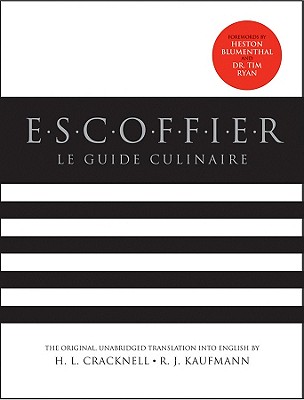
Escoffier: Le Guide Culinaire
The culinary bible that first codified French cuisine now in an updated English translation with Forewords from Chefs Heston Blumenthal and Tim Ryan.

When Georges Auguste Escoffier published the first edition of Le Guide Culinaire in 1903, it instantly became the must-have resource for understanding and preparing French cuisine. More than a century later, it remains the classic reference for professional chefs. This book is the only completely authentic, unabridged English translation of Escoffier's classic work.

Translated from the 1921 Fourth Edition, this revision includes all-new Forewords by Heston Blumenthal, chef-owner of the Michelin three-star-rated Fat Duck restaurant, and Chef Tim Ryan, President of The Culinary Institute of America, along with Escoffier's original Forewords, a memoir of the great chef by his grandson Pierre, and more than 5,000 narrative recipes for all the staples of French cuisine.


  • Includes more than 5,000 recipes in narrative form for everything from sauces, soups, garnishes, and hors d'oeuvres to fish, meats, poultry, and desserts

  • Ideal for professional chefs, culinary students, serious home cooks, food history buffs, and unrepentant foodies

  • The only unabridged English translation of Escoffier's original text, in a sleek, modern designFor anyone who is serious about French food, modern cooking, or culinary history, "Escoffier's Complete Guide to the Art of Modern Cookery" is the ultimate guide and cookbook.


  • The Escoffier Cookbook
    An American translation of the definitive Guide Culinaire, the Escoffier Cookbook includes weights, measurements, quantities, and terms according to American usage. Features 2,973 recipes.

    Sunday, November 27, 2011

    Perhaps the First Book Written By an "Atrocitologist"

    A compulsively readable and utterly original account of world history-from an atrocitologist's point of view.
     
    Evangelists of human progress meet their opposite in Matthew White's epic examination of history's one hundred most violent events, or, in White's piquant phrasing, "the numbers that people want to argue about." Reaching back to 480 BCE's second Persian War, White moves chronologically through history to this century's war in the Congo and devotes chapters to each event, where he surrounds hard facts (time and place) and succinct takeaways (who usually gets the blame?) with lively military, social, and political histories. With the eye of a seasoned statistician, White assigns each entry a ranking based on body count, and in doing so he gives voice to the suffering of ordinary people that, inexorably, has defined every historical epoch. By turns droll, insightful, matter-of-fact, and ultimately sympathetic to those who died, The Great Big Book of Horrible Things gives readers a chance to reach their own conclusions while offering a stark reminder of the darkness of the human heart.

    Sunday, November 13, 2011

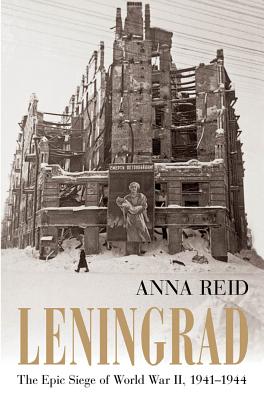
    Anna Reid Calls It, Convincingly, ‘the deadliest blockade of a city in histroy.""

    On September 8, 1941, eleven weeks after Hitler launched Operation Barbarossa, his brutal surprise attack on the Soviet Union, Leningrad was surrounded. The siege was not lifted for two and a half years, by which time some three quarters of a million Leningraders had died of starvation.

    Anna Reid's Leningrad is a gripping, authoritative narrative history of this dramatic moment in the twentieth century, interwoven with indelible personal accounts of daily siege life drawn from diarists on both sides. They reveal the Nazis' deliberate decision to starve Leningrad into surrender and Hitler's messianic miscalculation, the incompetence and cruelty of the Soviet war leadership, the horrors experienced by soldiers on the front lines, and, above all, the terrible details of life in the blockaded city: the relentless search for food and water; the withering of emotions and family ties; looting, murder, and cannibalism- and at the same time, extraordinary bravery and self-sacrifice.

    Stripping away decades of Soviet propaganda, and drawing on newly available diaries and government records, Leningrad also tackles a raft of unanswered questions: Was the size of the death toll as much the fault of Stalin as of Hitler? Why didn't the Germans capture the city? Why didn't it collapse into anarchy? What decided who lived and who died? Impressive in its originality and literary style, Leningrad gives voice to the dead and will rival Anthony Beevor's classic Stalingrad in its impact.

    Monday, October 17, 2011

    A Riveting Tale of the Great Cultural "Swerve" Known As The Renaissance

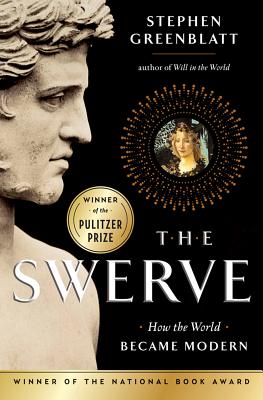
    The Swerve

    One of the world's most celebrated scholars, Stephen Greenblatt has crafted both an innovative work of history and a thrilling story of discovery, in which one manuscript, plucked from a thousand years of neglect, changed the course of human thought and made possible the world as we know it.

    Nearly six hundred years ago, a short, genial, cannily alert man in his late thirties took a very old manuscript off a library shelf, saw with excitement what he had discovered, and ordered that it be copied. That book was the last surviving manuscript of an ancient Roman philosophical epic, On the Nature of Things, by Lucretius-a beautiful poem of the most dangerous ideas: that the universe functioned without the aid of gods, that religious fear was damaging to human life, and that matter was made up of very small particles in eternal motion, colliding and swerving in new directions.

    The copying and translation of this ancient book-the greatest discovery of the greatest book-hunter of his age-fueled the Renaissance, inspiring artists such as Botticelli and thinkers such as Giordano Bruno; shaped the thought of Galileo and Freud, Darwin and Einstein; and had a revolutionary influence on writers such as Montaigne and Shakespeare and even Thomas Jefferson.

    Listen to what they are saying about the book on NPR, and follow the link there to read an excerpt of the book.

    Sunday, July 10, 2011

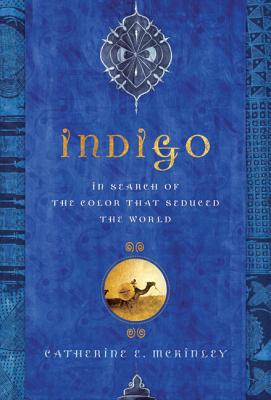
    The Long and Fascinating History of the Color Indigo

    For almost five millennia, in every culture and in every major religion, indigo-a blue pigment obtained from the small green leaf of a parasitic shrub through a complex process that even scientists still regard as mysterious-has been at the center of turbulent human encounters.

    Indigo is the story of this precious dye and its ancient heritage: its relationship to slavery as the "hidden half" of the transatlantic slave trade, its profound influence on fashion, and its spiritual significance, which is little recognized but no less alive today. It is an untold story, brimming with rich, electrifying tales of those who shaped the course of colonial history and a world economy.

    But Indigo is also the story of a personal quest: Catherine McKinley is the descendant of a clan of Scots who wore indigo tartan as their virile armor; the kin of several generations of Jewish "rag traders"; the maternal granddaughter of a Massachusetts textile factory owner; and the paternal granddaughter of African slaves-her ancestors were traded along the same Saharan routes as indigo, where a length of blue cotton could purchase human life. McKinley's journey in search of beauty and her own history ultimately leads her to a new and satisfying path, to finally "taste life." With its four-color photo insert and sumptuous design, Indigo will be as irresistible to look at as it is to read.

    Listen to McKinley talking about her book earlier this month.

    Friday, July 2, 2010

    Katie S recommends:


    For the first time: a full-color illustrated edition of Dee Brown’s classic history of the American West!

    Eloquent, heartbreaking, and meticulously documented, Bury My Heart at Wounded Knee follows the systematic destruction of the American Indian during the second half of the 19th century. Upon its publication in 1970, the book was universally lauded and became a cultural phenomenon that proved instrumental in transforming public perceptions of manifest destiny and the “winning” of the West.

    Using council records, autobiographies, and firsthand descriptions, Brown’s work highlighted the voices of those American Indians who actually experienced the battles, massacres, and broken treaties. Here is their view of the events that ultimately left them demoralized and defeated, including: the Battle of Sand Creek; Red Cloud’s War; the Battle of the Little Bighorn; and, of course, the Wounded Knee Massacre. Crazy Horse, Red Cloud, Sitting Bull, and Spotted Tail—the great chiefs and warriors of the Dakota, Ute, Cheyenne, and other tribes—come to life through their own words and formal portraits.

    Now, hundreds of illustrations—including maps, photographs, sketches, and paintings—enhance Brown’s masterpiece, making it even more vivid and personal. In addition to the incredible images, this edition also features relevant excerpts from such highly acclaimed Native-American themed books as Where White Men Fear to Tread by Russell Means, Mystic Chords of Memory by Michael Kammen, and Lakota Woman by Mary Crow Dog, as well as all-new essays by contemporary historians and Native American leaders like Elliott West and Joseph Marshall III.

    Wednesday, June 30, 2010

    A Whole Lot of History Covered Between Their Covers

    A People's History of the United States
    Known for its lively, clear prose as well as its scholarly research, A People's History of the United States is the only volume to tell America's story from the point of view of -- and in the words of -- America's women, factory workers, African-Americans, Native Americans, working poor, and immigrant laborers. This P.S. edition features an extra 16 pages of insights into the book, including author interviews, recommended reading, and more.


    A People's History of the World

    Chris Harman describes the shape and course of human history as a narrative of ordinary people forming and re-forming complex societies in pursuit of common human goals. Interacting with the forces of technological change as well as the impact of powerful individuals and revolutionary ideas, these societies have engendered events familiar to every schoolchild - from the empires of antiquity to the world wars of the twentieth century.

    In a bravura conclusion, Chris Harman exposes the reductive complacency of contemporary capitalism, and asks, in a world riven as never before by suffering and inequality, why we imagine that it can - or should - survive much longer. Ambitious, provocative and invigorating, A People's History of the World delivers a vital corrective to traditional history, as well as a powerful sense of the deep currents of humanity which surge beneath the froth of government.

    A Short History of Nearly Everything
    One of the world’s most beloved and bestselling writers takes his ultimate journey -- into the most intriguing and intractable questions that science seeks to answer.

    In A Walk in the Woods, Bill Bryson trekked the Appalachian Trail -- well, most of it. In In A Sunburned Country, he confronted some of the most lethal wildlife Australia has to offer. Now, in his biggest book, he confronts his greatest challenge: to understand -- and, if possible, answer -- the oldest, biggest questions we have posed about the universe and ourselves. Taking as territory everything from the Big Bang to the rise of civilization, Bryson seeks to understand how we got from there being nothing at all to there being us. To that end, he has attached himself to a host of the world’s most advanced (and often obsessed) archaeologists, anthropologists, and mathematicians, travelling to their offices, laboratories, and field camps. He has read (or tried to read) their books, pestered them with questions, apprenticed himself to their powerful minds. A Short History of Nearly Everything is the record of this quest, and it is a sometimes profound, sometimes funny, and always supremely clear and entertaining adventure in the realms of human knowledge, as only Bill Bryson can render it. Science has never been more involving or entertaining.