Friday, January 24, 2014

“A phenomenal street kid from the slums of Nairobi is the narrator of this second novel, a fable with realistic underpinnings. . . . Levine has found just the right voice for Bingo, an upbeat survivor mired in corruption yet still capable of redemption. . . . One thing’s for sure: Bingo will win hearts.”—Kirkus Reviews

http://bit.ly/1dKG76t

For fans of Dave Eggers, Teju Cole, and James McBride, comes this extraordinary novel of morality and the redemptive powers of art that offers a glimpse into an African underworld rarely described in fiction.

Meet Bingo, the greatest drug runner in the slums of Kibera, Nairobi, and maybe the world. A teenage “growth-retard,” as he calls himself, often mistaken for a younger boy, he faithfully serves Wolf, the drug lord of Kibera. Bingo spends his days throwing rocks at Krazi Hari, the prophet of Kibera’s garbage mound, “lipping” safari tourists of their cash and hanging out with his best friend, Slo-George, a taciturn fellow whose girth is a mystery to Bingo in a place where there is never enough food. Bingo earns his keep by running “white” to a host of clients, including Thomas Hunsa, a reclusive artist whose paintings, rooted in African tradition, move him. But when Bingo witnesses a drug-related murder and Wolf sends him to an orphanage for “protection,” Bingo’s life changes and he learns that life itself is the “run.”

A modern trickster tale that draws on traditional African legends, Bingo’s Run is a wildly original, often very funny, and always moving story of a boy alone in a corrupt and dangerous world who must depend on his wits and inner resources to survive.

Read an excerpt HERE. 

Jackie says:
"Fifteen year old Bingo is the fastest drug runner in town, even though he describes himself as a "growth-tard", his diminutive stature helps keep him out of trouble. He's knows how to be charming, and when to disappear. And he knows he's in trouble when he witnesses the death of a drug lord and helping himself to a suitcase full of money and "white" (it's never clear what the drug was, but I'm guessing cocaine). He hides out in an orphanage, and when a wealthy American woman comes, he finds a new way to grift and get a ticket to a whole new life. While this all makes him seem a very bad person, he most certainly is not. I doubt anyone can read this book and not fall in love with him. Levine's pitch perfect use of dialect really sets a tone and keeps you turning the pages. If you like "trickster" tales, this is one of the best."

Meg Is Recommending:

http://bit.ly/19FAHLr
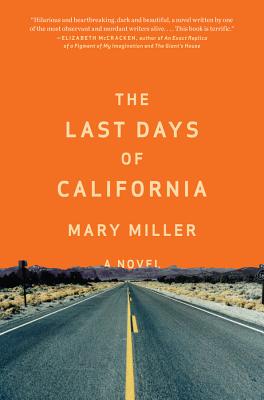
Fifteen-year-old Jess is on a road trip to the end of the world. Her evangelical father has packed up the family and left their Montgomery, Alabama, home behind to drive west in anticipation of the rapture, hoping to save as many souls as possible before the imminent Second Coming. With her long-suffering mother and her rebellious sister Elise, Jess hands out tracts to nonbelievers at every rest stop, Waffle House, and gas station along the way. Through sticky diners and in crowded motel pools, beneath bleached bedspreads and in the backseat of the family car, Jess and Elise whisper and squabble their way across the country. But as doomsday approaches, Jess can't seem to work up any real fear about the apocalypse when her sister's secret pregnancy and their increasingly frayed parents loom so much larger.

In this fresh and razor-sharp debut novel, teenage angst and evangelical ardor make a pilgrimage across an endlessly interchangeable American landscape of highways, motels, and strip malls. Sporting a "King Jesus Returns " t-shirt and well stocked with end-times pamphlets, Jess makes semi-earnest efforts to believe but is thwarted at every turn by a string of familiar and yet freshly rendered teenage obsessions. From "Will the world end?" to "Will I ever fall in love?" each tender worry, big and small, is brilliantly rendered with emotional weight. Mary Miller reinvents the classic American literary road-trip story, reviving its august traditions with the yearning and spiritual ennui of twenty-first-century adolescence. As the last day approaches, Jess's teenage myopia gradually gives way to a growing awareness of the painful undercurrents of her fractured family.

With a deadpan humor and a savage charm that belie a deep sympathy for her characters, Miller captures the gnawing uneasiness, sexual rivalry, and escalating self-doubt of teenage life in America, where the end always seems nigh and our illusions are necessary protections against that which we can't control.
 
 
http://bit.ly/1eKTgvq
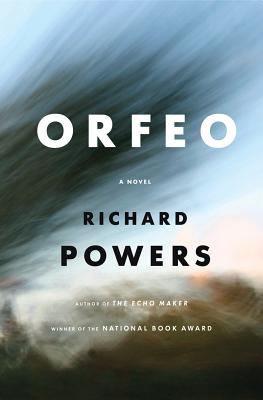
"If Powers were an American writer of the nineteenth century...he'd probably be the Herman Melville of Moby-Dick. His picture is that big," wrote Margaret Atwood (New York Review of Books). Indeed, since his debut in 1985 with Three Farmers on Their Way to a Dance, Richard Powers has been astonishing readers with novels that are sweeping in range, dazzling in technique, and rich in their explorations of music, art, literature, and technology.

In Orfeo, Powers tells the story of a man journeying into his past as he desperately flees the present. Composer Peter Els opens the door one evening to find the police on his doorstep. His home microbiology lab--the latest experiment in his lifelong attempt to find music in surprising patterns--has aroused the suspicions of Homeland Security. Panicked by the raid, Els turns fugitive. As an Internet-fueled hysteria erupts, Els--the "Bioterrorist Bach"--pays a final visit to the people he loves, those who shaped his musical journey. Through the help of his ex-wife, his daughter, and his longtime collaborator, Els hatches a plan to turn this disastrous collision with the security state into a work of art that will reawaken its audience to the sounds all around them. The result is a novel that soars in spirit and language by a writer who "may be America's most ambitious novelist" (Kevin Berger, San Francisco Chronicle).
 
 
http://bit.ly/1dKmZ9G
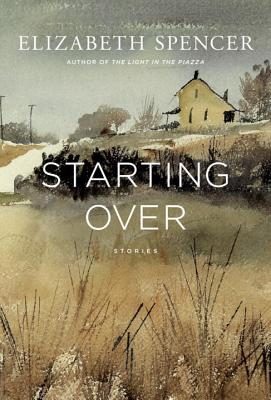
One of the masters of American short fiction—author of The Light in the Piazza—returns with a new collection of stories.

On the release of her first novel in 1948, Elizabeth Spencer was immediately championed by Robert Penn Warren and Eudora Welty, setting off a remarkable career as one of the great literary voices of the American South. Her career, now spanning seven decades, continues here with nine new stories. In Starting Over, Spencer returns to the deep emotional fault lines and unseen fractures that lie just beneath the veneer of happy family life. In “Sightings,” a troubled daughter suddenly returns to the home of the father she accidently blinded during her parents’ bitter separation; in “Blackie,” the reappearance of a son from a divorcee’s first marriage triggers a harrowing confrontation with her new family; while in “The Wedding Visitor,” a cousin travels home only to find himself entwined in the events leading up to a family wedding. In these nine stories, Spencer excels at revealing the flawed fabric of human relations. 
 
 
http://bit.ly/19FFkFu
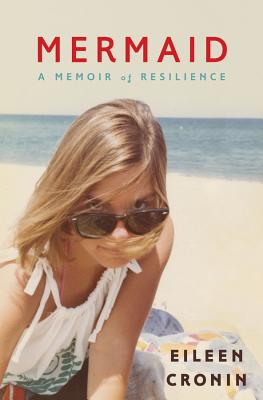
At the age of three, Eileen Cronin first realized that only she did not have legs. Her boisterous Catholic family accepted her situation as "God's will," treating her no differently than her ten siblings, as she "squiddled" through their 1960s Cincinnati home. But starting school, even wearing prosthetics, Cronin had to brave bullying and embarrassing questions. Thanks to her older brother's coaching, she handled a classmate's playground taunts with a smack from her lunchbox. As a teen, thrilled when boys asked her out, she was confused about what sexuality meant for her. She felt most comfortable and happiest relaxing and skinny dipping with her girlfriends, imagining herself "an elusive mermaid." The cause of her disability remained taboo, however, even as she looked toward the future and the possibility of her own family.

In later years, as her mother battled mental illness and denied having taken the drug thalidomide--known to cause birth defects--Cronin felt apart from her family. After the death of a close brother, she turned to alcohol. Eventually, however, she found the strength to set out on her own, volunteering at hospitals and earning a PhD in clinical psychology.

Reflecting with humor and grace on her youth, search for love, and quest for answers, Cronin spins a shimmering story of self-discovery and transformation.
 
 
http://bit.ly/1eXe3Os
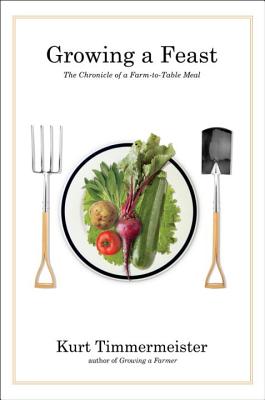
The story of a feast two years in the making, from the farmer who harvested the vegetables, raised the animals, and prepared the meal.
In Growing a Farmer, Kurt Timmermeister recounted the toil and joy of wrestling an empty plot of land on Vashon Island, Washington, into a dairy farm. Now he tells the story of a feast made from only what the farm provides. But the story of the meal begins two years earlier with the birth of a calf, Alice. When she is grown, Alice will produce the cream to be churned into butter, made into sauce BĂ©arnaise, and served alongside poached eggs and kale gathered the morning of the feast. Along the way we meet Leda, who trades onion seedlings for Kurt’s cheese; Michiko, who forages the white chanterelles for the antipasti course; and Bill, whose large, thin-skinned tomatoes will form the basis of the tomato upside-down cake. Rich in detail, resonant in story, Growing a Feast depicts the effort behind every meal, the farm that comes before every table.
 
 
http://bit.ly/1dHlfQ3
In recent years, Google's autonomous cars have logged thousands of miles on American highways and IBM's Watson trounced the best human Jeopardy players. Digital technologies--with hardware, software, and networks at their core--will in the near future diagnose diseases more accurately than doctors can, apply enormous data sets to transform retailing, and accomplish many tasks once considered uniquely human.

In The Second Machine Age MIT's Erik Brynjolfsson and Andrew McAfee--two thinkers at the forefront of their field--reveal the forces driving the reinvention of our lives and our economy. As the full impact of digital technologies is felt, we will realize immense bounty in the form of dazzling personal technology, advanced infrastructure, and near-boundless access to the cultural items that enrich our lives.

Amid this bounty will also be wrenching change. Professions of all kinds--from lawyers to truck drivers--will be forever upended. Companies will be forced to transform or die. Recent economic indicators reflect this shift: fewer people are working, and wages are falling even as productivity and profits soar.

Drawing on years of research and up-to-the-minute trends, Brynjolfsson and McAfee identify the best strategies for survival and offer a new path to prosperity. These include revamping education so that it prepares people for the next economy instead of the last one, designing new collaborations that pair brute processing power with human ingenuity, and embracing policies that make sense in a radically transformed landscape.

A fundamentally optimistic book, The Second Machine Age will alter how we think about issues of technological, societal, and economic progress.

TC Tidbit: A List of Snowy Reads

Thursday, January 23, 2014

"Although this story is based on Tibetan teachings, it resonates with all readers because it encourages us to make choices, not to fear change, and to be mindful of the life that we live." ~Judy B.

http://bit.ly/Ki2mH3

A Tibetan woodcutter dreams of exploring the world, but is too busy with his life to ever leave his valley. After he dies, he is taken on a journey through the cosmos and all the places on Earth as he makes choices that lead him to a new life. First published as part of the debut list for Barefoot Books in 1993, this gentle and inspiring look at life after death is just as relevant today.

Judy B. says:
"This delightful story tells of a woodcutter in Tibet who dreams of visiting other countries, other worlds.

When he dies, he is given a choice of the body and soul that he would like to inhabit, and the place to live, and he is reminded of all of his dreams and heart's desires.
 

His most lovely and interesting choice is at the end of the story.
 

Although this story is based on Tibetan teachings, it resonates with all readers because it encourages us to make choices, not to fear change, and to be mindful of the life that we live."

Kate M. Is Recommending:

http://bit.ly/LzCBTp
A young girl's disappearance rocks a community and a family in this stirring examination of grief, faith, justice, and the atrocities of war from Joyce Carol Oates, "one of the great artistic forces of our time" (The Nation)

Zeno Mayfield's daughter has disappeared into the night, gone missing in the wilds of the Adirondacks. But when the community of Carthage joins a father's frantic search for the girl, they discover the unlikeliest of suspects--a decorated Iraq War veteran with close ties to the Mayfield family. As grisly evidence mounts against the troubled war hero, the family must wrestle with the possibility of having lost a daughter forever.

Carthage plunges us deep into the psyche of a wounded young corporal haunted by unspeakable acts of wartime aggression, while unraveling the story of a disaffected young girl whose exile from her family may have come long before her disappearance.

Dark and riveting, Carthage is a powerful addition to the Joyce Carol Oates canon, one that explores the human capacity for violence, love, and forgiveness, and asks if it's ever truly possible to come home again.


http://bit.ly/1jgmkhw
In the latest mystery from New York Times bestselling author Charles Todd, Inspector Ian Rutledge is summoned to the quiet, isolated Fen country to solve a series of seemingly unconnected murders before the killer strikes again

August 1920. A society wedding at Ely Cathedral in Cambridgeshire becomes a crime scene when a guest is shot just as the bride arrives. Two weeks later, after a fruitless search for clues, the local police are forced to call in Scotland Yard. But not before there is another shooting in a village close by. This second murder has a witness; the only problem is that her description of the killer is so horrific it's unbelievable. Badgered by the police, she quickly recants her story.

Despite his experience, Inspector Ian Rutledge can find no connection between the two deaths. One victim was an Army officer, the other a solicitor standing for Parliament; their paths have never crossed. What links these two murders? Is it something from the past? Or is it only in the mind of a clever killer?

Then the case reminds Rutledge of a legendary assassin whispered about during the war. His own dark memories come back to haunt him as he hunts for the missing connection--and yet, when he finds it, it isn't as simple as he'd expected. He must put his trust in the devil in order to find the elusive and shocking answer.


http://bit.ly/1aAgmma
Inspired by a true story, New York Times bestselling author Phillip Margolin turns his hand to historical fiction in this masterful saga about justice in the American West.

Like thousands of other Americans in the nineteenth century, Matthew Penny, a young lawyer, believes that he and his wife, Rachel, can forge a better future out West. But after she drowns on the Oregon Trail, Matthew arrives on the frontier with nothing but shattered dreams. Unable to face the memories that await back home, he joins the handful of lawyers practicing in Portland, Oregon--which in 1860 is just a riverfront town in a state less than a year old.

Worthy Brown, a slave from Georgia, journeys west with his master, Caleb Barbour, who promises to reward Worthy and his daughter, Roxanne, with their freedom if they help him establish a homestead in Oregon. When Barbour reneges on his pledge, Worthy's hope for a fresh start with his child is destroyed.

In the hands of critically acclaimed thriller writer Phillip Margolin, the fates of these desperate men intertwine in a breathtaking narrative about the extent of evil and the high price of true justice. Matthew and Worthy decide to challenge Barbour in court, but events rapidly spiral out of their control and the stakes become higher than either of them could ever have imagined. And when Matthew, struggling to survive in the cutthroat, corrupt world of frontier law, crosses paths with Heather Gillette, the beautiful daughter of a wealthy Portland businessman, his grief-stricken existence is turned upside down, and suddenly he has everything to fight for.

Over two decades in the writing, Worthy Brown's Daughter is a compelling white-knuckle drama about two broken men risking everything for what they believe in. Powerfully evocative of time and place, woven through with rich historical detail, it charts new territory for Margolin--but its epic, deeply human scope is still defined by the suspense and energy his fans have come to expect from his books.


The official tie-in to the popular Discovery reality series that follows a Louisiana-based custom firearms business.

With his characteristic down-home wit and wisdom, Will Hayden tells the stories behind some of the best episodes of the hit Discovery series Sons of Guns. He'll let you in on his all-time favorite weapons and what it takes to modify a run-of-the-mill rifle into a world-class work of art. Hear his take on guns in America, from their construction and history to the importance of using them responsibly. Learn about Will's trials and tribulations and what it took to create a successful, family-owned firearms business.

If there's one thing folks from Louisiana can do, says Will, it's tell a heck of a story. This book is the next best thing to sitting around the campfire with Will and the boys (and his daughter, Stephanie), listening to him recount his favorite ones.


http://bit.ly/1ahKYhI
In Kind of Kin by award-winning author Rilla Askew, when a church-going, community-loved, family man is caught hiding a barn-full of illegal immigrant workers, he is arrested and sent to prison. This shocking development sends ripples through the town--dividing neighbors, causing riffs amongst his family, and spurring controversy across the state.

Using new laws in Oklahoma and Alabama as inspiration, Kind of Kin is a story of self-serving lawmakers and complicated lawbreakers, Christian principle and political scapegoating.

Rilla Askew's funny and poignant novel explores what happens when upstanding people are pushed too far--and how an ad-hoc family, and ultimately, an entire town, will unite to protect its own.

TC Tidbit: The Bard as Couples Counselor

Wednesday, January 22, 2014

Dispatch From The Fields: "Seriously, this is one of my favorite series ever written." ~Joe

http://bit.ly/19l3ncB
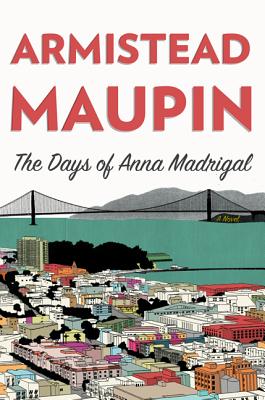
When I first learned there was a forthcoming installment of Tales of the City, I was thrilled. Seriously, this is one of my favorite series ever written. Learning that The Days of Anna Madrigal would be the final book in the series broke my heart. Of course, the series can’t go on forever, and we, as readers, are always welcome back to Barbary Lane by re-reading all of the books. The previous two books in the series, Michael Tolliver Lives and Mary Ann in Autumn, revisited the beloved characters, bringing us up-to-date on their lives more than twenty years after we met them.

In The Days of Anna Madrigal, the story is centered on the titular character, determined to make peace with her past in her waning days. Unlike the other books, more of this story is told in flashbacks to Anna Madrigal’s days as a youth in Winnemucca, Nevada. We meet her first love and get a glimpse of life growing up in a brothel. Brian Hawkins returns to San Francisco to take Anna to Winnemucca to come to terms with her past. Meanwhile, Michael Tolliver, his lover Jake, and Brian’s daughter, Shawna, are headed to a different part of the Nevada desert for the Burning Man festival. Armistead Maupin still tells his story in short chapters, and he winds his two storylines together with seamless ease. Maupin has been telling us this story for over thirty years, and the story is just as ahead of the times as ever. Anna Madrigal surrounds herself with what she calls her “chosen family” and that family has expanded as many do, introducing new characters on the edges of the story.

Knowing this is the final book in the series, I read it as slowly as I could, savoring the bittersweet story the whole way. Maupin made me laugh, made me underline and dog-ear pages, and made me cry. Turning that final page, having said goodbye to these characters I have known my entire adult life, felt like stepping out on your own, knowing the folks who’ve raised you did their best, and their best was fantastic. I will miss Anna Madrigal, Michael, Mary Ann, Brian, and the rest of the gang from Barbary Lane. Armistead Maupin, thank you for bringing them into my life!

--Joe


Just a reminder, Armistead Maupin will be discussing and signing this book at our Historic Lodo store tomorrow  night (1/23/14) at 7:30pm.  If you want your book signed, you should come to the store by 6:30, when tickets will be distributed on a first come, first served basis.