Wednesday, June 23, 2010


New on the Shelves:
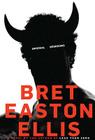 Imperial Bedrooms
Bret Easton Ellis’s debut, Less Than Zero, is one of the signal novels of the last thirty years, and he now follows those infamous teenagers into an even more desperate middle age.
Clay, a successful screenwriter, has returned from New York to Los Angeles to help cast his new movie, and he’s soon drifting through a long-familiar circle. Blair, his former girlfriend, is married to Trent, an influential manager who’s still a bisexual philanderer, and their Beverly Hills parties attract various levels of fame, fortune and power. Then there’s Clay’s childhood friend Julian, a recovering addict, and their old dealer, Rip, face-lifted beyond recognition and seemingly even more sinister than in his notorious past.
But Clay’s own demons emerge once he meets a gorgeous young actress determined to win a role in his movie. And when his life careens completely out of control, he has no choice but to plumb the darkest recesses of his character and come to terms with his proclivity for betrayal.
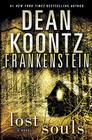
#1 New York Times bestselling author Dean Koontz brings his fertile imagination and unparalleled storytelling abilities to one of the most timeless—and terrifying—creations in all of fiction: the legend of Frankenstein. In Lost Souls, Koontz puts a singular twist on this classic tale of ambition and science gone wrong and forges a new legend uniquely suited to our times—a story of revenge, redemption, and the razor-thin line that separates humanity from inhumanity as we consider a new invitation to apocalypse.
The work of creation has begun again. Only now things will be different. Victor Leben, once Frankenstein, has not only seen the future—he’s ready to populate it. Using stem cells, “organic” silicon circuitry, and nanotechnology, he will engender a race of superhumans—the perfect melding of flesh and machine. With a powerful, enigmatic backer eager to see his dream come to fruition and a secret location where the enemies of progress can’t find him, Victor is certain that this time, nothing and no one can stop him.
It is up to five people to prove him wrong. In their hands rests nothing less than the survival of humanity itself.
They are drawn together in different ways, by omens sinister and wondrous, to the same shattering conclusion: Two years after they saw him die, the man they knew as Victor Helios lives on. Detectives Carson O’Connor and Michael Maddison; Victor’s engineered wife, Erika 5, and her companion Jocko; and the original Victor’s first creation, the tormented Deucalion, have all arrived at a small Montana town where their old alliance will be renewed—and tested—by forces from within and without, and where the dangers they face will eclipse any they have yet encountered. Yet in the midst of their peril, love will blossom, and joy, and they will discover sources of strength and perseverance they could not have imagined.
They will need all these resources, and more. For a monumental battle is about to commence that will require all their ingenuity and courage, as it defines what we are to be . . . and if we are to be at all.
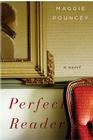
In this enchanting debut novel, Maggie Pouncey brings to life the unforgettable Flora Dempsey, the headstrong and quick-witted only child of Lewis Dempsey, a beloved former college president and famous literary critic in the league of Harold Bloom.
At the news of her father’s death, Flora quits her big-city magazine job and returns to Darwin, the quaint New England town where she grew up, to retreat into the house he has left her, filled as it is with reminders of him. Even weightier is her appointment as her father’s literary executor. It seems he was secretly writing poems at the end of his life—love poems to a girlfriend Flora didn’t know he had. Flora soon discovers that this woman has her own claims on Lewis’s poetry and his memory, and in the righteousness of her loss and bafflement at her father’s secrets—his life so richly separate from her own in ways she never guessed—Flora is highly suspicious of her. Meanwhile, Flora is besieged by well-wishers and literary bloggers alike as she tries to figure out how to navigate it all: the fate of the poems, the girlfriend who wants a place in her life, her memories of her parents’ divorce, and her own uncertain future.
At once comic and profound, Perfect Reader is a heady, uplifting story of loneliness and of the spur to growth that grief can be. Brimming with energy and with the elbow-patchy wisdom of her still-vivid father, Flora’s story will set her free to be the “perfect reader” not just of her father’s life but of her own as well.
The Lovers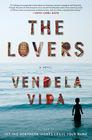
From the acclaimed author of the 2007 New York Times Notable Book Let the Northern Lights Erase Your Name comes a stunning novel about the love between husbands and wives, mothers and children.
Twenty-eight years ago, Peter and Yvonne honeymooned in the beautiful coastal village of DatÇa, Turkey. Now Yvonne is a widow, her twin children grown. Hoping to immerse herself in memories of a happier time—as well as sand and sea—Yvonne returns to DatÇa. But her plans for a restorative week in Turkey are quickly complicated. Instead of comforting her, her memories begin to trouble her. Her vacation rental's landlord and his bold, intriguing wife—who share a curious marital arrangement—become constant uninvited visitors, in and out of the house.
Overwhelmed by the past and unexpectedly dislocated by the environment, Yvonne clings to a newfound friendship with Ahmet, a local boy who makes his living as a shell collector. With Ahmet as her guide, Yvonne gains new insight into the lives of her own adult children, and she finally begins to enjoy the shimmering sea and relaxed pace of the Turkish coast. But a devastating accident upends her delicate peace and throws her life into chaos—and her sense of self into turmoil.
With the crystalline voice and psychological nuance for which her work has been so celebrated, Vendela Vida has crafted another unforgettable heroine in a stunningly beautiful and mysterious landscape.
Jackie recommends...
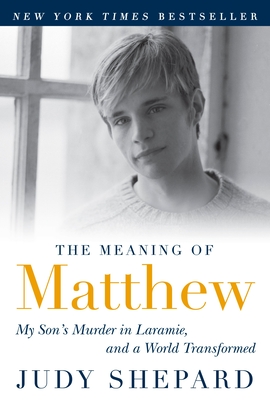
The mother of Matthew Shepard shares her story about her son's death and the choice she made to become an international gay rights activist
Today, the name Matthew Shepard is synonymous with gay rights, but before his grisly murder in 1998, Matthew was simply Judy Shepard's son. For the first time in book form, Judy Shepard speaks about her loss, sharing memories of Matthew, their life as a typical American family, and the pivotal event in the small college town that changed everything.
The Meaning of Matthew follows the Shepard family in the days immediately after the crime, when Judy and her husband traveled to see their incapacitated son, kept alive by life support machines; how the Shepards learned of the incredible response from strangers all across America who held candlelit vigils and memorial services for their child; and finally, how they struggled to navigate the legal system as Matthew's murderers were on trial. Heart-wrenchingly honest, Judy Shepard confides with readers about how she handled the crippling loss of her child, why she became a gay rights activist, and the challenges and rewards of raising a gay child in America today.
The Meaning of Matthew not only captures the historical significance and complicated civil rights issues surrounding one young man's life and death, but it also chronicles one ordinary woman's struggle to cope with the unthinkable.
Jackie says: "I've met Judy Shepard, and cried with her for the violent, needless, senseless death of her son. She has become a tireless gay rights activist and an inspiration."
Tuesday, June 22, 2010
TC Tidbits: How do you pronounce...?
Having trouble figuring out how pronounce an author's name? This should help.
Joe's "Gay Reads" Recommendations, Part One
 My Queer War by James Lord
In My Queer War, James Lord tells the story of a young man’s exposure to the terrors, dislocations, and horrors of armed conflict.
In 1942, a timid, inexperienced twenty-one-year-old Lord reports to Atlantic City, New Jersey, to enlist in the U.S. Army. His career in the armed forces takes him to Nevada and California, to Boston, to England, and eventually to France and Germany, where he witnesses firsthand the ravages of total war on Europe’s land and on its people. Along the way he comes to terms with his own sexuality, experiences the thrill of first love and the chill of disillusionment with his fellow man, and in a moment of great rashness makes the acquaintance of the world’s most renowned artist, who will show him the way to a new life.
My Queer War is a rich and moving record of one man’s maturation in the crucible of the greatest war the world has known. If his war is queer, it is because each man’s experience is strange in its own way. His is a story of universal significance and appeal, told by a wry and eloquent observer of the world and of himself.
Joe says: "A stream-of-consciousness memoir that tells what it was like to be gay in the army during World War II. This book captures not only the excitement and humdrum day-to-day life of serving in Europe, it also tells of the danger and (surprising) openness of being gay in the military during that time. An interesting read especially during this discussion of Don't Ask Don't Tell." The Lunatic, The Lover and The Poet
A Divinity scholar at Wittenberg University, Horatio prides himself on his ability to argue both sides of any intellectual debate but is himself a skeptic, never fully believing in any philosophy. That is, until he meets the outrageous, provocative, and flamboyantly beautiful Prince of Denmark, who teaches him more about both Earth and Heaven than any of his books. But Hamlet is also irrationally haunted by intimations of a tragic destiny he believes is preordained.
When a freelance translation job turns into a full-scale theatrical production, Horatio arranges for the theater-loving prince to act in the play-disguised as the heroine! This attracts the attention of Horatio′s patroness, the dark and manipulative Lady Adriana. A voracious and astute reader of both books and people, she performs her own seductions to test whether the "platonic true-love" described in his poems is truly so platonic. But when a mysterious rival poet calling himself "Will Shake-speare" begins to court both Prince Hamlet and his Dark Lady, Horatio is forced to choose between his skepticism and his love.
Laced with quotes, references, and in-jokes, cross-dressing, bed-tricks, mistaken identity, and a bisexual love-triangle inspired by Shakespeare′s own sonnets, this novel upends everything you thought you knew about Hamlet. Witty, insightful, playful, and truly wise about the greatest works of the Bard, THE LUNATIC, THE LOVER, AND THE POET is a delectable treat for people that have loved books like Stephen Greenblatt′s WILL IN THE WORLD and John Updike′s GERTRUDE AND CLAUDIUS.
Joe says: "An interesting, historical bisexual love triangle. In Middle Ages Wittenberg, student Horatio falls in love with the handsome thrilling young Prince of Denmark, who is seeing the Lady Adriana. Echoing the Shakespeare's sonnets (which its plot is based on), this fun book would be excellent for a light summer read." The Great Lover
In 1909, sixteen-year-old Nell Golightly is a housemaid at a popular tea garden near Cambridge University, and Rupert Brooke, a new tenant, is already causing a stir with his boyish good looks and habit of swimming naked in nearby Byron's Pool. Despite her good sense, Nell seems to be falling under the radical young poet's spell, even though Brooke apparently adores no one but himself. Could he ever love a housemaid? Is he, in fact, capable of love at all?
Jill Dawson's The Great Lover imaginatively and playfully gives new voice to Rupert Brooke through the poet's own words and through the remembrances of the spirited Nell. An extraordinary novel, it powerfully conveys the allure of charisma as it captures the mysterious and often perverse workings of the human heart.
Joe says: "Rupert Brooke wanted to be the Great Lover. He was adored by women and men, but he seemed to love only the idea of love. Based on a truestory, pieced together from letters and stories, this novel is a delight to read. The action takes place in England, just prior to the Great War and captures a world that was about to end... the last vestiges of the British Empire. It took me a little bit to get into the language of the book, but by the time I got into it, I was hooked and Jill Dawson didn't let me go until the end. Despite its setting, this is a thoroughly modern tale of the limits of love and lust. The story is told from two points of view: Rupert's and a maid's, Nell Golightly. Book clubs are going to love this book: it offers so much to talk about - class distinctions, the end of colonialism, bisexuality, poetry & its place in society, and so much more!"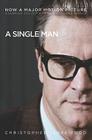 A Single Man
When A Single Man was originally published, it shocked many by its frank, sympathetic, and moving portrayal of a gay man in midlife. George, the protagonist, is adjusting to life on his own after the sudden death of his partner, and determines to persist in the routines of his daily life: the course of A Single Man spans twenty-four hours in an ordinary day. An Englishman and a professor living in suburban Southern California, he is an outsider in every way, and his internal reflections and interactions with others reveal a man who loves being alive despite everyday injustices and loneliness. Wry, suddenly manic, constantly funny, surprisingly sad, this novel catches the texture of life itself.
Joe says: "Although I have written about this book before, and many folks saw the movie, I am still thinking about this elegant novella. Written 50 years ago, Isherwood's writing still speaks to our times: it is one of the perfect portraits of a man after his partner has died. If you've seen the movie, don't worry; the book has a slightly different tone, and stands on its own. A perfect companion to get ready for the autumn release* of Isherwood's Journals."
* BTC will get you the details on that as soon as they are available!
From Riot to Revolution
"Riveting...Not only the definitive examination of the riots but an absorbing history of pre-Stonewall America, and how the oppression and pent-up rage of those years finally ignited on a hot New York night." - Boston Globe
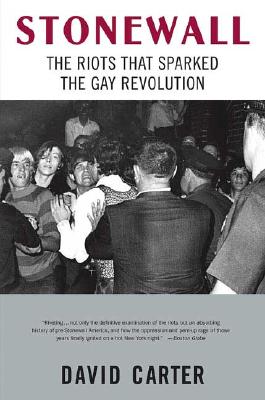
In 1969, a series of riots over police action against The Stonewall Inn, a gay bar in New York City's Greenwich Village, changed the longtime landscape of the homosexual in society literally overnight. Since then the event itself has become the stuff of legend, with relatively little hard information available on the riots themselves. Now, based on hundreds of interviews, an exhaustive search of public and previously sealed files, and over a decade of intensive research into the history and the topic, Stonewall brings this singular event to vivid life in this, the definitive story of one of history's most singular events.
David Carter has had a varied career as a writer, editor, and filmmaker. He is the author of biographies of Salvador Dali and George Santayana, he edited and compiled Spontaneous Mind, a collection of interviews with Allen Ginsberg, and directed the film Meher Baba in Italy for Peter Townshend. Carter has a B.A. from Emory University and an M.A. from the University of Wisconsin. He lives in Greenwich Village in New York City. A Randy Shilts / Publishing Triangle Award Finalist
In 1969, a series of riots over police action against The Stonewall Inn, a gay bar in New York City's Greenwich Village, forever changed the standing of homosexuals in American society. Since then, the rebellion itself has become the stuff of legend, with relatively little concrete information available on the riots themselves.
But with this important, long-overdue new study—based on hundreds of interviews, exhaustive investigations into public and previously sealed files, and over a decade of intensive research into both the event itself and those it set in motion—Carter brings this singular moment to life in a detailed and definitive account of one of modern history's key social actions.
Stonewall gives us, at long last, the where and why and how of the beginning of the Gay Rights movement. Riveting . . . not only the definitive examination of the riots but an absorbing history of pre-Stonewall America, and how the oppression and pent-up rage of those years finally ignited on a hot New York night."—The Boston Globe "David Carter's Stonewall: The Riots that Sparked the Gay Revolution offers readers a sobering reminder of the Stonewall riots and how three days forever changed the gay movement. His comprehensive historical analysis of the Stonewall Inn bar's ties to the Mafia, its diverse clientele and to the birth of the LGBTQ movement is a must-read for anyone studying LGBTQ history. Carter exhaustively examines how the Stonewall Inn became a symbol of a new era of LGBTQ politics. The book is reminiscent of Michelangelo Signorile's Queer in America, marking a period when the LGBTQ political paradigm forever changed. Carter, a freelance writer hailing from New York's Greenwich Village, offers a large number of personal accounts of the riots, riots that transformed the gay and lesbian movement from an early 1960s era of assimilation to a new form of radicalism. Also, his book dispels the popular myth that Greenwich Village drag queens, exhausted from continual police harassment, finally fought back and began to riot because they were mourning the loss of Judy Garland. In fact, Carter does an excellent job of showing how several groups—not just drag queens, but lesbians, street people and hustlers—responded to police raiding the Mafia-owned bar. Surprisingly, the police initially received support from Stonewall patrons, who were tired of the Mafia running local gay and lesbian bars. But as the police became forceful in their arrest of an unknown combative lesbian who questioned, 'Why don't you guys do something?,' the Village spectators' jeers and camp calls evolved into the throwing of coins, paving stones, parking meters and finally erupted into the historic three-day riot. In part one, 'Setting the Stage,' Carter describes the Stonewall Inn by beginning with its birth in the 1930s, when two Greenwich Village businesses—a stable and a bakery—were formed into one building at the ground floor level on Christopher Street. He examines early Greenwich Village history, from its Dutch farmland background to popular beatnik hangout of poets. Carter tells the anguished stories of individuals forced to hide in an era in which homosexuality was a shameful, dirty secret. In part two, he traces the evolution of the riots by detailing the bar's notorious Mafia ownership and streetwise clientele; he uses personal accounts that place the reader inside the bar the first night of rioting. Finally, in part three, Clark illustrates the birth of the Gay Liberation Movement, and chronicles the Greek lambda symbol of gay power. Overall, Carter shows how the Greenwich Village's Stonewall Inn rebellion incited a new wave of militant groups willing to take immediate, direct action against the establishment of anti-homosexual organizations. His account shows how LGBTQ liberationists made police aggravation the exception rather then the rule in New York City. Often we take for granted that our brothers and sisters fought long and hard for the LGBTQ community to have visibility. Carter's historical account of the Stonewall Inn's real contribution reminds us where we've come from."—Ken Cimino, adjunct professor, California State University at Los Angeles
"Riveting . . . not only the definitive examination of the riots but an absorbing history of pre-Stonewall America, and how the oppression and pent-up rage of those years finally ignited on a hot New York night."—The Boston Globe
"A terrific piece of nonfiction, a satisfying and illuminating document that will be referred to time and again."—The Advocate
"No matter what you may believe about the event, you will gain new insights. Historically important and socially significant."—The Dallas Morning News
"A gripping, hour-by-hour reconstruction . . . this definitive account is long overdue but well worth the wait."—Richard Labonte, Book Marks
"Stonewall presents a thorough, often compelling reconstruction of the nearly weeklong protest . . . provides thoughtful and sometimes delightfully quirky details about the era's gay culture and politics, Greenwich Village itself, and the New Yorkers—from mobsters to flame queens to cops—who that morning stumbled into history."—Providence Journal-Bulletin
"Carter's vividly detailed report and prodigious research bring to life again this major, dramatic event in modern gay history. This was a riot heard round the world, and Carter has done it proud."—Jonathan Ned Katz, author of Love Stories: Sex Between Men Before Homosexuality
"A beautifully written, suspenseful narrative that also meets the toughest tests of academic research."—The Bay Area Reporter
"Considering all that went before, the ongoing repression and corruption, and the scent of social and political liberation in the air, Carter's eloquent account makes it clear that something was bound to catch fire . . . A complete, full-bodied portrait, with lots of flesh on the bones of a strong narrative structure."—Kirkus Reviews
Monday, June 21, 2010
TC Tidbits: Gay LIterature and Human Rights
"Although not a new practice, increasingly seen in today's literature and fiction are gay themes, or at least the incorporation of gay characters. Although restricted to the reading population, these characters are staging a silent coup d'etat on the minds of mainstream society. Author's, both gay and straight, are touching on topics and themes of human rights in a direct way never seen in mainstream literature. This opening of gay discourse is largely influenced by the sexual revolutions - homosexuality is written in way which presents it as a very real, emotion filled adoration. 'Gay love,' has become as shocking as 'straight love' in literature, which in reality is not that shocking."
--Byron Sieben
read the whole article here
--Byron Sieben
read the whole article here
Subscribe to:
Posts (Atom)