From National Book Award finalist David I. Kertzer comes the gripping
story of Pope Pius XI’s secret relations with Italian dictator Benito
Mussolini. This groundbreaking work, based on seven years of research in
the Vatican and Fascist archives, including reports from Mussolini’s
spies inside the highest levels of the Church, will forever change our
understanding of the Vatican’s role in the rise of Fascism in Europe.
The Pope and Mussolini tells the story of two men who came to power in 1922, and together
changed the course of twentieth-century history. In most respects, they
could not have been more different. One was scholarly and devout, the
other thuggish and profane. Yet Pius XI and “Il Duce” had many things in
common. They shared a distrust of democracy and a visceral hatred of
Communism. Both were prone to sudden fits of temper and were fiercely
protective of the prerogatives of their office. (“We have many interests
to protect,” the Pope declared, soon after Mussolini seized control of
the government in 1922.) Each relied on the other to consolidate his
power and achieve his political goals.
In a challenge to the
conventional history of this period, in which a heroic Church does
battle with the Fascist regime, Kertzer shows how Pius XI played a
crucial role in making Mussolini’s dictatorship possible and keeping him
in power. In exchange for Vatican support, Mussolini restored many of
the privileges the Church had lost and gave in to the pope’s demands
that the police enforce Catholic morality. Yet in the last years of his
life—as the Italian dictator grew ever closer to Hitler—the pontiff’s
faith in this treacherous bargain started to waver. With his health
failing, he began to lash out at the Duce and threatened to denounce
Mussolini’s anti-Semitic racial laws before it was too late. Horrified
by the threat to the Church-Fascist alliance, the Vatican’s inner
circle, including the future Pope Pius XII, struggled to restrain the
headstrong pope from destroying a partnership that had served both the
Church and the dictator for many years.
The Pope and Mussolini
brims with memorable portraits of the men who helped enable the reign
of Fascism in Italy: Father Pietro Tacchi Venturi, Pius’s personal
emissary to the dictator, a wily anti-Semite known as Mussolini’s
Rasputin; Victor Emmanuel III, the king of Italy, an object of
widespread derision who lacked the stature—literally and figuratively—to
stand up to the domineering Duce; and Cardinal Secretary of State
Eugenio Pacelli, whose political skills and ambition made him
Mussolini’s most powerful ally inside the Vatican, and positioned him to
succeed the pontiff as the controversial Pius XII, whose actions during
World War II would be subject for debate for decades to come.
With the recent opening of the Vatican archives covering Pius XI’s
papacy, the full story of the Pope’s complex relationship with his
Fascist partner can finally be told. Vivid, dramatic, with surprises at
every turn, The Pope and Mussoliniis history writ large and with the lightning hand of truth.
When Rupert Murdoch enlisted Roger Ailes to launch a cable news network in 1996, American politics and media changed forever. Now, with a remarkable level of detail and insight, New York magazine reporter Gabriel Sherman brings Ailes’s unique genius to life, along with the outsize personalities—Bill O’Reilly, Sean Hannity, Megyn Kelly, Sarah Palin, Karl Rove, Glenn Beck, Mike Huckabee, and others—who have helped Fox News play a defining role in the great social and political controversies of the past two decades. From the Clinton-Lewinsky scandal to the Bush-Gore recount, from the war in Iraq to the Tea Party attack on the Obama presidency, Roger Ailes has developed an unrivaled power to sway the national agenda. Even more, he has become the indispensable figure in conservative America and the man any Republican politician with presidential aspirations must court.
How did this man, whose life story has until now been shrouded in myth, become the master strategist of our political landscape? In revelatory detail, Sherman chronicles the rise of Ailes, a sickly kid from an Ohio factory town who, through sheer willpower, the flair of a showman, fierce corporate politicking, and a profound understanding of the priorities of middle America, built the most influential television news empire of our time.
Drawing on hundreds of interviews with Fox News insiders past and present, Sherman documents Ailes’s tactical acuity as he battles the press, business rivals, and countless real and perceived enemies inside and outside Fox. Sherman takes us inside the morning meetings in which Ailes and other high-level executives strategize Fox’s presentation of the news to advance Ailes’s political agenda; provides behind-the-scenes details of Ailes’s crucial role as finder and shaper of talent, including his sometimes rocky relationships with Fox News stars such as O’Reilly and Hannity; and probes Ailes’s fraught partnership with his equally brash and mercurial boss, Rupert Murdoch.
Roger Ailes’s life is a story worthy of Citizen Kane. The Loudest Voice in the Room is an extraordinary feat of reportage with a compelling human drama at its heart.
Fifty years ago, Norman Mailer asserted, "William Burroughs is the only American novelist living today who may conceivably be possessed by genius." Few since have taken such literary risks, developed such individual political or spiritual ideas, or spanned such a wide range of media. Burroughs wrote novels, memoirs, technical manuals, and poetry. He painted, made collages, took thousands of photographs, produced hundreds of hours of experimental recordings, acted in movies, and recorded more CDs than most rock bands. Burroughs was the original cult figure of the Beat Movement, and with the publication of his novel Naked Lunch, which was originally banned for obscenity, he became a guru to the 60s youth counterculture. In Call Me Burroughs, biographer and Beat historian Barry Miles presents the first full-length biography of Burroughs to be published in a quarter century-and the first one to chronicle the last decade of Burroughs's life and examine his long-term cultural legacy.
Written with the full support of the Burroughs estate and drawing from countless interviews with figures like Allen Ginsberg, Lucien Carr, and Burroughs himself, Call me Burroughs is a rigorously researched biography that finally gets to the heart of its notoriously mercurial subject.
Churchill's First War by Con Coughlin is a fascinating account of Winston Churchill's early military career fighting in the 1890 Afghan campaign, offering fresh and revealing parallels into today's war in Afghanistan
Just over a century ago British troops were fighting a vicious frontier war against Pashtun tribeman on the North West Frontier—the great-great-grandfathers of the Taliban and tribal insurgents in modern-day Afghanistan. Winston Churchill, then a young cavalry lieutenant, wrote a vivid account of what he saw during his first major campaign. The Story of the Malakand Field Force, published in 1898, was Churchill’s first book and, a hundred years later, is required reading for military commanders on the ground, both British and American.
In Churchill's First War, acclaimed author and foreign correspondent, Con Coughlin tells the story of that campaign, a story of high adventure and imperial success, which contains many lessons and warnings for today. Combining historical narrative, interviews with contemporary key players, and the journalist’s eye for great color and analysis, Churchill's First War affords us a rare insight into both the nineteenth-century "Great Game" and the twenty-first-century conflict that has raged longer than World War II.
In the late summer of 1918, after four long years of senseless, stagnant fighting, the Western Front erupted. The bitter four-month struggle that ensued--known as the Hundred Days Campaign--saw some of the bloodiest and most ferocious combat of the Great War, as the Allies grimly worked to break the stalemate in the west and end the conflict that had decimated Europe.
In Hundred Days, acclaimed military historian Nick Lloyd leads readers into the endgame of World War I, showing how the timely arrival of American men and materiel--as well as the bravery of French, British, and Commonwealth soldiers--helped to turn the tide on the Western Front. Many of these battle-hardened troops had endured years of terror in the trenches, clinging to their resolve through poison-gas attacks and fruitless assaults across no man's land. Finally, in July 1918, they and their American allies did the impossible: they returned movement to the western theater. Using surprise attacks, innovative artillery tactics, and swarms of tanks and aircraft, they pushed the Germans out of their trenches and forced them back to their final bastion: the Hindenburg Line, a formidable network of dugouts, barbed wire, and pillboxes. After a massive assault, the Allies broke through, racing toward the Rhine and forcing Kaiser Wilhelm II to sue for peace.
An epic tale ranging from the ravaged fields of Flanders to the revolutionary streets of Berlin, Hundred Days recalls the bravery and sacrifice that finally silenced the guns of Europe.
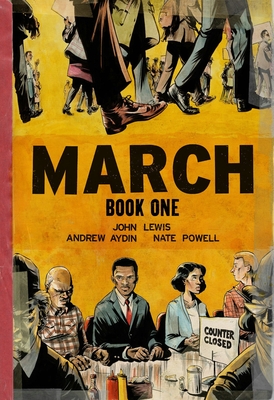
"Congressman John Lewis has been a resounding moral voice in the quest for equality for more than 50 years, and I'm so pleased that he is sharing his memories of the Civil Rights Movement with America's young leaders. In March, he brings a whole new generation with him across the Edmund Pettus Bridge, from a past of clenched fists into a future of outstretched hands."
- President Bill Clinton
Congressman John Lewis (GA-5) is an American icon, one of the key figures of the civil rights movement. His commitment to justice and nonviolence has taken him from an Alabama sharecropper's farm to the halls of Congress, from a segregated schoolroom to the 1963 March on Washington, and from receiving beatings from state troopers to receiving the Medal of Freedom from the first African-American president. Now, to share his remarkable story with new generations, Lewis presents March, a graphic novel trilogy, in collaboration with co-writer Andrew Aydin and New York Times best-selling artist Nate Powell (winner of the Eisner Award and LA Times Book Prize finalist for Swallow Me Whole).
March is a vivid first-hand account of John Lewis' lifelong struggle for civil and human rights, meditating in the modern age on the distance traveled since the days of Jim Crow and segregation. Rooted in Lewis' personal story, it also reflects on the highs and lows of the broader civil rights movement. Book One spans John Lewis' youth in rural Alabama, his life-changing meeting with Martin Luther King, Jr., the birth of the Nashville Student Movement, and their battle to tear down segregation through nonviolent lunch counter sit-ins, building to a stunning climax on the steps of City Hall. Many years ago, John Lewis and other student activists drew inspiration from the 1958 comic book "Martin Luther King and the Montgomery Story." Now, his own comics bring those days to life for a new audience, testifying to a movement whose echoes will be heard for generations.
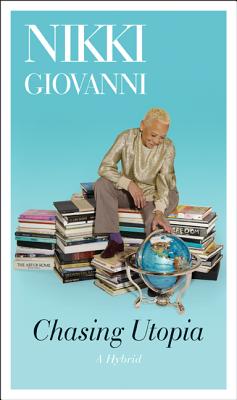
Nikki Giovanni's poetry has spurred movements and inspired songs, turned hearts and informed generations. She's been hailed as a healer and as a national treasure. But Giovanni's heart resides in the everyday, where family and lovers gather, friends commune, and those no longer with us are remembered. And at every gathering there is food--food as sustenance, food as aphrodisiac, food as memory. A pot of beans is flavored with her mother's sighs--this sigh part cardamom, that one the essence of clove; a lover requests a banquet as an affirmation of ongoing passion; homage is paid to the most time-honored appetizer: soup.
With Chasing Utopia, Giovanni demands that the prosaic--flowers, birdsong, win-ter--be seen as poetic, and reaffirms once again why she is as energetic, "remarkable" (Gwendolyn Brooks), "wonderful" (Marian Wright Edelman),"outspoken, prolific, energetic" (New York Times), and relevant as ever.
Too many of us feel trapped in stagnant romantic, family, or workplace relationships. Weighed down by toxic thoughts and emotions, we might be quick to judge and slow to pardon, and self-righteous about our feelings as we dwell on memories of what we or others did (or failed to do). In this new book and CD, Iyanla Vanzant challenges us to liberate ourselves from the wounds of the past and to embrace the new power of forgiveness. With Iyanla's 21-Day Forgiveness Plan, you'll explore relationship dynamics with your parents, children, friends, partners, co-workers, bosses, yourself, and even God. With journaling work and Emotional Freedom Techniques (also known as "tapping"), you'll learn to live with more love; gain new clarity on your life, lessons, and blessings; and discover a new level of personal freedom, peace, and well-being. Forgiveness doesn't mean agreeing with, condoning, or even liking what has happened. Forgiveness means letting go and knowing that--regardless of how challenging, frightening, or difficult an experience may seem--everything is just as it needs to be in order for you to grow and learn. When you focus on how things "should" be, you deny the presence and power of love. Accept the events of the past, while being willing to change your perspective on them. As Iyanla says, "Only forgiveness can liberate minds and hearts once held captive by anger, bitterness, resentment, and fear. Forgiveness is a true path to freedom that can renew faith, build trust, and nourish the soul."
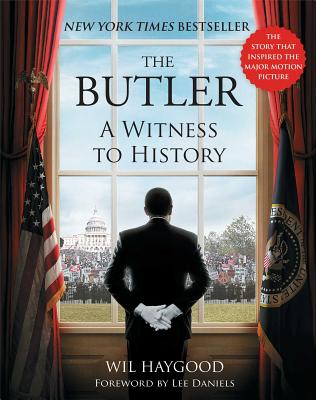
When acclaimed Washington Post writer Wil Haygood had an early hunch that Obama would win the 2008 election, he thought he’d highlight the singular moment by exploring the life of someone who had come of age when segregation was so widespread, so embedded in the culture as to make the very thought of a black president inconceivable. He struck gold when he tracked down Eugene Allen, a butler who had served no fewer than eight presidents, from Harry Truman to Ronald Reagan. During his thirty-four years of service, Allen became what the Independent described as a “discreet stagehand who for three decades helped keep the show running in the most important political theatre of all.”
While serving tea and supervising buffets, Allen was also a witness to history as decisions about America’s most momentous events were being made. Here he is at the White House while Kennedy contemplates the Cuban missile crisis; here he is again when Kennedy’s widow returns from that fateful day in Dallas. Here he is when Johnson and his cabinet debate Vietnam, and here he is again when Ronald Reagan is finally forced to get tough on apartheid. Perhaps hitting closest to home was the civil rights legislation that was developed, often with passions flaring, right in front of his eyes even as his own community of neighbors, friends, and family were contending with Jim Crow America.
With a foreword by the Academy Award– nominated director Lee Daniels, The Butler also includes an essay, in the vein of James Baldwin’s jewel The Devil Finds Work, that explores the history of black images on celluloid and in Hollywood, and fifty-seven pictures of Eugene Allen, his family, the presidents he served, and the remarkable cast of the movie.
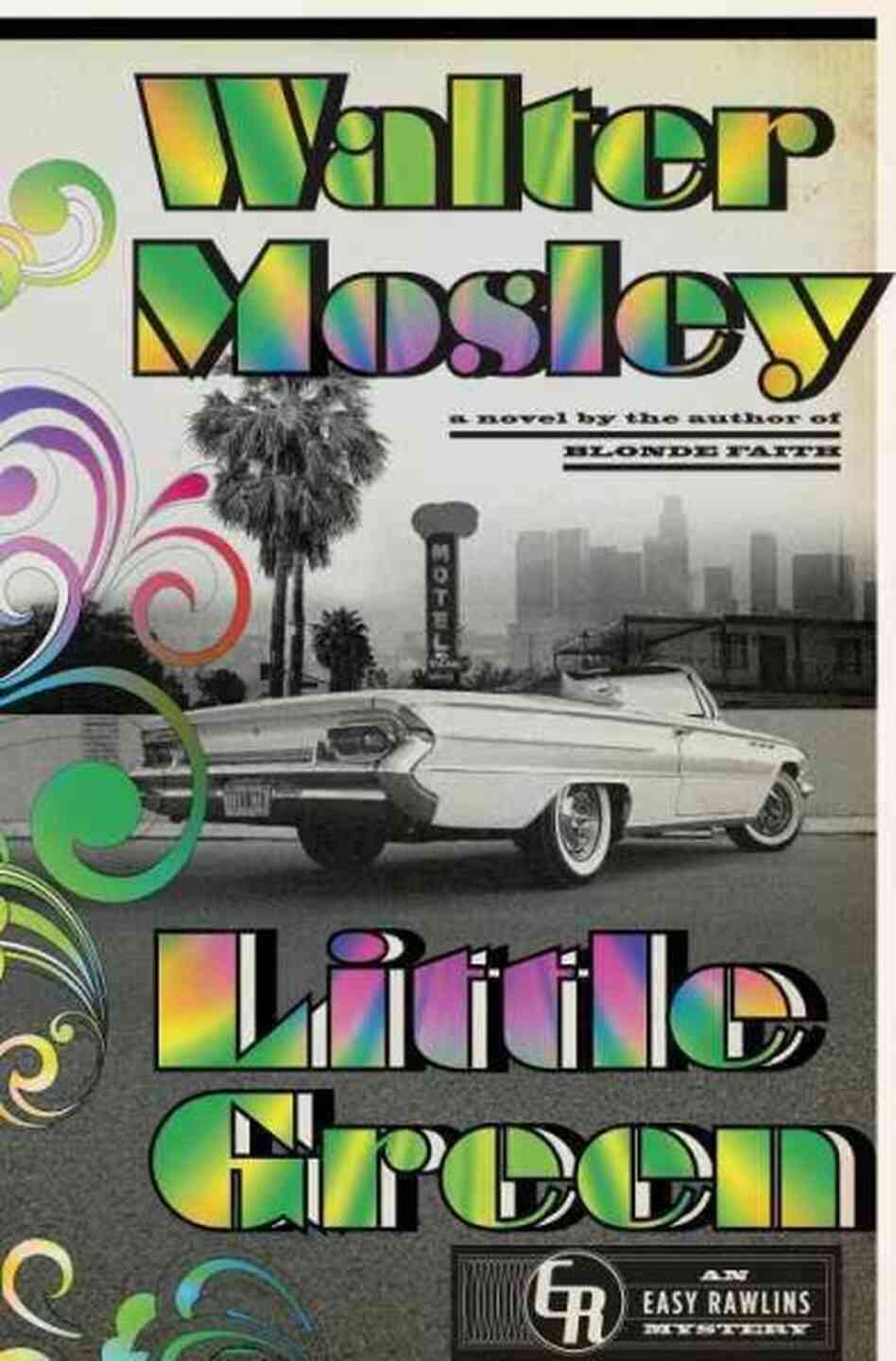
In Little Green, Walter Mosley’s acclaimed detective Easy Rawlins returns from the brink of death to investigate the dark side of that haven for Los Angeles hippies, the Sunset Strip. He’s soon back in top form, cruising the gloriously psychedelic mean streets of L.A. with his murderous sidekick, Mouse. They’ve been hired to look for a young black man, Evander “Little Green” Noon, who disappeared during an acid trip.
Fueled by an elixir called Gator’s Blood, Easy experiences a physical, spiritual, and emotional resurrection, but peace and love soon give way to murder and mayhem.
From a breathtaking new voice, a novel about a splintered family in Kenya—a story of power and deceit, unrequited love, survival and sacrifice.
Odidi Oganda, running for his life, is gunned down in the streets of Nairobi. His grief-stricken sister, Ajany, just returned from Brazil, and their father bring his body back to their crumbling home in the Kenyan drylands, seeking some comfort and peace. But the murder has stirred memories long left untouched and unleashed a series of unexpected events: Odidi and Ajany’s mercurial mother flees in a fit of rage; a young Englishman arrives at the Ogandas’ house, seeking his missing father; a hardened policeman who has borne witness to unspeakable acts reopens a cold case; and an all-seeing Trader with a murky identity plots an overdue revenge. In scenes stretching from the violent upheaval of contemporary Kenya back through a shocking political assassination in 1969 and the Mau Mau uprisings against British colonial rule in the 1950s, we come to learn the secrets held by this parched landscape, buried deep within the shared past of the family and of a conflicted nation.
Here is a spellbinding novel about a brother and sister who have lost their way; about how myths come to pass, history is written, and war stains us forever.