Friday, July 26, 2013

TC Literary Tidbit: George Bernard Shaw was born on this day in 1856


George Bernard Shaw (26 July 1856 – 2 November 1950) was an Irish playwright and a co-founder of the London School of Economics. Although his first profitable writing was music and literary criticism, in which capacity he wrote many highly articulate pieces of journalism, his main talent was for drama, and he wrote more than 60 plays. He was also an essayist, novelist and short story writer. Nearly all his writings address prevailing social problems, but have a vein of comedy which makes their stark themes more palatable. Issues which engaged Shaw's attention included education, marriage, religion, government, health care, and class privilege.

He is the only person to have been awarded both a Nobel Prize in Literature (1925) and an Oscar (1938), for his contributions to literature and for his work on the film Pygmalion (adaptation of his play of the same name), respectively.  Shaw wanted to refuse his Nobel Prize outright because he had no desire for public honours, but accepted it at his wife's behest: she considered it a tribute to Ireland. He did reject the monetary award, requesting it be used to finance translation of fellow playwright August Strindberg's works from Swedish to English .  Wikipedia

Thursday, July 25, 2013

"... since I can honestly say I also learned something, this book would be helpful to an audience of a wide age range." ~Jocelyn


Did you know the Grinch was on a quest? What does it mean when a hero takes a journey? Gets caught in the rain? Or eats green eggs and ham? And what are vampires really about?

One thing is certain—there's always more to a story than you think!

In this funny and practical young readers' version of Thomas C. Foster's New York Times bestselling book How to Read Literature Like a Professor, Foster offers a whole new perspective on reading, drawing from a wide range of classics and favorites to explore what stories mean to us and how we can understand them. Using all genres—novels, short stories, plays, poems, movies, and song lyrics—Foster gives kids the hidden tools for reading, making it fun and exciting!

Browse inside the book HERE.

Jocelyn says:
"Thomas Foster refers to modern and classic literature while  giving examples of how recognizing symbolism adds a depth and richness to the enjoyment of 'most any story in his surprisingly interesting book How To Read Literature Like A Professor For Kids. He writes in a breezy, easy to grasp style that is perfect for both hardcore and more casual mid-grade readers, though since I can honestly say I also learned something, this book would be helpful to an audience of a wide age range.


This book can be enjoyed on more than one level, so it could be read multiple times and give the reader more each time. I'm going to send a copy to a gifted 3rd grader, but I am serious when I say most middle and high schoolers would learn something from it, too. 2 thumbs up!"

Eric B.'s Recommending:

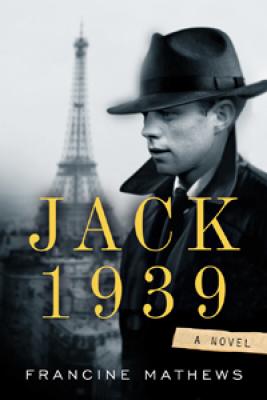
In "one of the most deliciously high-concept thrillers imaginable" (The New Yorker) a young JFK travels to Europe on a secret mission for President Roosevelt

It’s the spring of 1939, and the prospect of war in Europe looms large. The United States has no intelligence service. In Washington, D.C., President Franklin Roosevelt may run for an unprecedented third term and needs someone he can trust to find out what the Nazis are up to. His choice: John F. Kennedy.

It’s a surprising selection. At twenty-two, Jack Kennedy is the attractive but unpromising second son of Joseph P. Kennedy, Roosevelt’s ambassador to Britain (and occasional political adversary). But when Jack decides to travel through Europe to gather research for his Harvard senior thesis, Roosevelt takes the opportunity to use him as his personal spy. The president’s goal: to stop the flow of German money that has been flooding the United States to buy the 1940 election—an election that Adolf Hitler intends Roosevelt lose.

In a deft mosaic of fact and fiction, Francine Mathews has written a gripping espionage tale that explores what might have happened when a young Jack Kennedy is let loose in Europe as the world careens toward war. A potent combination of history and storytelling, Jack 1939 is a sexy, entertaining read.


Recently returned from fin de siècle Vienna, where she tragically lost the first great love of her life, Eleanor Burden settles into her expected place in Boston society, marries a suitable husband, and waits for life to come to her. Eleanor’s story is not unlike that of the other young women she grew up with in 1890’s Boston, except for one difference: Eleanor believes herself to have advance knowledge of every major historical event to come in her lifetime. But soon Eleanor’s script of events begins to unravel, and she must find the courage of her deepest convictions, discover the difference between predetermination and free will, find faith in her own sanity, and decide whether she will allow history to unfold come what may — or use her extraordinary gifts to bend history and deliver the life she is meant to have.


Winner of the 2013 Colorado Book Award for Literary Fiction - a poignant, darkly comic debut novel about a father and son finding their way together as their livelihood inexorably disappears

When Stacey “Shakespeare” Williams returns to the family farm in eastern Colorado to bury his dead cat, he finds his widowed father, Emmett, living in squalor. There’s no money, the land is fallow, and a local banker has cheated the senile Emmett out of the majority of the farm equipment and his beloved Cessna.

Unemployed and without prospects, Shakespeare settles in as caretaker to both his dad and the farm while simultaneously getting drawn into an unlikely clique of former classmates. Threatened with the farm’s foreclosure, Shakespeare, Emmett, and his misfit friends hatch a half-serious plot to rob the very bank that stole their future.


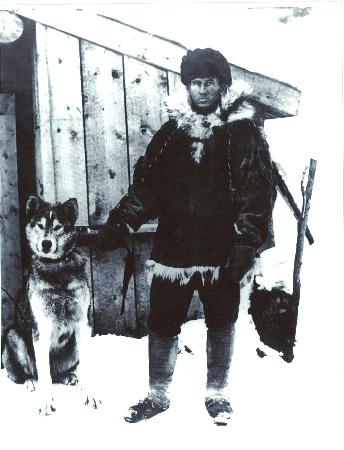
TC Literary Tidbit: On this day in 1897...


...Jack London heads off to join the Klondike Gold Rush, where he will write his first successful stories.


Wednesday, July 24, 2013

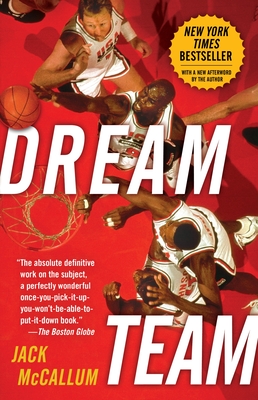
Where's Booker? Hanging With The Dream Team

The book began by dispelling what is probably still a commonly held myth, that it was USA basketball that wanted professional basketball players in the Olympics.  The first chapter related the story of the former meat inspector turned FIBA (Fédération Internationale de Basketball) observer, Boris Stankovic,  who came to the United States to watch basketball  being played.   It was 1974, well before the era of Larry Bird and Magic Johnson, but even then, it was clear to him that professional basketball in America was at a different level while watching Oscar Robertson, Jerry West, Walt Frazier, and Pete Maravich play.    He said, "My concern was trying to make the game of basketball strong, to grow it, and yet there was the separation [between the amateur level and professional level].  It became impossible for me to tolerate."

It was 10 years before Boris Stankovic met with David Stern and Russ Granik, commissioner and deputy commissioner of the NBA to broach the subject.    By that time, Magic and Bird had reinvigorated the NBA  and a young Chicago Bull, Michael Jordan was in his second year in the league. 

The momentum was growing both for the NBA and the possibility for a sort of super team, an A-Team,  a group of basketball mutants or Avengers.  McCallum detailed the highs and lows of each player selected and several things stood out about them.  First, they came from very diverse their backgrounds and upbringings.  They, quite literally, represented America as the great American melting pot.  Second, how driven and competitive each of the Dream Team members were.  They didn't accept anything less than being the best.  In example after example, McCallum describes how each of these stars were already blessed with world class athletic ability.  However, what made each one of them the greatest at their position and led to their inclusion, is because they individually outworked everyone else, their drive.   The team of Charles Barkley, Larry Bird, Clyde Drexler, Patrick Ewing, Magic Johnson, Michael Jordan, Christian Laettner, Karl Malone, Chris Mullin, Scottie Pippen, David Robinson, and John Stockton gave America and the world something to remember forever.  And Pistons coach, Chuck Daly was able to bring all of them together in a way that probably only he could.  

By the time professional stars were allowed, Larry Bird was battling constant back problems, Magic Johnson had declared that he was HIV positive, when this was still new to the American consciousness, and Michael Jordan was in his prime.  They signed on to play for USA Basketball and created a Beatles like sensation everywhere they went during the Barcelona Olympics.  Twenty four hour security in a hotel that housed them and their families made for a very different experience than the other Olympians in the Olympic village.

McCallum also wrote about the agents, the endorsements, the egos, and ultimately the play that resulted in the most dominating performances game after game against overwhelmed basketball teams who were as star struck as those attending the Olympics or watching on TV from home.  McCallum does not gloss over the darker moments  like when Charles Barkley elbowed an undersized Angolan who idolized him or when Michael Jordan and Scottie Pippen played such ruthless defense on their future Bull teammate, Toni Kukoc.  But, he portrayed a moment in time where multimillionaires with nothing to gain exemplified to the world what happens when the best athletes put aside everything else in the name of the team.

Near the end of the book, McCallum described the international impact of this Dream Team as so many of the current, international, NBA stars were watching as teenagers or college students at the time.  These included  Dirk Nowitzki, in Germany now of the Dallas Mavericks,  Manu Ginobili, in Argentina, of the San Antonio Spurs, Pau Gasol from Spain of the Lakers, Mehmet Okur from Turkey, Tony Parker in France, Tim Duncan of the Bahamas, and Canadian Steve Nash.   All of their athletic and, at times,  their career paths took a dramatic shift by watching the Dream Team.

Readers who enjoyed other books portraying sports and its place in history like David Halberstam's Playing for Keeps, Jane Leavy's Sandy Koufax:  A Lefty's Legacy, or David Remnick's King of the World:  Muhammed Ali and the Rise of an American Hero will enjoy McCallum's Dream Team.

--Edward

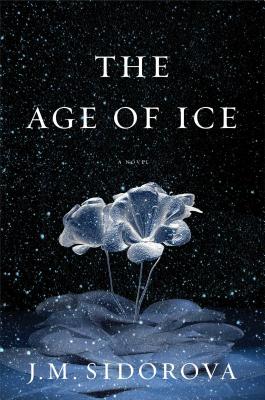
"Jeweled with the kind of narrative intricacies and heights of fancy that transform a good story into a sensory glut, in this mesmerizing debut, Sidorova reduces you to a primal state of readership, casting you into darkness so vast that you have no choice but to press on and discover what about it feels so familiar. The Age of Ice rekindles every far-flung childhood memory you have of what it means to experience a great book." ~Téa Obreht, author of The Tiger's Wife


The Empress Anna Ioannovna has issued her latest eccentric order: construct a palace out of ice blocks. Inside its walls her slaves build a wedding chamber, a canopy bed on a dais, heavy drapes cascading to the floor—all made of ice. Sealed inside are a disgraced nobleman and a deformed female jester. On the empress’s command—for her entertainment—these two are to be married, the relationship consummated inside this frozen prison. In the morning, guards enter to find them half-dead. Nine months later, two boys are born.

Surrounded by servants and animals, Prince Alexander Velitzyn and his twin brother, Andrei, have an idyllic childhood on the family’s large country estate. But as they approach manhood, stark differences coalesce. Andrei is daring and ambitious; Alexander is tentative and adrift. One frigid winter night on the road between St. Petersburg and Moscow, as he flees his army post, Alexander comes to a horrifying revelation: his body is immune to cold.

J. M. Sidorova’s boldly original and genrebending novel takes readers from the grisly fields of the Napoleonic Wars to the blazing heat of Afghanistan, from the outer reaches of Siberia to the cacophonous streets of nineteenth-century Paris. The adventures of its protagonist, Prince Alexander Velitzyn—on a lifelong quest for the truth behind his strange physiology—will span three continents and two centuries and bring him into contact with an incredible range of real historical figures, from Mary Shelley, the author of Frankenstein, to the licentious Russian empress Elizaveta and Arctic explorer Joseph Billings.

The Age of Ice is one of the most enchanting and inventive debut novels of the year.

You can get a little taste of this book HERE.


TC Tidbit: A Wonderful NPR Interview with Gillian Flynn