Thursday, May 2, 2013

Jackie Thinks This Is a Delightful Book, Even If It Did Make Her Cry


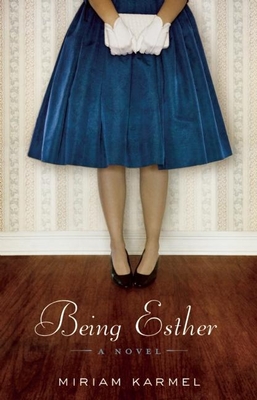
"Growing old is one of the most surprising things that has happened to her. She hadn't given it any thought. Then one day, she was eighty-five. Not just old, but an object of derision, pity. Is there any use explaining that she is still herself—albeit a slower, achier, creakier version of the original?"
—from Being Esther

Being Esther intimately explores the interior consciousness of an elderly Jewish woman who lives as much in the past as in the present.

Whereas the past includes pleasant memories of family, love and lust, the happy confines of marriage, and the rare occasions to break those confines—like taking a part-time job as a bookseller at Kroch's & Brentano's—the present includes crossing out the names of the deceased in a phone book, fending off attempts by her daughter to move into assisted living, daily check-ins with a neighbor, and the occasional outing. Not prone to self-pity, Esther is at moments lucid and then suddenly lost in a world which has disappeared along with many who had inhabited it.

Miriam Karmel's fiction debut brings understanding and tremendous empathy to the character of Esther Lustig, a woman who readers will not soon forget.

Jackie says:
"This delightful book is about Esther, age 85, and her last few months before her death.  She's as real as any character I've ever fallen in love with.  She has some regrets, some joys, and a whole lot of opinions.  She's a normal woman who had a normal life, a normal marriage, a normal motherhood, but there is a spark to her that just won't fade.  She's the same person she's always been, as she sees it, though admittedly older, creakier, slower.  A simple life is not a boring life—not by any means. Thank you, Esther, for reminding me of that! What a delightful book, even if it did end up making me cry."


"Fierce, frank, raw and profoundly moving." —Kirkus Reviews


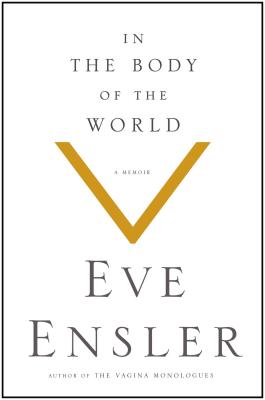
From the bestselling author of The Vagina Monologues and one of Newsweek’s 150 Women Who Changed the World, a visionary memoir of separation and connection—to the body, the self, and the world

Playwright, author, and activist Eve Ensler has devoted her life to the female body—how to talk about it, how to protect and value it. Yet she spent much of her life disassociated from her own body—a disconnection brought on by her father’s sexual abuse and her mother’s remoteness. “Because I did not, could not inhabit my body or the Earth,” she writes, “I could not feel or know their pain.”

But Ensler is shocked out of her distance. While working in the Congo, she is shattered to encounter the horrific rape and violence inflicted on the women there. Soon after, she is diagnosed with uterine cancer, and through months of harrowing treatment, she is forced to become first and foremost a body—pricked, punctured, cut, scanned. It is then that all distance is erased. As she connects her own illness to the devastation of the earth, her life force to the resilience of humanity, she is finally, fully—and gratefully—joined to the body of the world.

Unflinching, generous, and inspiring, Ensler calls on us all to embody our connection to and responsibility for the world.

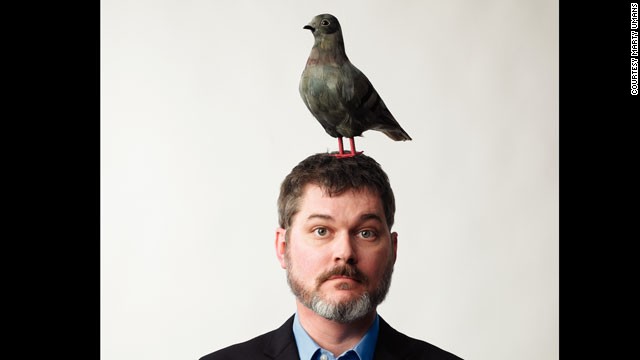
TC Tidbit: An Interview with Mo Willems

Wednesday, May 1, 2013

"Hill gives himself a broader canvas of 600-some pages and two decades to tell a story of good vs.evil...and the result is a spectacularly exciting ride." --Hank


Joe Hill, the acclaimed, award-winning author of the New York Times bestsellers Heart-Shaped Box and Horns, plunges you into the dark side of imagination with a thrilling novel of supernatural suspense that will have you flinching at shadows and checking the rearview mirror again and again. . . .

NOS4A2

Don't slow down

Victoria McQueen has an uncanny knack for finding things: a misplaced bracelet, a missing photograph, answers to unanswerable questions. When she rides her bicycle over the rickety old covered bridge in the woods near her house, she always emerges in the places she needs to be. Vic doesn't tell anyone about her unusual ability, because she knows no one will believe her. She has trouble understanding it herself.

Charles Talent Manx has a gift of his own. He likes to take children for rides in his 1938 Rolls-Royce Wraith with the vanity plate NOS4A2. In the Wraith, he and his innocent guests can slip out of the everyday world and onto hidden roads that lead to an astonishing playground of amusements he calls Christmasland. Mile by mile, the journey across the highway of Charlie's twisted imagination transforms his precious passengers, leaving them as terrifying and unstoppable as their benefactor.

And then comes the day when Vic goes looking for trouble . . . and finds her way, inevitably, to Charlie.
That was a lifetime ago. Now, the only kid ever to escape Charlie's unmitigated evil is all grown up and desperate to forget.

But Charlie Manx hasn't stopped thinking about the exceptional Victoria McQueen. On the road again, he won't slow down until he's taken his revenge. He's after something very special—something Vic can never replace.

As a life-and-death battle of wills builds—her magic pitted against his—Vic McQueen prepares to destroy Charlie once and for all . . . or die trying. . . .


Hank says:
"In his third novel, Hill gives himself a broader canvas of 600-some pages and two more decades to tell a story of good vs.evil than he did in Heart-Shaped Box or Horns, and the result is a spectacularly exciting ride, by bicycle, creepy Rolls-Royce, and motorcycle.

Vic McQueen, a little girl with an otherworldly knack for finding lost things, is the only child ever to have survived the clutches of serial kidnapper/killer Charles Talent Manx. Her escape results in his comatose incarceration in a federal prison, but he's not the only one with unusual abilities. Years later, Manx fakes his death and slips out, and hits the road again, in his car with the license plate NOS4A2, this time coming after Vic's son Wayne, intending to take him to join the other children he's collected over the years, in a special place called Christmasland....

The good characters, none more than Vic herself, are flawed and dysfunctional, though in a generally sympathetic way that makes them more interesting and endearing. Among those who help Vic in her desperate attempt to retrieve Wayne are a stammering librarian who divines things using Scrabble tiles, an adversarial but goodhearted FBI agent, and Vic's ex-husband Lou, the father of Wayne. 


It seemed to me for awhile that it was an open secret that Stephen King is Joe Hill's father, but that he was trying to establish himself on his own merit, and it wasn't polite to talk about it. Maybe now that they've collaborated on Road Rage, the cat is out of whatever flimsy bag it may ever have been in, or maybe it was just my own misperception. In any case, NOS4A2 contains direct references to several of King's works, including It, The Dark Tower, and even the forthcoming Doctor Sleep. Manx's assistant Bing Partridge, aka the Gasmask Man, parrots The Stand's Trashcan Man at one point, and there are less direct similarities to many others: Firestarter, The Dead Zone, Christine, and the short story "Mrs. Todd's Shortcut," to name just a few. Hill dedicates the book to his mom, and it can't be a coincidence that the FBI agent is named Tabitha! Lovecraft also gets a nod, and his own brief career has been embellished by many other writers wishing to share in his literary creation. It's all in good fun, and why not?" 

Save The Date!!!

Free numbered tickets for a place in the signing line will be handed out at 6:00 pm. Seating for the presentation prior to the signing is limited, and available on a first-come, first-served basis to ticketed customers only.

Liz and Michele Are Recommending...

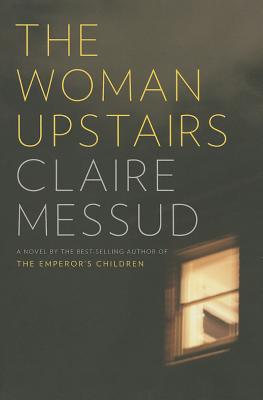
Nora Eldridge, an elementary school teacher in Cambridge, Massachusetts, long ago compromised her dream to be a successful artist, mother and lover. She has instead become the “woman upstairs,” a reliable friend and neighbor always on the fringe of others’ achievements. Then into her life arrives the glamorous and cosmopolitan Shahids—her new student Reza Shahid, a child who enchants as if from a fairy tale, and his parents: Skandar, a dashing Lebanese professor who has come to Boston for a fellowship at Harvard, and Sirena, an effortlessly alluring Italian artist.

When Reza is attacked by schoolyard bullies, Nora is drawn deep into the complex world of the Shahid family; she finds herself falling in love with them, separately and together. Nora’s happiness explodes her boundaries, and she discovers in herself an unprecedented ferocity—one that puts her beliefs and her sense of self at stake.

Told with urgency, intimacy and piercing emotion, this brilliant novel of passion and artistic fulfillment explores the intensity, thrill—and the devastating cost—of embracing an authentic life.


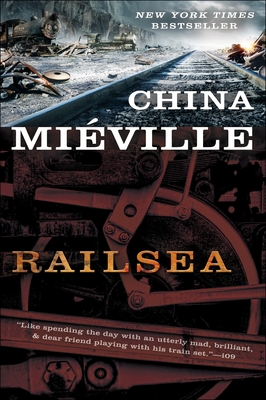
On board the moletrain Medes, Sham Yes ap Soorap watches in awe as he witnesses his first moldywarpe hunt: the giant mole bursting from the earth, the harpoonists targeting their prey, the battle resulting in one’s death & the other’s glory. Spectacular as it is, Sham can’t shake the sense that there is more to life than the endless rails of the railsea—even if his captain thinks only of hunting the ivory-colored mole that took her arm years ago. But when they come across a wrecked train, Sham finds something—a series of pictures hinting at something, somewhere, that should be impossible—that leads to considerably more than he’d bargained for. Soon he’s hunted on all sides, by pirates, trainsfolk, monsters & salvage-scrabblers. & it might not be just Sham’s life that’s about to change. It could be the whole of the railsea.
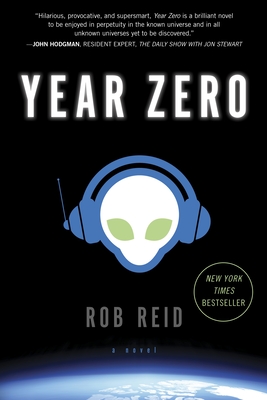

Low-level entertainment lawyer Nick Carter thinks it’s a prank, not an alien encounter, when a redheaded mullah and a curvaceous nun show up at his office. But Frampton and Carly are highly advanced (if bumbling) extraterrestrials. The entire cosmos, they tell him, has been hopelessly hooked on American pop songs ever since “Year Zero” (1977 to us), resulting in the biggest copyright violation since the Big Bang and bankrupting the whole universe. Nick has just been tapped to clean up this mess before things get ugly. Thankfully, this unlikely galaxy-hopping hero does know a thing or two about copyright law. Now, with Carly and Frampton as his guides, Nick has forty-eight hours to save humanity—while hoping to wow the hot girl who lives down the hall from him.


By the author of the New York Times bestselling Everest: Mountain Without Mercy, this chronicle of the iconic first American expedition to Mt. Everest in May 1963 – published to coincide with the climb's 50th anniversary­ – combines riveting adventure, a perceptive analysis of its dark and terrifying historical context, and revelations about a secret mission that followed. 
In the midst of the Cold War, against the backdrop of the Bay of Pigs fiasco, the space race with the Soviet Union, and the quagmire of the Vietnam War, a band of iconoclastic, independent-minded American mountaineers set off for Mt. Everest, aiming to restore America's confidence and optimism.  Their objective is to reach the summit while conducting scientific research, but which route will they take?  Might the Chinese, in a public relations coup, have reached the top ahead of them?  And what about another American team, led by the grandson of a President, that nearly bagged the peak in a bootleg attempt a year earlier?

The Vast Unknown is, on one level, a harrowing, character-driven account of the climb itself and its legendary team of alternately inspiring, troubled, and tragic climbers who suffered injuries, a near mutiny, and death on the mountain.  It is also an examination of the profound sway the expedition had over the American consciousness and sense of identity during a time when the country was floundering.  And it is an investigation of the expedition's little-known outcome: the selection of a team to plant a CIA surveillance device on the Himalayan peak of Nanda Devi, to spy into China where Defense Intelligence learned that nuclear missile testing was underway.

TC Tidbit: Don DeLillo Wins The First Library of Congress Prize for American Fiction