The Alchemist, originally published in 1988, is the story of the spiritual quest of a shepherd boy. There are dreams to be followed, directions from wise advisers and lessons from the universe. The book has been translated into 71 languages and sold more than 40 million copies. (via Jacket Copy)
“It was an old dream of mine to have The Alchemist as a graphic novel. This version exceeds my expectations and is a beautiful manifestation of what I originally imagined while crafting this story.” —Paulo CoelhoFriday, December 3, 2010


Thursday, December 2, 2010
Historical Anniversaries Have Mark L. Recommending...
For the 150th anniversary of Civil War:
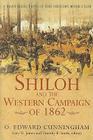 Shiloh and the Western Campaign on 1862
The bloody and decisive two-day battle of Shiloh (April 6-7, 1862) changed the entire course of the American Civil War. The stunning Northern victory thrust Union commander Ulysses S. Grant into the national spotlight, claimed the life of Confederate commander Albert S. Johnston, and forever buried the notion that the Civil War would be a short conflict.
The conflagration at Shiloh had its roots in the strong Union advance during the winter of 1861-1862 that resulted in the capture of Forts Henry and Donelson in Tennessee. The offensive collapsed General Albert S. Johnston's advanced line in Kentucky and forced him to withdraw all the way to northern Mississippi. Anxious to attack the enemy, Johnston began concentrating Southern forces at Corinth, a major railroad center just below the Tennessee border. His bold plan called for his Army of the Mississippi to march north and destroy General Grant's Army of the Tennessee before it could link up with another Union army on the way to join him.
On the morning of April 6, Johnston boasted to his subordinates, "Tonight we will water our horses in the Tennessee " They nearly did so. Johnston's sweeping attack hit the unsuspecting Federal camps at Pittsburgh Landing and routed the enemy from position after position as they fell back toward the Tennessee River. Johnston's sudden death in the Peach Orchard, however, coupled with stubborn Federal resistance, widespread confusion, and Grant's dogged determination to hold the field, saved the Union army from destruction. The arrival of General Don C. Buell's reinforcements that night turned the tide of battle. The next day, Grant seized the initiative and attacked the Confederates, driving them from the field. Shiloh was one of the bloodiest battles of the entire war, with nearly 24,000 men killed, wounded, and missing.
 War Like the Thunderbolt
Called “the greatest event of the Civil War” by New York diarist George Templeton Strong, the epic struggle for the city of Atlanta in the bloody summer of 1864 was a pivotal moment in American history. Union commander William Tecumseh Sherman’s relentless fight for the city secured the reelection of Abraham Lincoln, sealed the fate of the Southern Confederacy, and set a precedent for military campaigns that endures today. Its depiction in the novel and motion picture Gone with the Wind established the fight for Atlanta as an iconic episode in our nation’s most terrible war. In War Like the Thunderbolt: The Battle and Burning of Atlanta, award-winning author Russell S. Bonds takes the reader behind the lines and across the smoky battlefields of Peachtree Creek, Atlanta, Ezra Church, and Jonesboro, and into the lives of fascinating characters, both the famous and the forgotten, including the fiery and brilliant Sherman; General John Bell Hood, the Confederacy’s last hope to defend Atlanta; Benjamin Harrison, the diminutive young Indiana colonel who would rise to become President of the United States; Patrick Cleburne, the Irishman-turned- Southern officer; and ten-year-old diarist Carrie Berry, who bravely withstood and bore witness to the fall of the city. Here also is the dramatic story of the ordeal of Atlanta itself—the five-week artillery bombardment, the expulsion of its civilian population, and the infamous fire that followed. Based on new research in diaries, newspapers, previously unpublished letters, and other archival sources, War Like the Thunderbolt is a combination of captivating narrative and insightful military analysis—a stirring account of the battle and burning of the “Gate City of the South.”
Regarding the Alamo siege and battle, which will have its 175th anniversary Feb.23-Mar.6,2011, Mark recommends:
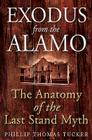 Exodus from the Alamo
A startling new analysis of one of America's most glorious battles . . .
Shiloh and the Western Campaign on 1862The bloody and decisive two-day battle of Shiloh (April 6-7, 1862) changed the entire course of the American Civil War. The stunning Northern victory thrust Union commander Ulysses S. Grant into the national spotlight, claimed the life of Confederate commander Albert S. Johnston, and forever buried the notion that the Civil War would be a short conflict.
The conflagration at Shiloh had its roots in the strong Union advance during the winter of 1861-1862 that resulted in the capture of Forts Henry and Donelson in Tennessee. The offensive collapsed General Albert S. Johnston's advanced line in Kentucky and forced him to withdraw all the way to northern Mississippi. Anxious to attack the enemy, Johnston began concentrating Southern forces at Corinth, a major railroad center just below the Tennessee border. His bold plan called for his Army of the Mississippi to march north and destroy General Grant's Army of the Tennessee before it could link up with another Union army on the way to join him.
On the morning of April 6, Johnston boasted to his subordinates, "Tonight we will water our horses in the Tennessee " They nearly did so. Johnston's sweeping attack hit the unsuspecting Federal camps at Pittsburgh Landing and routed the enemy from position after position as they fell back toward the Tennessee River. Johnston's sudden death in the Peach Orchard, however, coupled with stubborn Federal resistance, widespread confusion, and Grant's dogged determination to hold the field, saved the Union army from destruction. The arrival of General Don C. Buell's reinforcements that night turned the tide of battle. The next day, Grant seized the initiative and attacked the Confederates, driving them from the field. Shiloh was one of the bloodiest battles of the entire war, with nearly 24,000 men killed, wounded, and missing.
War Like the ThunderboltCalled “the greatest event of the Civil War” by New York diarist George Templeton Strong, the epic struggle for the city of Atlanta in the bloody summer of 1864 was a pivotal moment in American history. Union commander William Tecumseh Sherman’s relentless fight for the city secured the reelection of Abraham Lincoln, sealed the fate of the Southern Confederacy, and set a precedent for military campaigns that endures today. Its depiction in the novel and motion picture Gone with the Wind established the fight for Atlanta as an iconic episode in our nation’s most terrible war. In War Like the Thunderbolt: The Battle and Burning of Atlanta, award-winning author Russell S. Bonds takes the reader behind the lines and across the smoky battlefields of Peachtree Creek, Atlanta, Ezra Church, and Jonesboro, and into the lives of fascinating characters, both the famous and the forgotten, including the fiery and brilliant Sherman; General John Bell Hood, the Confederacy’s last hope to defend Atlanta; Benjamin Harrison, the diminutive young Indiana colonel who would rise to become President of the United States; Patrick Cleburne, the Irishman-turned- Southern officer; and ten-year-old diarist Carrie Berry, who bravely withstood and bore witness to the fall of the city. Here also is the dramatic story of the ordeal of Atlanta itself—the five-week artillery bombardment, the expulsion of its civilian population, and the infamous fire that followed. Based on new research in diaries, newspapers, previously unpublished letters, and other archival sources, War Like the Thunderbolt is a combination of captivating narrative and insightful military analysis—a stirring account of the battle and burning of the “Gate City of the South.”
Regarding the Alamo siege and battle, which will have its 175th anniversary Feb.23-Mar.6,2011, Mark recommends:
Exodus from the AlamoA startling new analysis of one of America's most glorious battles . . .
Contrary to movie and legend, we now know that the defenders of the Alamo in the war for Texan independence-including Davy Crockett, Jim Bowie and William B. Travis-did not die under brilliant sunlight, defending their positions against hordes of Mexican infantry. Instead the Mexicans launched a predawn attack, surmounting the walls in darkness, forcing a wild melee inside the fort before many of its defenders had even awoken.
In this book, Dr. Tucker, after deep research into recently discovered Mexican accounts and the forensic evidence, informs us that the traditional myth of the Alamo is even more off-base: most of the Alamo's defenders died in breakouts from the fort, cut down by Santa Anna's cavalry that had been pre-positioned to intercept the escapees.
To be clear, a number of the Alamo's defenders hung on inside the fort, fighting back every way they could. Captain Dickinson, with cannon atop the chapel (in which his wife hid), fired repeatedly into the Mexican throng of enemy cavalry until he was finally cut down. The controversy on Crockett still remains, though the recently authenticated diary of the Mexican de la Pena offers evidence that he surrendered.
The most startling aspect of this book is that most of the Texans, in two gallantly led groups, broke out of the fort after the enemy had broken in, and the primary fights took place on the plain outside. Still fighting desperately, the Texans' retreat was halted by cavalry, and afterward Mexican lancers plied their trade with bloodcurdling charges into the midst of the remaining resisters.
Notoriously, Santa Anna burned the bodies of the Texans who had dared stand against him. As this book proves in thorough detail, the funeral pyres were well outside the fort-that is, where the two separate groups of escapees fell on the plain, rather than in the Alamo itself.
Graphic Focus on Lynda Barry
Lynda Barry is "one of the most successful non-mainstream American cartoonists" according to Wikipedia. Here are some of her fantastic books that we have available right now.
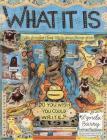 What It Is
“Deliciously drawn (with fragments of collage worked into each page), insightful and bubbling with delight in the process of artistic creation. A+” —Salon
How do objects summon memories? What do real images feel like? For decades, these types of questions have permeated the pages of Lynda Barry’s compositions, with words attracting pictures and conjuring places through a pen that first and foremost keeps on moving. What It Is demonstrates a tried-and-true creative method that is playful, powerful, and accessible to anyone with an inquisitive wish to write or to remember. Composed of completely new material, each page of Barry’s first Drawn & Quarterly book is a full-color collage that is not only a gentle guide to this process but an invigorating example of exactly what it is: “The ordinary is extraordinary.”
 Picture This
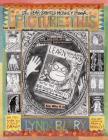
Lynda Barry single-handedly created a literary genre all her own, the graphic memoir/how-to, otherwise known as the bestselling, the acclaimed, but most important, the adored and the inspirational What It Is. The R. R. Donnelley and Eisner Award–winning book posed, explored, and answered the question: “Do you wish you could write?” Now with Picture This, Barry asks: “Do you wish you could draw?” It features the return of Barry’s most beloved character, Marlys, and introduces a new one, the Near-sighted Monkey. Like What It Is,Picture This is an inspirational, take-home extension of Barry’s traveling, continually sold-out, and sought-after workshop, “Writing the Unthinkable.”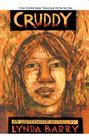 Cruddy
On a September night in 1971, a few days after getting busted for dropping acid, a sixteen-year-old curls up in the corner of her ratty bedroom and begins to write.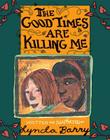 The Good Times are Killing Me
In her first novel, a famed cartoonist tells the sensitive story of a young girl's coming of age in the 1960s. "Deft and deceptively simple . . . Ms. Barry has an impeccable ear, and this funny, intricate, and finally heartbreaking story exquisitely captures an American childhood".--The New York Times.
 One Hundred Demons
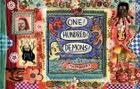
Here are 20 stories told in Barry's distinctive cartoon-narrative style that delve into the funk and sweetness of love, family, adolescence, race and the 'hood identity.
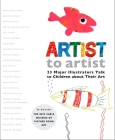 Artist to Artist
In this remarkable and beautiful anthology featuring the likes of Maurice Sendak, Robert Sabuda, Rosemary Wells, and Eric Carle, twenty-three of the most honored and beloved artists in children's literature talk informally to children--sharing secrets about their art and how they began their adventures into illustration. Fold-out pages featuring photographs of their early work, their studios and materials, as well as sketches and finished art create an exuberant feast for the eye that will attract both children and adults.
What It Is“Deliciously drawn (with fragments of collage worked into each page), insightful and bubbling with delight in the process of artistic creation. A+” —Salon
How do objects summon memories? What do real images feel like? For decades, these types of questions have permeated the pages of Lynda Barry’s compositions, with words attracting pictures and conjuring places through a pen that first and foremost keeps on moving. What It Is demonstrates a tried-and-true creative method that is playful, powerful, and accessible to anyone with an inquisitive wish to write or to remember. Composed of completely new material, each page of Barry’s first Drawn & Quarterly book is a full-color collage that is not only a gentle guide to this process but an invigorating example of exactly what it is: “The ordinary is extraordinary.”
Picture ThisLynda Barry single-handedly created a literary genre all her own, the graphic memoir/how-to, otherwise known as the bestselling, the acclaimed, but most important, the adored and the inspirational What It Is. The R. R. Donnelley and Eisner Award–winning book posed, explored, and answered the question: “Do you wish you could write?” Now with Picture This, Barry asks: “Do you wish you could draw?” It features the return of Barry’s most beloved character, Marlys, and introduces a new one, the Near-sighted Monkey. Like What It Is,Picture This is an inspirational, take-home extension of Barry’s traveling, continually sold-out, and sought-after workshop, “Writing the Unthinkable.”
CruddyOn a September night in 1971, a few days after getting busted for dropping acid, a sixteen-year-old curls up in the corner of her ratty bedroom and begins to write.
Now the truth can finally be revealed about the mysterious day long ago when the authorities found a child, calmly walking in the boiling desert, covered with blood.
The girl is Roberta Rohbeson, and her rant against a world bounded by "the cruddy top bedroom of a cruddy rental house on a very cruddy mud road" soon becomes a detailed account of another story, one that she has kept silent since she was eleven.
Darkly funny and resonant with humanity, Cruddy, masterfully intertwines Roberta's stories -- part Easy Rider and part bipolar Wizard of Oz. These stories, the backbone of Roberta's short life, include a one-way trip across America fueled by revenge and greed and a vivid cast of characters, starring Roberta's dangerous father, the owners of the Knocking Hammer Bar-cum-slaughterhouse, and runaway adolescents. With a teenager's eye for freakish detail and a nervous ability to make the most horrible scenes seem hilarious, Cruddy is a stunning achievement.
The Good Times are Killing MeIn her first novel, a famed cartoonist tells the sensitive story of a young girl's coming of age in the 1960s. "Deft and deceptively simple . . . Ms. Barry has an impeccable ear, and this funny, intricate, and finally heartbreaking story exquisitely captures an American childhood".--The New York Times.
One Hundred DemonsHere are 20 stories told in Barry's distinctive cartoon-narrative style that delve into the funk and sweetness of love, family, adolescence, race and the 'hood identity.
Artist to ArtistIn this remarkable and beautiful anthology featuring the likes of Maurice Sendak, Robert Sabuda, Rosemary Wells, and Eric Carle, twenty-three of the most honored and beloved artists in children's literature talk informally to children--sharing secrets about their art and how they began their adventures into illustration. Fold-out pages featuring photographs of their early work, their studios and materials, as well as sketches and finished art create an exuberant feast for the eye that will attract both children and adults.
Self-portraits of each illustrator crown this important anthology that celebrates the artists and the art of the picture book. An event book for the ages.
TC Tidbits: Patricia Cornwell's "American For Vets"
 America is facing a national crisis: a rise in the number of Veterans in need of our support. Now, everyone can get involved and help military veterans, men and women, who have served and sacrificed for our country, prepare for a better future.
 The America for Vets campaign aims to mobilize people across America to provide veterans in need with daily supplies as a part of Veterans Village of San Diego's daily life-readiness programs.  Veterans Village of San Diego is a nationally recognized nonprofit and nongovernmental organization that specializes in prevention, intervention, treatment, aftercare and employment services for military veterans, including men and women who have recently returned from Iraq and Afghanistan. Founded in 1981 by Vietnam veterans, Veterans Village of San Diego has five locations throughout San Diego County and serves more than 2,000 veterans each year.
How Can You Get Involved?
Beginning December 1st, at all of Patricia Cornwell's book tour stops, readers can make in-kind donations that will go towards the support of Veterans Village of San Diego.
Donations of the following items will be accepted:--Shampoo
--Body Wash
--Conditioner
--Comb
--Brush
--Hair Gel
--Toothbrush
--Toothpaste
--Dental Floss
--Deodorant (stick or spray)
--Lip Balm
--Disposable Razors
--Shaving Cream
--Q-Tips
--Feminine Products
--Toiletry Kit
For those supporters not able to attend the bookstore events, but who would like to send a donation directly to Veterans Village of San Diego, that can be done online at www.VVSD.net.
See Patricia Cornwell's tour stops »Wednesday, December 1, 2010
Holiday Book Picks with a Western Twist
Tattered Cover's lead buyer Cathy Langer and Nicole Magistro, owner of The Bookworm in Edwards were on "Colorado Matters", a program on Colorado Public Radio, talking about great western themed books to give for the holidays. (Listen to the program here.)
 Shinin' Times at the Fort
Part memoir, part cookbook with beautiful photography from Award winning photographer Lois Ellen Frank, author Holly Kinney lovingly tells the stories behind the recipes that have long been favorites at the world renowned restaurant The Fort, which was also her family's home. Historic recipes with a modern twist from rattlesnake to how to cook buffalo and game, to luscious desserts is a must for gift giving!
Meet Holly tomorrow night at 7:30 at our Colfax Avenue store. Click for details.
 Soldiers on Skis
Soldiers on Skis is the first complete history of the 10th Mountain Division––America's only troops specially trained for mountain and winter warfare––as told by the veterans themselves. Vivid personal accounts range from the humorous to the horrific to the heart-wrenching, and an outstanding collection of rare photographs captures the beautiful serenity of the division’s Colorado mountain training grounds as well as the stark brutality of the battlefield in Italy.
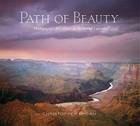 Path of Beauty
From sweeping vistas to intimate details of life along the Colorado River, master printer and photographer Christopher Brown takes readers on a beautiful, powerful journey through a previously undiscovered Grand Canyon.
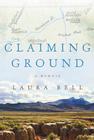 Claiming Ground
In 1977, Laura Bell, at loose ends after graduating from college, leaves her family home in Kentucky for a wild and unexpected adventure: herding sheep in Wyoming’s Big Horn Basin. Inexorably drawn to this life of solitude and physical toil, a young woman in a man’s world, she is perhaps the strangest member of this beguiling community of drunks and eccentrics. So begins her unabating search for a place to belong and for the raw materials with which to create a home and family of her own. Yet only through time and distance does she acquire the wisdom that allows her to see the love she lived through and sometimes left behind. 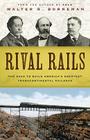 Rival Rails
From acclaimed historian Walter R. Borneman comes a dazzling account of the battle to build America’s transcontinental rail lines. Rival Rails is an action-packed epic of how an empire was born—and the remarkable men who made it happen.
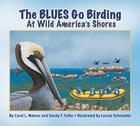 The Blues Go Birding at Wild American Shores
In this second of the BLUES Go Birding series, five adorable cartoon bluebirds go on another bird watching adventure. This time they follow in the footsteps of the famed Roger Tory Peterson, and see birds on every coastline of America. Filled with both information and fun, the BLUES are a delightful introduction to birdwatching and the major shorebird species.
 Bones
Bones
This book is far from skinny -- it's the definitive nonfiction title about human and animal bones, delivered with in-your-face accuracy and intrigue. In this visually driven volume, kids come face-to-face with some head-to-toe boney comparisons, many of them shown at actual size. Here you'll find the differences between a man's hand and that of a spider monkey; the great weight of an elephant's leg, paired with the feather-light femur of a stork; and rib-tickling info about snakes and sloths. How many bones are in the whole human body? The Heroine's Bookshelf
An exploration of classic heroines and their equally admirable authors, The Heroine's Bookshelf shows today's women how to tap into their inner strengths and live life with intelligence and grace.
Shinin' Times at the FortPart memoir, part cookbook with beautiful photography from Award winning photographer Lois Ellen Frank, author Holly Kinney lovingly tells the stories behind the recipes that have long been favorites at the world renowned restaurant The Fort, which was also her family's home. Historic recipes with a modern twist from rattlesnake to how to cook buffalo and game, to luscious desserts is a must for gift giving!
Meet Holly tomorrow night at 7:30 at our Colfax Avenue store. Click for details.
Soldiers on SkisSoldiers on Skis is the first complete history of the 10th Mountain Division––America's only troops specially trained for mountain and winter warfare––as told by the veterans themselves. Vivid personal accounts range from the humorous to the horrific to the heart-wrenching, and an outstanding collection of rare photographs captures the beautiful serenity of the division’s Colorado mountain training grounds as well as the stark brutality of the battlefield in Italy.
Soldiers on Skis follows the division from its formation, its rugged training at Camp Hale, and its first taste of battle in the Aleutian Islands to its triumphant deployment to Italy, where it spearheaded the victorious Allied drive through the Northern Apennines and into the Po River Valley.
The book also pays tribute to the role many of the veterans of America's "ski troops" played in the phenomenal post-war rise of the skiing industry in America.
Path of BeautyFrom sweeping vistas to intimate details of life along the Colorado River, master printer and photographer Christopher Brown takes readers on a beautiful, powerful journey through a previously undiscovered Grand Canyon.
Christopher Brown has seen the Grand Canyon, inside and out, like no other, and his photography reveals a landscape of surprising and visually stunning delights. A lifelong explorer, Brown first hiked across the Canyon when he was fifteen. After high school, an Outward Bound course inspired him to move there and spend the next forty years guiding mountaineering and river trips from Alaska to Ecuador. He was a boatman in the Grand Canyon for about twenty of those years, and has rowed thirty-five two-week trips through the Canyon on the Colorado River.
Brown carried cameras on all of these adventures and taught himself photography. Slowly his interest shifted from the adrenaline of the rapids to the aesthetics of the Canyon, and the quiet tranquility of remote grottoes. He evolved as a photographer, becoming entranced by the visual experience, the beauty of being in the Canyon. He never knows what to expect when he returns to the Canyon, just that it will be different–and that is what keeps him coming back for more!
Complimenting the seventy-four full-color photographs in the book are a series of essays that begin by exploring the geological processes that made the Canyon the natural wonder that it is today, as well as the adventure and excitement that accompany life on the river as a boatman. Mirroring the extremes of life, the text shifts from adventure, to beauty, discussing the physical and emotional components of visual perception. An explorer of both exterior and interior landscapes, Brown strives to reveal layers of meaning and beauty in life that are often obscured by our preconceptions and habitual ways of perceiving the world, our relationships and ourselves.
Through stunning photography and an engaging text, Path of Beauty brings together an imaginative perspective on adventure, beauty and reflection in the wilderness. It is an evocative visual reminder of the importance of wild landscapes, where people can go to explore, discover, and grow wise. It will resonate with anyone who has ever wanted to leave the clamor of the modern world behind and immerse himself in the fresh, restorative splendor of the wilderness.
Claiming GroundIn 1977, Laura Bell, at loose ends after graduating from college, leaves her family home in Kentucky for a wild and unexpected adventure: herding sheep in Wyoming’s Big Horn Basin. Inexorably drawn to this life of solitude and physical toil, a young woman in a man’s world, she is perhaps the strangest member of this beguiling community of drunks and eccentrics. So begins her unabating search for a place to belong and for the raw materials with which to create a home and family of her own. Yet only through time and distance does she acquire the wisdom that allows her to see the love she lived through and sometimes left behind.
By turns cattle rancher, forest ranger, outfitter, masseuse, wife and mother, Bell vividly recounts her struggle to find solid earth in which to put down roots. Brimming with careful insight and written in a spare, radiant prose, her story is a heart-wrenching ode to the rough, enormous beauty of the Western landscape and the peculiar sweetness of hard labor, to finding oneself even in isolation, to a life formed by nature, and to the redemption of love, whether given or received.
Quietly profound and moving, astonishing in its honesty, in its deep familiarity with country rarely seen so clearly, and in beauties all its own, Claiming Ground is a truly singular memoir.
Rival RailsFrom acclaimed historian Walter R. Borneman comes a dazzling account of the battle to build America’s transcontinental rail lines. Rival Rails is an action-packed epic of how an empire was born—and the remarkable men who made it happen.
After the completion of the first transcontinental railroad in 1869, the rest of the country was up for grabs, and the race was on. The prize: a better, shorter, less snowy route through the corridors of the American Southwest, linking Los Angeles to Chicago. In Rival Rails, Borneman lays out in compelling detail the sectional rivalries, contested routes, political posturing, and ambitious business dealings that unfolded as an increasing number of lines pushed their way across the country.
Borneman brings to life the legendary business geniuses and so-called robber barons who made millions and fought the elements—and one another—to move America, including William Jackson Palmer, whose leadership of the Denver and Rio Grande Western Railroad relied on innovative narrow gauge trains that could climb steeper grades and take tighter curves; Collis P. Huntington of the Central Pacific and Southern Pacific lines, a magnate insatiably obsessed with trains—and who was not above bribing congressmen to satisfy his passion; Edward Payson Ripley, visionary president of the Atchison, Topeka and Santa Fe, whose fiscal conservatism and smarts brought the industry back from the brink; and Jay Gould, ultrasecretive, strong-armer and one-man powerhouse.
In addition, Borneman captures the herculean efforts required to construct these roads—the laborers who did the back-breaking work, boring tunnels through mountains and throwing bridges across unruly rivers, the brakemen who ran atop moving cars, the tracklayers crushed and killed by runaway trains. From backroom deals in Washington, D.C., to armed robberies of trains in the wild deserts, from glorified cattle cars to streamliners and Super Chiefs, all the great incidents and innovations of a mighty American era are re-created with unprecedented power in Rival Rails.
The Blues Go Birding at Wild American ShoresIn this second of the BLUES Go Birding series, five adorable cartoon bluebirds go on another bird watching adventure. This time they follow in the footsteps of the famed Roger Tory Peterson, and see birds on every coastline of America. Filled with both information and fun, the BLUES are a delightful introduction to birdwatching and the major shorebird species.
BonesThis book is far from skinny -- it's the definitive nonfiction title about human and animal bones, delivered with in-your-face accuracy and intrigue. In this visually driven volume, kids come face-to-face with some head-to-toe boney comparisons, many of them shown at actual size. Here you'll find the differences between a man's hand and that of a spider monkey; the great weight of an elephant's leg, paired with the feather-light femur of a stork; and rib-tickling info about snakes and sloths. How many bones are in the whole human body?
Kids find out when they open the three large gatefold spreads that reveal the hard (yet enjoyable) truths about the boney insides of Earth's many creatures.
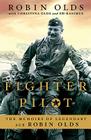
Robin Olds was a larger-than-life hero with a towering personality. A graduate of West Point and an inductee in the National College Football Hall of Fame for his All-American performance for Army, Olds was one of the toughest college football players at the time. In WWII, Olds quickly became a top fighter pilot and squadron commander by the age of 22—and an ace with 12 aerial victories. But it was in Vietnam where the man became a legend. He arrived in 1966 to find a dejected group of pilots and motivated them by placing himself on the flight schedule under officers junior to himself, then challenging them to train him properly because he would soon be leading them. Proving he wasn’t a WWII retread, he led the wing with aggressiveness, scoring another four confirmed kills, becoming a rare triple ace. Olds (who retired a brigadier general and died in 2007) was a unique individual whose personal story is one of the most eagerly anticipated military books of the year.
The Heroine's BookshelfAn exploration of classic heroines and their equally admirable authors, The Heroine's Bookshelf shows today's women how to tap into their inner strengths and live life with intelligence and grace.
Jo March, Scarlett O'Hara, Scout Finch—the literary canon is brimming with intelligent, feisty, never-say-die heroines and celebrated female authors. Like today's women, they placed a premium on personality, spirituality, career, sisterhood, and family. When they were up against the wall, authors like Jane Austen and Louisa May Alcott fought back—sometimes with words, sometimes with gritty actions. In this witty, informative, and inspiring read, their stories offer much-needed literary intervention to modern women.
Full of beloved heroines and the remarkable writers who created them, The Heroine's Bookshelf explores how the pluck and dignity of literary characters such as Jane Eyre and Lizzy Bennet can encourage women today.
Each legendary character is paired with her central quality—Anne Shirley is associated with irrepressible "Happiness," while Scarlett O'Hara personifies "Fight"—along with insights into her author's extraordinary life. From Zora Neale Hurston to Colette, Laura Ingalls Wilder to Charlotte BrontË, Harper Lee to Alice Walker, here are authors and characters whose spirited stories are more inspiring today than ever.
Give the Gift of Great Ideas
For the true bibliophile and design-savvy book lover, here is some of the new titles in Penguin's celebrated Great Ideas series by some of history's most innovative thinkers. Acclaimed for their striking and elegant package, each volume features a unique type-driven design that highlights the bookmaker's art. Offering great literature and great design at great prices, this series is ideal for readers who want to explore and savor the Great Ideas that have shaped our world.
 An Apology for Idlers
By Robert Louis Stevenson
 The Grand Inquisitor
by Fodor Dostoyevsky
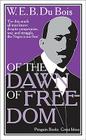 The Dawn of Freedom
by W.E.B. DuBois
 On Solitude
by Michel de Montaigne
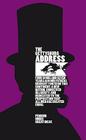 The Gettysburg Address
by Abraham Lincoln
 Revolution and War
by Karl Marx
An Apology for IdlersBy Robert Louis Stevenson
The Grand Inquisitorby Fodor Dostoyevsky
The Dawn of Freedomby W.E.B. DuBois
On Solitudeby Michel de Montaigne
The Gettysburg Addressby Abraham Lincoln
Revolution and Warby Karl Marx


Subscribe to:
Posts (Atom)