Monday, July 5, 2010

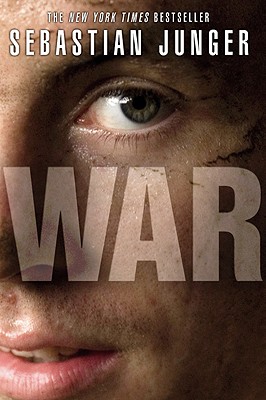
Sebastian Junger Podcasts War


Sebastian Junger is the New York Times bestselling author of The Perfect Storm and A Death in Belmont. He is a contributing editor to Vanity Fair, and has been awarded a National Magazine Award and an SAIS Novartis Prize for journalism. Junger reads from and discusses his new book War, in which he turns his brilliant and empathetic eye to the reality of combat-the fear, the honor, and the trust among men in an extreme situation whose survival depends on their absolute commitment to one another. His on-the-ground account follows a single platoon through a 15-month tour of duty in the most dangerous outpost in Afghanistan’s Korengal Valley.

listen to the podcast recorded by AuthorsOnTourLive.com

Pictures from the event:

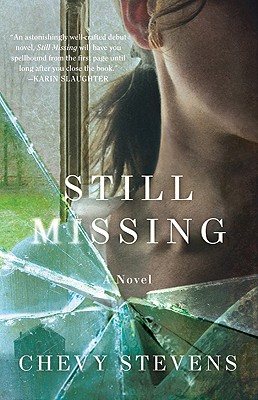
Stunning Debut Novel Coming Out Tomorrow

On the day she was abducted, Annie O’Sullivan, a thirty-two year old realtor, had three goals—sell a house, forget about a recent argument with her mother, and be on time for dinner with her ever- patient boyfriend. The open house is slow, but when her last visitor pulls up in a van as she's about to leave, Annie thinks it just might be her lucky day after all. Interwoven with the story of the year Annie spent as the captive of psychopath in a remote mountain cabin, which unfolds through sessions with her psychiatrist, is a second narrative recounting events following her escape—her struggle to piece her shattered life back together and the ongoing police investigation into the identity of her captor.

The truth doesn’t always set you free.

Still Missing is that rare debut find--a shocking, visceral, brutal and beautifully crafted debut novel.

Jackie says:
"This is a powerhouse of a debut novel, and is certainly one of the "buzz" books this summer. And justifiably so. This is a masterful book of psychological suspense and a brilliant character study that is haunting in its extremes--a real summer page turner with some serious literary chops.

It's the story of Anne O'Sullivan, a 32 year old realtor who was abducted from an open
house and held captive for over a year in a mountain cabin by a psychopath whom she only
refers to as 'The Freak', who wants his own family. There are moments of graphic
violence, but the true horror comes from the constant and unpredictable possibility of it. The most interesting thing is that the story is told in a single voice--Anne's--as she tells her therapist about her confinement, her escape, and how she's adjusting, or not adjusting, now that she's 'back'. It's about the aftereffects of trauma as much as it is about the trauma itself. It's about what surviving does to a person, how it changes them, how to go back to an old life as a new person. It's utterly fascinating, and some of the points brought up by Anne in her sessions will linger with you for a long, long, long time. The last line of the book will break your heart--but do not cheat and read ahead--it's far better you end the book on that note. Trust me on this."


Sunday, July 4, 2010

More staff recommendations

Molly recommends:
My Dearest Friend

In 1762, John Adams penned a flirtatious note to "Miss Adorable," the 17-year-old Abigail Smith. In 1801, Abigail wrote to wish her husband John a safe journey as he headed home to Quincy after serving as president of the nation he helped create. The letters that span these nearly forty years form the most significant correspondence--and reveal one of the most intriguing and inspiring partnerships--in American history.

As a pivotal player in the American Revolution and the early republic, John had a front-row seat at critical moments in the creation of the United States, from the drafting of the Declaration of Independence to negotiating peace with Great Britain to serving as the first vice president and second president under the U.S. Constitution. Separated more often than they were together during this founding era, John and Abigail shared their lives through letters that each addressed to "My Dearest Friend," debating ideas and commenting on current events while attending to the concerns of raising their children (including a future president).

Full of keen observations and articulate commentary on world events, these letters are also remarkably intimate. This new collection--including some letters never before published--invites readers to experience the founding of a nation and the partnership of two strong individuals, in their own words. This is history at its most authentic and most engaging.

Jeannie recommends:

The Metaphysical Club

Winner of the 2002 Pulitzer Prize for History

A riveting, original book about the creation of modern American thought.

The Metaphysical Club was an informal group that met in Cambridge, Massachusetts, in 1872, to talk about ideas. Its members included Oliver Well Holmes, Jr., future associate justice of the United States Supreme Court; William James, the father of modern American psychology; and Charles Sanders Peirce, logician, scientist, and the founder of semiotics. The Club was probably in existence for about nine months. No records were kept. The one thing we know that came out of it was an idea -- an idea about ideas. This book is the story of that idea.

Holmes, James, and Peirce all believed that ideas are not things "out there" waiting to be discovered but are tools people invent -- like knives and forks and microchips -- to make their way in the world. They thought that ideas are produced not by individuals, but by groups of individuals -- that ideas are social. They do not develop according to some inner logic of their own but are entirely dependent -- like germs -- on their human carriers and environment. And they thought that the survival of any idea depends not on its immutability but on its adaptability.

The Metaphysical Club is written in the spirit of this idea about ideas. It is not a history of philosophy but an absorbing narrative about personalities and social history, a story about America. It begins with the Civil War and s in 1919 with Justice Holmes's dissenting opinion in the case of U.S. v. Abrams-the basis for the constitutional law of free speech. The first four sections of the book focus on Holmes, James, Peirce, and their intellectual heir, John Dewey. The last section discusses some of the fundamental twentieth-century ideas they are associated with. This is a book about a way of thinking that changed American life."

Jackie recommends:

The Lost Summer of Louisa May Alcott

Millions of readers have fallen in love with Little Women. But how could Louisa May Alcott-who never had a romance-write so convincingly of love and heart-break without experiencing it herself?

Deftly mixing fact and fiction, Kelly O'Connor McNees imagines a love affair that would threaten Louisa's writing career-and inspire the story of Jo and Laurie in Little Women. Stuck in small-town New Hampshire in 1855, Louisa finds herself torn between a love that takes her by surprise and her dream of independence as a writer in Boston. The choice she must make comes with a steep price that she will pay for the rest of her life.

Marti recommends:

Tongue Tied

A family saga about two young men who in an act of solidarity - before one moves to work in the coal mines of south Wales, decide to each get a tatoo of the Welsh red dragon. They are at the Bala Fair and it's 1876 and little do they know what this symbolic gesture will mean in the years to come. TONGUE TIED is a fascinating read! You'll be immersed in rural Wales where you'll feel as though you've hiked the Arenig Fawr, heard the Welsh tenor compete, and lived alongside the diverse members of the Evans family. I did not want this book to end. Author Peter Griffiths was born in Cynheidre, Wales and moved to Denver in 1972 where he worked until recently. He and his wife now divide their time between Wales and Colorado.

Dennis recommends:

Ladies of Liberty
Recounted with the insight and humor of an expert storyteller and drawing on personal correspondence, private journals, and other primary sources—many of them previously unpublished—Roberts brings to life the extraordinary accomplishments of women who laid the groundwork for a better society. Almost every quotation here is written by a woman, to a woman, or about a woman. From first ladies to freethinkers, educators to explorers, this exceptional group includes Abigail Adams, Margaret Bayard Smith, Martha Jefferson, Dolley Madison, Elizabeth Monroe, Louisa Catherine Adams, Eliza Hamilton, Theodosia Burr, Rebecca Gratz, Louisa Livingston, Rosalie Calvert, Sacajawea, and others. In a much-needed addition to the shelves of Founding Father literature, Roberts sheds new light on the generation of heroines, reformers, and visionaries who helped shape our nation, giving these ladies of liberty the recognition they so greatly deserve.

Founding Mothers

From #1 New York Times bestselling author Cokie Roberts comes New York Times bestseller Founding Mothers, an intimate and illuminating look at the fervently patriotic and passionate women whose tireless pursuits on behalf of their families–and their country–proved just as crucial to the forging of a new nation as the rebellion that established it.

While much has been written about the men who signed the Declaration of Independence, battled the British, and framed the Constitution, the wives, mothers, sisters and daughters they left behind have been little noticed by history. #1 New York Times bestselling author Cokie Roberts brings us women who fought the Revolution as valiantly as the men, often defending their very doorsteps. Drawing upon personal correspondence, private journals, and even favored recipes, Roberts reveals the often surprising stories of these fascinating women, bringing to life the everyday trials and extraordinary triumphs of individuals like Abigail Adams, Mercy Otis Warren, Deborah Read Franklin, Eliza Pinckney, Catherine Littlefield Green, Esther DeBerdt Reed and Martha Washington–proving that without our exemplary women, the new country might have never survived.


New to Our Shelves: Historical Fiction Edition

Leaving Rock Harbor
An unforgettable coming-of-age story and a luminous portrayal of a dramatic era of American history, Rebecca Chace’s Leaving Rock Harbor takes readers into the heart of a New England mill town in the early twentieth century.

On the eve of World War I, fourteen-year-old Frankie Ross and her parents leave their simple life in Poughkeepsie to seek a new beginning in the booming city of Rock Harbor, Massachusetts. Frankie’s father finds work in a bustling cotton mill, but erupting labor strikes threaten to dismantle the town’s socioeconomic structure. Frankie soon befriends two charismatic young men—Winslow Curtis, privileged son of the town’s most powerful politician, and Joe Barros, a Portuguese mill worker who becomes a union organizer—forming a tender yet bittersweet love triangle that will have an impact on all three throughout their lives. Inspired in part by Chace’s family history, Frankie’s journey to adulthood takes us through the First World War and into the Jazz Age, followed by the Great Depression—from rags to riches and back again. Her life parallels the evolution of the mill town itself, and the lost promise of a boomtown that everyone thought would last forever.
The Spy
Detective Isaac Bell, hero of The Chase and The Wrecker, returns in the remarkable new adventure from the #1 New York Times-bestselling author.

It is 1908, and international tensions are mounting as the world plunges toward war. When a brilliant American battleship gun designer dies in a sensational apparent suicide, the man's grief-stricken daughter turns to the legendary Van Dorn Detective Agency to clear her father's name. Van Dorn puts his chief investigator on the case, and Isaac Bell soon realizes that the clues point not to suicide but to murder. And when more suspicious deaths follow, it becomes clear that someone-an elusive spy-is orchestrating the destruction of America's brightest technological minds... and the murders all connect to a top- secret project called Hull 44.

But that is just the beginning. As the intrigue deepens, Bell will find himself pitted against German, Japanese, and British spies, in a mission that encompasses dreadnought battleships, Teddy Roosevelt's Great White Fleet, Chinatown, Hell's Kitchen, and the Brooklyn Navy Yard. Isaac Bell has certainly faced perilous situations before, but this time it is more than the future of his country that's at stake- it's the fate of the world.
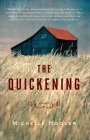
The Quickening
Enidina Current and Mary Morrow live on neighboring farms in the flat, hard country of the upper Midwest during the early 1900s. This hardscrabble life comes easily to some, like Eddie, who has never wanted more than the land she works and the animals she raises on it with her husband, Frank. But for the deeply religious Mary, farming is an awkward living and at odds with her more cosmopolitan inclinations. Still, Mary creates a clean and orderly home life for her stormy husband, Jack, and her sons, while she adapts to the isolation of a rural town through the inspiration of a local preacher. She is the first to befriend Eddie in a relationship that will prove as rugged as the ground they walk on. Despite having little in common, Eddie and Mary need one another for survival and companionship. But as the Great Depression threatens, the delicate balance of their reliance on one another tips, pitting neighbor against neighbor, exposing the dark secrets they hide from one another, and triggering a series of disquieting events that threaten to unravel not only their friendship but their families as well.
In this luminous and unforgettable debut, Michelle Hoover explores the polarization of the human soul in times of hardship and the instinctual drive for self-preservation by whatever means necessary. The Quickening stands as a novel of lyrical precision and historical consequence, reflecting the resilience and sacrifices required even now in our modern troubled times.
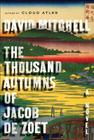
The Thousand Autumns of Jabob de Zoet
In 2007, Time magazine named him one of the most influential novelists in the world. He has twice been short-listed for the Man Booker Prize. The New York Times Book Review called him simply “a genius.” Now David Mitchell lends fresh credence to The Guardian’s claim that “each of his books seems entirely different from that which preceded it.” The Thousand Autumns of Jacob de Zoet is a stunning departure for this brilliant, restless, and wildly ambitious author, a giant leap forward by even his own high standards. A bold and epic novel of a rarely visited point in history, it is a work as exquisitely rendered as it is irresistibly readable.

The year is 1799, the place Dejima in Nagasaki Harbor, the “high-walled, fan-shaped artificial island” that is the Japanese Empire’s single port and sole window onto the world, designed to keep the West at bay; the farthest outpost of the war-ravaged Dutch East Indies Company; and a de facto prison for the dozen foreigners permitted to live and work there. To this place of devious merchants, deceitful interpreters, costly courtesans, earthquakes, and typhoons comes Jacob de Zoet, a devout and resourceful young clerk who has five years in the East to earn a fortune of sufficient size to win the hand of his wealthy fiancĂ©e back in Holland.

But Jacob’s original intentions are eclipsed after a chance encounter with Orito Aibagawa, the disfigured daughter of a samurai doctor and midwife to the city’s powerful magistrate. The borders between propriety, profit, and pleasure blur until Jacob finds his vision clouded, one rash promise made and then fatefully broken. The consequences will extend beyond Jacob’s worst imaginings. As one cynical colleague asks, “Who ain’t a gambler in the glorious Orient, with his very life?”
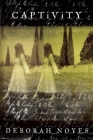
Captivity
Noyes takes the true story of the Fox sisters and the false promise their spiritualist tricks could offer a broken heart, and weaves a story that asks, What is the difference between the real and the unreal when people react precisely the same to each?
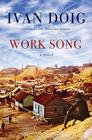


Work Song
An award-winning and beloved novelist of the American West spins the further adventures of a favorite character, in one of his richest historical settings yet.

"If America was a melting pot, Butte would be its boiling point," observes Morrie Morgan, the itinerant teacher, walking encyclopedia, and inveterate charmer last seen leaving a one-room schoolhouse in Marias Coulee, the stage he stole in Ivan Doig's 2006 The Whistling Season. A decade later, Morrie is back in Montana, as the beguiling narrator of Work Song.

Lured like so many others by "the richest hill on earth," Morrie steps off the train in Butte, copper-mining capital of the world, in its jittery heyday of 1919. But while riches elude Morrie, once again a colorful cast of local characters-and their dramas-seek him out: a look-alike, sound-alike pair of retired Welsh miners; a streak-of-lightning waif so skinny that he is dubbed Russian Famine; a pair of mining company goons; a comely landlady propitiously named Grace; and an eccentric boss at the public library, his whispered nickname a source of inexplicable terror. When Morrie crosses paths with a lively former student, now engaged to a fiery young union leader, he is caught up in the mounting clash between the iron-fisted mining company, radical "outside agitators," and the beleaguered miners. And as tensions above ground and below reach the explosion point, Morrie finds a unique way to give a voice to those who truly need one.

"The most tumultous, quirky, and fascinating city in the American West of the last century has finally found a storyteller equal to its stories. ... Ivan Doig brings to life the core of humanity, and a hell of cast, amidst the shadows and sorrows of Butte, Montana -- a city that could say it never slept well before New York made a similar claim."-Tim Egan, author of The Last Hard Time and The Big Burn

The Magic of Words


Every school day feels the same for fourth graders Lucy and Henry and Evie and Russell and May. Then Ms. Mirabel comes to their class—bringing magical words and a whole new way of seeing and understanding.

From beloved author Patricia MacLachlan comes an honest, inspiring story about what is real and what is unreal, and about the ways that writing can change our lives and connect us to our own stories—word after word after word.

Jackie says: "I just read this book this weekend, and it did two things to me: 1. it really made me want to write and 2. it made me cry. I love this book."

Read an interview with author Patricia MacLachlan.

Saturday, July 3, 2010

Cathy Talks Summer Reads on Colorado Public Radio

Click on the title of the program to listen to it, click on the names of the books to learn more about them.


Summer Book Picks:(from 6/21/10)

Some recommendations for Summer reading, all with a flavor of Colorado and the West. We've asked two local booksellers to give us some suggestions. Cathy Langer is lead buyer for the Tattered Cover Book Stores in Denver, and Andrea Avantaggio is a co-owner of Maria's Bookshop in Durango. They speak with Ryan Warner.

Their Recommendations:

The Lonely Polygamist by Brady Udall

Half Broke Horses by Jeanette Walls

Peace, Love and Baby Ducks by Lauren Myracle

Matterhorn by Karl Marlantes

Broken: A Love Story by Lisa Jones


Summer Reading With A Colorado Flavor: (from 6/28/10)

"Cathy Langer from the Tattered Cover in Denver and Joe Foster of Maria's Bookshop in Durango share their summer book picks with Ryan Warner."

Children of the Waters by Carleen Brice

Abandon by Blake Crouch

Jericho's Fall by Steven Carter

In The Heart of the Canyon by Elisabeth Hyde

Colorado Mountain Passes by Rick Spitzer

The Animal Dialogues by Craig Childs

Judi's History Recomendations:


Confessions of an Economic Hit Man
From the author of the phenomenal New York Times bestseller, Confessions of an Economic Hit Man, comes an expose of international corruption-- and an inspired plan to turn the tide for future generations.

Drawing on interviews with other EHMs, jackals, CIA operatives, reporters, businessmen, and activists, Perkins reveals the secret history of events that have created the current American Empire, including:

* How the "defeats" in Vietnam and Iraq have benefited big business

* The role of Israel as "Fortress America" in the Middle East

* Tragic repercussions of the IMF's "Asian Economic Collapse"

* The current Latin American revolution and its lessons for democracy

* U.S. blunders in Tibet, Congo, Lebanon, and Venezuela

From the U.S. military in Iraq to infrastructure development in Indonesia, from Peace Corps volunteers in Africa to jackals in Venezuela, Perkins exposes a conspiracy of corruption that has fueled instability and anti-Americanism around the globe, with consequences reflected in our daily headlines. Having raised the alarm, Perkins passionately addresses how Americans can work to create a more peaceful and stable world for future generations.


A Game as Old as Empire
John Perkins's sensational New York Times bestseller Confessions of an Economic Hit Man (more than 300,000 sold) revealed just the tip of the iceberg of the secret world of economic hit men and the web of global corruption. Now more economic hit men and investigators tell the whole shocking story.

The Teapot Dome Scandal
In this amazing and at times ribald story, Laton McCartney tells how Big Oil handpicked Warren G. Harding, an obscure Ohio senator, to serve as our twenty-third president. Harding and his “oil cabinet” made it possible for cronies to secure vast fuel reserves that had been set aside for use by the U.S. Navy. In exchange, the oilmen paid off senior government officials, bribed newspaper publishers, and covered the GOP campaign debt. When news of the scandal finally emerged, the consequences were disastrous. Drawing on contemporary records newly made available to McCartney, The Teapot Dome Scandal reveals a shocking, revelatory picture of just how far-reaching the affair was, how high the stakes, and how powerful the conspirators–all told in a dazzling narrative style.