Monday, April 18, 2011

This Will Be The Last We'll See of Jackson Brodie, For Awhile At Least

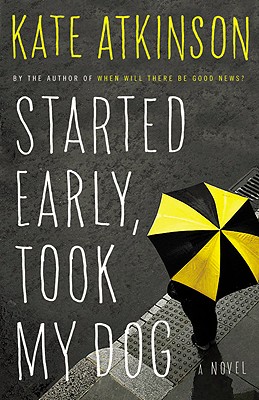
Started Early, Took My Dog
Tracy Waterhouse leads a quiet, ordered life as a retired police detective-a life that takes a surprising turn when she encounters Kelly Cross, a habitual offender, dragging a young child through town. Both appear miserable and better off without each other-or so decides Tracy, in a snap decision that surprises herself as much as Kelly. Suddenly burdened with a small child, Tracy soon learns her parental inexperience is actually the least of her problems, as much larger ones loom for her and her young charge.

Meanwhile, Jackson Brodie, the beloved detective of novels such as Case Histories, is embarking on a different sort of rescue-that of an abused dog. Dog in tow, Jackson is about to learn, along with Tracy, that no good deed goes unpunished.

Read an interview with the author.

TC Tidbits: "I Started Early" by Emily Dickinson

Sunday, April 17, 2011

Dreams of the Garden: Looking at Historical Gardening

American Eden
The story of our nation and ourselves—as told through our country's most significant gardens and their creators

From Frederick Law Olmsted to Richard Neutra, Michelle Obama to our neighbors, Americans throughout history have revealed something of themselves—their personalities, desires, and beliefs—in the gardens they create. Rooted in the time and place of their making, as much as in the minds and identities of their makers, gardens mirror the struggles and energies of a changing society. Melding biography, history, and cultural commentary in a one-of-a-kind narrative, American Eden presents a dynamic, sweeping look at this country's landscapes and the visionaries behind them.

Monticello's gardens helped Jefferson reconcile his conflicted feelings about slavery—and take his mind off his increasing debt. Edith Wharton's gardens made her feel more European and superior to her wealthy but insufficiently sophisticated countrymen. Martha Stewart's how-to instructions helped bring Americans back into their gardens, while at the same time stoking and exploiting our anxieties about social class. Isamu Noguchi's and Robert Smithson's experiments reinvigorated the age-old exchange between art and the garden.

American Eden offers an inclusive definition of the garden, considering intentional landscapes that range from domestic kitchen gardens to city parks and national parks, suburban backyards and golf courses, public plazas and Manhattan's High Line park, reclaimed from freight train tracks. And it exposes the overlap between garden-making and painting, literature, and especially architecture—the garden's inseparable sibling—to reveal the deep interconnections between the arts and their most inspired practitioners.

Moving deftly through time and place across America's diverse landscapes—from Revolutionary-era Virginia to turn-of-the-century Chicago to 1960s suburban California—and featuring a diverse cast of landscape-makers—whether artists, architects, or housewives, amateurs or professionals, robber barons, politicians, reformers, or dreamers—Wade Graham vividly unfolds the larger cultural history through more personal dramas.

Beautifully illustrated with color and black-and-white images, American Eden is at once a different kind of garden book and a different kind of American history, one that offers a compelling, untold story—a saga that mirrors and illuminates our nation's invention, and constant reinvention, of itself.

Founding Gardeners
From the author of the acclaimed The Brother Gardeners {see below}, a fascinating look at the founding fathers from the unique and intimate perspective of their lives as gardeners, plantsmen, and farmers.

For the founding fathers, gardening, agriculture, and botany were elemental passions, as deeply ingrained in their characters as their belief in liberty for the nation they were creating. Andrea Wulf reveals for the first time this aspect of the revolutionary generation. She describes how, even as British ships gathered off Staten Island, George Washington wrote his estate manager about the garden at Mount Vernon; how a tour of English gardens renewed Thomas Jefferson’s and John Adams’s faith in their fledgling nation; how a trip to the great botanist John Bartram’s garden helped the delegates of the Constitutional Congress break their deadlock; and why James Madison is the forgotten father of American environmentalism. These and other stories reveal a guiding but previously overlooked ideology of the American Revolution.

Founding Gardeners adds depth and nuance to our understanding of the American experiment and provides us with a portrait of the founding fathers as they’ve never before been seen.

The Brother's Garden
Bringing to life the science and adventure of eighteenth-century plant collecting, The Brother Gardeners is the story of how six men created the modern garden and changed the horticultural world in the process. It is a story of a garden revolution that began in America.

In 1733, colonial farmer John Bartram shipped two boxes of precious American plants and seeds to Peter Collinson in London. Around these men formed the nucleus of a botany movement, which included famous Swedish botanist Carl Linnaeus; Philip Miller, bestselling author of The Gardeners Dictionary; and Joseph Banks and David Solander, two botanist explorers, who scoured the globe for plant life aboard Captain Cook’s Endeavor. As they cultivated exotic blooms from around the world, they helped make Britain an epicenter of horticultural and botanical expertise. The Brother Gardeners paints a vivid portrait of an emerging world of knowledge and gardening as we know it today.

The Curious Gardener's Almanac

A delightful anthology of curiosities that honors the gardening life.

Celebrating the garden in all its splendid diversity and rich history, this collection of facts, ancient wisdom and customs, tips, and recipes features more than 1,000 entries-remarkable information about flowers, vegetables, fruits, trees, herbs, insects, birds, water, soil, tools, composts, climate, gardens and gardeners, myths, superstitions, and biodynamics.

Woven into this wealth of knowledge are famous quotations, anecdotes, traditional sayings, lines of verse, and words of rural wisdom. It's a wonderful gift for any gardener, whether they're tending a window box or a full-fledged farm.

Another Tiger On The Shelves And In The Kitchen

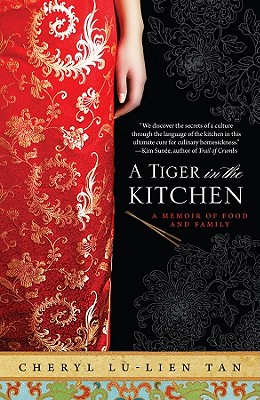
Born in the year of the Tiger (a rebellious sign), Cheryl Tan left Singapore at age 18 to attend Northwestern University. Years later, as a 30-something living in New York City, she was suddenly gripped with a sense of loss at the knowledge that after almost sixteen years in the United States, she was, indeed, “Ang Moh” (a Chinese term that implies “Westernized”). Tan did not know how to make the food of her people, and any Singaporean will tell you that they don’t eat to live—they live to eat. In the tiny Southeast Asian country that straddles the equator, food is both a national obsession and their way of bonding. In the kitchen, they tell stories.

In A Tiger in the Kitchen,Cheryl Tan invites readers to join her on a quest to recreate the dishes of her native Singapore as a way to connect food and family with her sense of home. As Tan begins cooking with her family, she learns not just about food, but about her family history and her heritage. She finds that home is rooted in the kitchen and the foods of her Singaporean girlhood. A Tiger in the Kitchen is a charming story about being a Chinese-American and a food exile, and finding a place for one’s heritage in a modern life.

A Tiger in the Kitchen:  Asian Spaghetti and Meatballs from Mark Joyella on Vimeo.

TC Tidbits: "Zombie Poems"

Saturday, April 16, 2011

Preschool One Book, One Denver Storytime TODAY at 10:30 At Our Colfax Avenue Store

The Denver Preschool Program (DPP) and the Denver Office of Cultural Affairs (DOCA) have announced the selection for Preschool One Book, One Denver 2011. Beginning April 15, 2011, many of Denver’s preschoolers will begin reading Is Your Mama a Llama? (Scholastic) by Deborah Guarino. As in previous years, this year’s Preschool OBOD Program will include public readings by the author, on-site readings at several DPP enrolled preschools, and book donations to DPP classrooms. As part of this year’s program, Deborah Guarino will visit the Tattered Cover on Colfax for a very special storytime for young children and their families.

These Books Could Spring You Into Activism

Polls show that the majority of Americans oppose recent US wars and Wall Street bailouts, yet most remain passive and appear resigned to powerlessness. In Get Up, Stand Up, Bruce Levine offers an original and convincing explanation for this passivity. Many Americans are deeply demoralized by decades of oppressive elitism, and they have lost confidence that genuine democracy is possible. Drawing on phenomena such as learned helplessness, the abuse syndrome, and other psychological principles and techniques for pacifying a population, Levine explains how major US institutions have created fatalism. When such fatalism and defeatism set in, truths about social and economic injustices are not enough to set people free.

However, the situation is not truly hopeless. History tells us that for democratic movements to get off the ground, individuals must recover self-respect, and a people must regain collective confidence that they can succeed at eliminating top-down controls. Get Up, Stand Up describes how we can recover dignity, confidence, and the energy to do battle. That achievement fills in the missing piece that, until now, has undermined so many efforts to energize genuine democracy.

Get Up, Stand Up
details those strategies and tactics that oppressed peoples have successfully employed to gain power. We the People can unite, gain strength, wisely do battle, and wrest power away from the ruling corporate-government partnership (the "corporatocracy"). Get Up, Stand Up explains how.


Diane Wilson is an activist, shrimper, and all around hell-raiser whose first book, An Unreasonable Woman, told of her battle to save her bay in Seadrift, Texas. Back then, she was an accidental activist who worked with whistleblowers, organized protests, and eventually sunk her own boat to stop the plastic-manufacturing giant Formosa from releasing dangerous chemicals into water she shrimped in, grew up on, and loved.

But, it turns out, the fight against Formosa was just the beginning. In Diary of an Eco-Outlaw, Diane writes about what happened as she began to fight injustice not just in Seadrift, but around the world—taking on Union Carbide for its failure to compensate those injured in the Bhopal disaster, cofounding the women’s antiwar group Code Pink to protest the wars in Iraq and Afghanistan, attempting a citizens arrest of Dick Cheney, famously covering herself with fake oil and demanding the arrest of then BP CEO Tony Hayward as he testified before Congress, and otherwise becoming a world-class activist against corporate injustice, war, and environmental crimes.

As George Bernard Shaw once said, “all progress depends on unreasonable women.” And in the Diary of an Eco-Outlaw, the eminently unreasonable Wilson delivers a no-holds-barred account of how she—a fourth-generation shrimper, former boat captain, and mother of five—took a turn at midlife, unable to stand by quietly as she witnessed abuses of people and the environment. Since then, she has launched legislative campaigns, demonstrations, and hunger strikes—and generally gotten herself in all manner of trouble.

All worth it, says Wilson. Jailed more than 50 times for civil disobedience, Wilson has stood up for environmental justice, and peace, around the world—a fact that has earned her many kudos from environmentalists and peace activists alike, and that has forced progress where progress was hard to come by.


It's been almost a century and a half since a critical mass of Americans believed that secession was an American birthright. But breakaway movements large and small are rising up across the nation. From Vermont to Alaska, activists driven by all manner of motives want to form new states-and even new nations.So, just what's happening out there? The American Empire is dying, says Bill Kauffman in this incisive, eye-opening investigation into modern-day secession-the next radical idea poised to enter mainstream discourse. And those rising up to topple that empire are a surprising mix of conservatives, liberals, regionalists, and independents who-from movement to movement-may share few political beliefs but who have one thing in common: a sense that our nation has grown too large, and too powerfully centralized, to stay true to its founding principles. Bye Bye, Miss American Empire traces the historical roots of the secessionist spirit, and introduces us to the often radical, sometimes quixotic, and highly charged movements that want to decentralize and re-localize power.During the George W. Bush administration, frustrated liberals talked secession back to within hailing distance of the margins of national debate, a place it had not occupied since 1861. Now, secessionist voices on the left and right and everywhere in between are amplifying. Writes Kauffman, "The noise is the sweet hum of revolution, of subjects learning how to be citizens, of people shaking off . . . their Wall Street and Pentagon overlords and taking charge of their lives once more."Engaging, illuminating, even sometimes troubling, Bye Bye, Miss American Empire is a must-read for those taking the pulse of the nation."