Wednesday, April 20, 2011

This Week's Dark Days of Supernatural Happenings:

TODAY (4-20-11): live chat with Angelfire author Courtney Allison Moulton.  Check in at inkpop.com to find out what time.

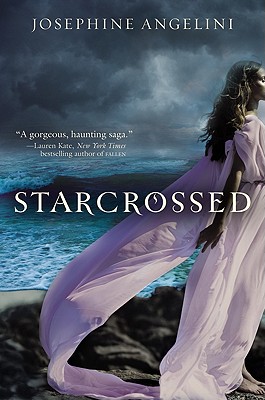
 Starcrossed
How do you defy destiny?

Helen Hamilton has spent her entire sixteen years trying to hide how different she is—no easy task on an island as small and sheltered as Nantucket. And it's getting harder. Nightmares of a desperate desert journey have Helen waking parched, only to find her sheets damaged by dirt and dust. At school she's haunted by hallucinations of three women weeping tears of blood . . . and when Helen first crosses paths with Lucas Delos, she has no way of knowing they're destined to play the leading roles in a tragedy the Fates insist on repeating throughout history.

As Helen unlocks the secrets of her ancestry, she realizes that some myths are more than just legend. But even demigod powers might not be enough to defy the forces that are both drawing her and Lucas together—and trying to tear them apart.

This book will not be released until May 31, 2011, but the inkpop.com Writing Challenge based on it starts tomorrow, April 21, 2011.  Check the site for details.

TC Tidbits: Hands by Sandra Kay

Tuesday, April 19, 2011

Dispatches From The Field: Joe Reviews This Memoir About Grief and Living Off the Grid and On the Land

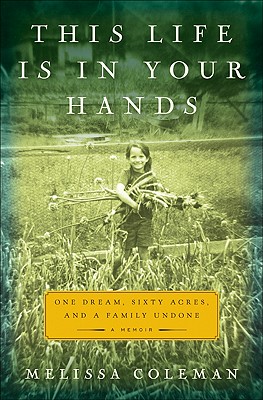
Set on a rugged coastal homestead during the 1970s, This Life Is in Your Hands introduces a superb young writer driven by the need to uncover the truth of a childhood tragedy and connect anew with the beauty and vitality of the back-to-the-land ideal that shaped her early years.

In the fall of 1968, Melissa Coleman's parents, Eliot and Sue—a handsome, idealistic young couple from well-to-do families—pack a few essentials into their VW truck and abandon the complications of modern reality to carve a farm from the woods. They move to a remote peninsula on the coast of Maine and become disciples of Helen and Scott Nearing, authors of the homesteading bible Living the Good Life. On sixty acres of sandy, intractable land, Eliot and Sue begin to forge a new existence, subsisting on the crops they grow and building a home with their own hands.

While they establish a happy family and achieve their visionary goals, the pursuit of a purer, simpler life comes at a price. Winters are long and lean, summers frenetic with the work of the harvest, and the distraction of the many young farm apprentices threatens the Colemans' marriage. Then, one summer day when Melissa is seven, her three-year-old sister, Heidi, wanders off and drowns in the pond where she liked to play. In the wake of the accident, ideals give way to human frailty, divorce, and a mother's breakdown—and ultimately young Melissa is abandoned to the care of neighbors. What really happened, and who, if anyone, is to blame?


This Life Is in Your Hands is the search to understand a complicated past; a true story, both tragic and redemptive, it tells of the quest to make a good life, the role of fate, and the power of forgiveness.

Read an excerpt.

Joe says:
"Melissa Coleman did not have the 1970's childhood many of us did: she was raised in rural Maine on a farm without electricity, in a family that helped pioneer the back-to-the-earth movement. It was a fun life, but a tragic one. When Melissa was seven years old, her little sister drowned in the family's pond. It was an event that tore apart their family, and changed all of their lives. This book is as much about the quest to understand fate as it is a book about the hard work it takes to live a life off the grid.

This book is full of heart-warming reminisces of her childhood, made all the more heart-breaking by the end of the book. Melissa Coleman's story is not only about her, but about her parents, Eliot and Sue, and the community of like-minded individuals that lived on and near their farm on the coast of Maine. Many of these people were the ones who worked hard on the groundbreaking work regarding the organic movement. Coleman writes with honest passion in a style at once homespun and powerfully emotional."


Bloody Science

A sharp-eyed exposé of the deadly politics, murderous plots, and cutthroat rivalries behind the first blood transfusions in seventeenth-century Europe.

On a cold day in 1667, a renegade physician named Jean Denis transfused calf's blood into one of Paris's most notorious madmen. In doing so, Denis angered not only the elite scientists who had hoped to perform the first animal-to-human transfusions themselves, but also a host of powerful conservatives who believed that the doctor was toying with forces of nature that he did not understand. Just days after the experiment, the madman was dead, and Denis was framed for murder.

A riveting account of the first blood transfusion experiments in 17th-century Paris and London, Blood Work gives us a vivid glimpse of a particularly fraught period in history-a time of fire and plague, empire building and international distrust, when monsters were believed to inhabit the seas and the boundary between science and superstition was still in flux. Amid this atmosphere of uncertainty, transfusionists like Denis became embroiled in the hottest cultural debates and fiercest political rivalries of their day. As historian Holly Tucker reveals, transfusion's detractors would stop at nothing-not even murdering Denis's patient-to outlaw a practice that might jeopardize human souls, pave the way for monstrous hybrid creatures, or even provoke divine retribution.

Taking us from the highest ranks of society to the lowest, from dissection rooms in palaces to the filth-clogged streets of Paris, Blood Work sheds light on an era that wrestled with the same questions about morality and experimentation that haunt medical science to this day.

TC Tidbits: Forgetfulness by Billy Collins

Monday, April 18, 2011

Amy Stewart Is In Denver April 20 and 21!!!

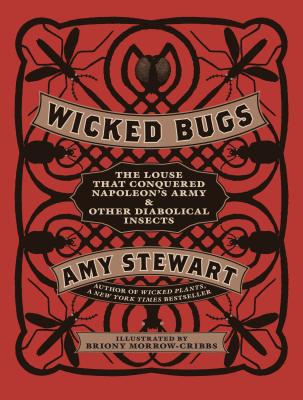
Wicked Bugs
In this darkly comical look at the sinister side of our relationship with the natural world, Stewart has tracked down over 100 of our worst entomological foes-creatures that infest, infect, and generally wreak havoc on human affairs. From the world's most painful hornet, to the flies that transmit deadly diseases, to millipedes that stop traffic, to the "bookworms" that devour libraries, to the Japanese beetles munching on your roses, Wicked Bugs delves into the extraordinary powers of six and eight-legged creatures.

With wit, style, and exacting research, Stewart has uncovered the most terrifying and titillating stories of bugs gone wild. It's an A - Z of insect enemies, interspersed with sections that explore bugs with kinky sex lives ("She's Just Not That Into You"), creatures lurking in the cupboard ("Fear No Weevil"), insects eating your tomatoes ("Gardener's Dirty Dozen") and phobias that feed our (sometimes) irrational responses to bugs ("Have No Fear").

Intricate and strangely beautiful etchings and drawings by Briony Morrow-Cribbs capture diabolical bugs of all shapes and sizes in this mixture of history, science, murder and intrigue that begins-but doesn't end-in your own backyard.

The book isn't available until May, but you can read an excerpt here. Tattered Cover is accepting pre-orders as well.


Stewart is offering a workshop on April 20 and a slide show on April 21 at the Denver Botanical Gardens.  Click on the dates for more information.  She is also speaking at the Denver Woman's Press Club on the April 21.  Get the details here.

Backyard Birders, KB Has Found A Book For You!

Spring has sprung!  As the days grow longer and warmer, and with daylight savings time's early commencement, our thoughts turn to outdoor activities.

An oft-requested book for the springtime at the Tattered Cover has been a local "backyard guide" for birds.  For many years I have directed customers toward the Colorado bird guides, particularly Mary Taylor
Gray's Guide to Colorado Birds because of the superior graphics, good information, and the choice of birds included in the guide. There are also portable laminated pamphlets, with one available for Denver Birds and the other entitled Colorado Bird, but the information just includes general bird categories, bird illustrations
and bird names, so that little information can be imparted to the user other than the bird's physical appearance.  No book limited to 'backyard  birds' existed, and I wondered how one would be possible,
since relatively few birds--about fifteen or so--actually showed up in MY backyard the year I kept track of them.  Plus, three of those birds consisted of the uncharismatic (and non-native) starlings, pigeons and House Sparrows.  How could an enticing and informative guide be focused on a seemingly small number of lackluster birds?  Also, would the typical East Coast backyard have anything in common with mine?

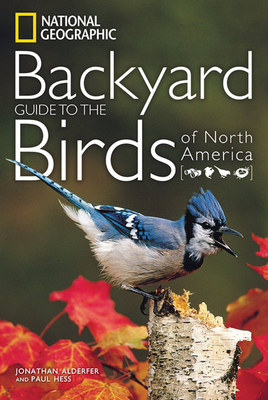
Now, brand new for 2011, National Geographic has done a book specifically labeled 'backyard birds' entitled National Geographic Guide to Backyard Birds of North America.  This book does have a limited scope, as expected  by its intended audience, but it imparts plenty of useful information  and entices the user with appealing graphics.  Just 150 species receive coverage in this guide, the ones most likely to be noticed in suburb or residential areas with some parks, wooded areas, watercourses and ponds. 

The 150 species covered each have a page devoted to them, with an illustration of the bird perched and another of the bird in flight. Another set of illustrations is provided when different field marks occur for the male and female of the species (those species that are 'sexually dimorphic').  Each description includes a scientific name, an extensive descripton of the bird's appearance, similar species, voice description (unfortunately this can be a bit subjective), and range description and map.

Special note: Those seeking their first bird guide or looking for a bird guide as a gift will often be drawn to the bird books using photographs rather than drawings of the birds, as the photographs initially offer a greater visual appeal.  I am among those many instructors and seasoned birders who prefer illustrations to photographs, particularly for those just beginning to bird.  I've got several reasons for this preference, but the main one is that illustrations enable one to draw attention to key distinquishing and diagnotic features. Illustrators make sure the drawings clearly show the unique aspects of the bird, and they can point out and label that part of the bird needing particular attention in the field--key field marks can be highlighted.
Immediately inside the front cover of this book, one gleans information from a "quick-find" index to the common types of birds (ie. thrushes, swallows, wren, hawks etc.) found in North America, with representative pictures of these categories of birds on the back side of the same flap.  Also found here is the all-important key to the range maps, with different colors indicating whether a bird typically stays in an area year-round, occurs just in the spring/summer breeding season, migrates through, or resides there in the winter.

The first section of the book contains some suggestions on feeding birds, how to set up birdhouses, landscaping with birds in mind, choosing binoculars and several other topics.  In addition, throughout
the book there are sidebars on topics such as seasonal coloration and molts, how owls are able to hunt in the dark, how long different species of birds typically live, and other birdlife topics.

A unique male bird head key exists near the front of the book, and as these play a crucial role in bird  ID --expert birders can generally ID a bird by head and facial features alone--this key may encourage a beginning birder to focus particularly on this crucial region of the bird, and perhaps advance more quickly in accurate bird identification.

Other nifty aspects of the book include some sharp photographs, a small glossary of bird terms in the back, and a list of suggested readings.  For someone seeking a first guide or a gift that would be appealing but not overwhelming, this would be something to consider.  But remember that the book's limited scope means that even birds in one's immediate neighborhood (such as the breeding Double-crested Cormorants and Black-crowned Night Herons three blocks from Colfax Ave Tattered Cover in City Park) may not be covered.

So if this book whets one's appetite for birding, it may encourage the purchase of a more comprehensive guide at a later date.

--KB